‘Music was our teacher’: the sound system pioneers reviving the scene in Manchester and beyond

For a generation of young Black Mancunians, some of the history lessons that mattered most were not taught in classrooms, but through towering stacks of amps and speakers, turntables and Jamaican records.
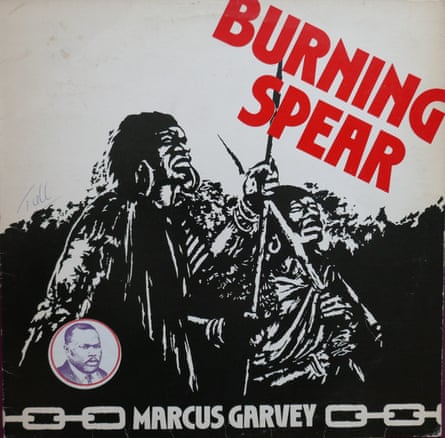
“We didn’t know where we fit in. We didn’t know our history. Our parents were busy working two or three jobs,” says Errol “Barzy” Beaumont, a founder member of Baron Turbo Charge, Manchester’s long-running reggae sound system. “It was the records – Burning Spear, Bob Marley, Culture, that were telling us about our culture, which wasn’t on the school curriculum. For us, the sound system was not just entertainment – it was an education.”
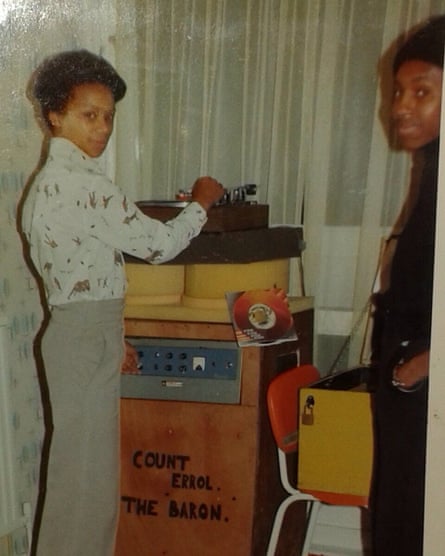
More than 50 years since the sons and daughters of Windrush-generation pioneers adapted their parents’ music, DJing culture and technology to forge a Black British youth movement, Manchester’s sound system scene is enjoying a revival.
Keithly Brandy, an archivist of Manchester’s postwar Black history, has been working with museums and universities to preserve the flyers and paperwork that documented the scene in the 1970s and 80s and Winston Jones, the founder of Trafford Bar Studios, has been producing a podcast series about it.
It has come full circle. Manchester once looked to Jamaica for inspiration, but in recent years the Megatone Sound Foundation has set up and supported sound systems across the Black diaspora, from Kingston to the Gambia and Ethiopia, and Baron Turbo Charge are keeping reggae alive in the heart of Moss Side.
And, just as sound systems provided a lifeline for young Black people with few places to express themselves in postwar Britain, half a century later they are once again offering a sense of belonging and community to those same people, now in their 60s.
For Marcus, of Megatone Sound Foundation, the journey began in his parents’ front room in Old Trafford in 1976, when he was nine years old. Without his mother’s knowledge, he dismantled the family’s wooden stereogram, removing the turntable, speakers and valve amplifier before reassembling them in homemade cabinets upstairs.
“I started to build a little system called Conqueror. It was just like a house thing,” he says. “And then from there, it grew.”
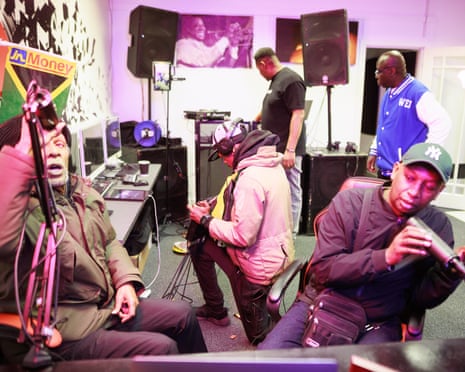
Back then the emergent scene was concentrated in the house parties, community functions and youth clubs of Manchester neighbourhoods such as Hulme, Moss Side and Old Trafford.
The records varied depending on the venue and the company. Bob and Marcia’s anthem, Young, Gifted and Black, was a staple record parents approved of. But, away from the more conservative older generation, youth clubs such as Aquarius, Proctor’s, Birley and the Hideaway rocked to the sounds of Dillinger and Johnny Clarke. In what could be a male-dominated scene, 1980s sounds such as Kilowatt drew a female following with lovers rock.
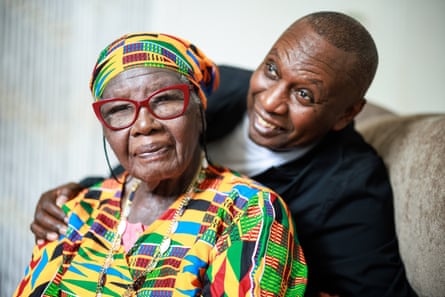
No one could have imagined that ephemera from Manchester’s scene – such as a contract from the broadcaster David Rodigan’s appearance at the PSV club, the reggae venue founded by the city’s Black bus drivers – would one day be displayed in a museum. That contract – which features in the V&A East’s The Music is Black: A British Story exhibition in London – is among items preserved for decades by Brandy.
Back in 1976, Brandy set up his own sound system, Tyban Sounds, with two friends, “Big” Trevor Bell and “Young” Trevor Bell, inspired by the older generation of Manchester soundmen, including Lord Cass, Bugga Levi, Count Leroy, Count Sam, Rocket and Angel Hi-Fi, who had brought the culture with them from the Caribbean. “You would see these people at weddings and christenings – and be in awe of them,” Brandy says.
Brandy still recalls the excitement of bringing London’s Conqueror sound system to Manchester Carnival and the after-party at Abasindi’s women’s co-operative – having persuaded his mother, the carnival pioneer Locita Brandy, to give the young people a chance.
The sound system – a competitive collective of DJs, MCs, sound engineers, crew and their mobile, custom-built, bass-heavy audio set-up – was invented in 1940s Jamaica, with the original sounds playing American R&B and mento music in Kingston.
In the US, the culture would shape hip-hop, after the Kingston-born DJ Kool Herc set up a sound system in the Bronx, while in the UK, sound system culture evolved through time, bringing everything from roots reggae and lovers rock to house, garage and jungle records to the mainstream.
Despite that winding journey – shaping artists including Soul II Soul, Maxi Priest and Massive Attack along the way – reggae is the essence of the culture.
“Back then the music was like a newspaper,” Jones says of 70s reggae. “It was teaching us about history, it was teaching us about Marcus Garvey, about Nelson Mandela. It was teaching us that Africa was our home – the music was our teacher.”
At the heart of Trafford Bar Studios, the creative space Jones founded and funded with compensation from his experiences as part of the Windrush scandal, young people can learn skills such as DJing, photography, videography and podcasting without charge. It echoes the ethos of the sound system movement: collective and individual empowerment through music and creativity.
after newsletter promotion
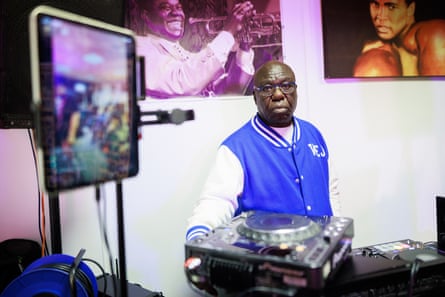
“It’s about resilience,” Jones says. “A kid leaves school and believes he can’t do anything, but we give you hope when you come in here.”
Jones funded the Pioneers of Manchester’s Soundsystem era podcast to ensure voices from a significant chapter in Manchester’s Black cultural history are preserved for posterity. “All these soundmen, everybody have a story to tell,” he said.
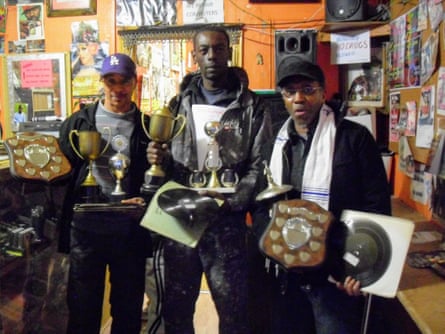
The Baron Turbo Charge founder Errol Beaumont set out into the scene with his friends Junior Wilson and the late Melvyn “Wizzydan” Joseph as teenagers in the mid-70s, when Black people faced an unofficial societal colour bar.
The trio saved £10 each to buy a secondhand valve guitar amplifier to add to the records, speakers and old turntable they already had.
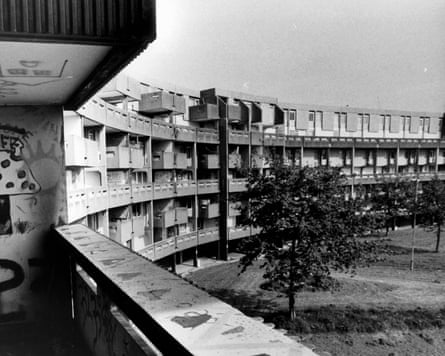
On the day of the dance, realising their speakers had no cabinets, they nailed together boxes using timber from a building site and hauled the gear up the staircase of flats on Bonsall Street, on the edge of Manchester’s long-demolished, brutalist Hulme Crescents estate.
“We hadn’t tested the system or anything. The party was on the fourth floor, we built it on the first, and by the time we got to the second floor, it fell apart,” Beaumont laughs. From that moment on, the boys decided to “get serious”.
Awareness that his generation was facing a different kind of exclusion motivated Beaumont, now 67, to return to playing dances after a decades-long hiatus.
“There’s nothing really for my generation now, as entertainment,” he says. “That was one of the reasons we brought the sound back out – because there’s a lot of people like ourselves who still want to put on their nice clothes and go out, just like we did back in the day.”
This makes the West Indian Sports and Social Centre – the historic Moss Side community hub – a key venue, one of the few places where large sound systems can still recreate the old atmosphere.
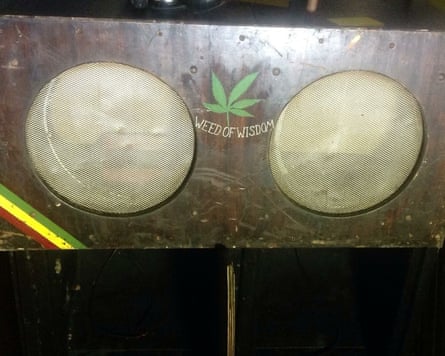
Meanwhile, as well as establishing sounds in Africa and the Caribbean, fundraising for charitable causes, and organising events celebrating community elders, the Megatone Sound Foundation is feted by audiences in France, Greece, Hungary and Poland.
“What makes Manchester sounds special is that Manchester people have this warm demeanour, and a multicultural attitude to things,” Jones says. “If you go back to the days of [Moss Side nightclubs] the Nile and the Reno, white people, Black people, everybody was rubbing shoulders. It’s a working-class attitude, it’s a solidarity.”
KioskNews shows a cleaned-up reading view extracted from the publisher’s page — the original always lives on their site, not ours.