EU proposes new US$49 billion Ukraine loan for 2027
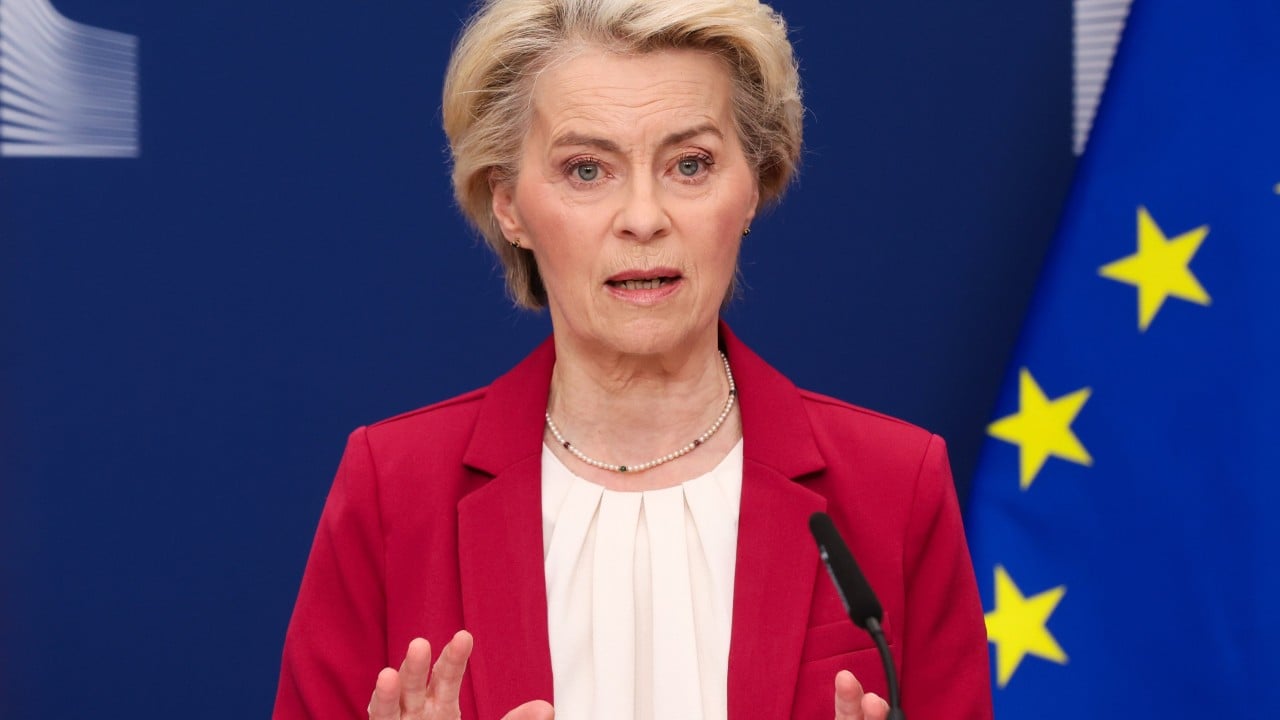
The European Union on Wednesday proposed member states give Ukraine an extra €45 billion (US$49 billion) loan to plug Kyiv’s 2027 budget shortfalls as Russia’s war drags on.
The funding would go two-thirds of the way towards filling a €70 billion black hole Kyiv is facing next year – with Brussels looking to incentivise other Ukraine backers to do the rest.
“Five years since the start of this war of aggression, Europe stands united. We are as committed as ever to support Ukraine in war and in peace,” European Commission chief Ursula von der Leyen said.
“We think this is the best way to give Ukraine a strong hand at the negotiation table, and Ukraine only needs to repay once Russia pays for the damage it has caused in Ukraine.”
EU leaders will discuss the loan at a summit in Brussels next week in the hope of reaching a deal.
The EU is currently paying out a €90 billion loan to Kyiv that it hoped would see the country through to the end of next year.
But as Russia has intensified its attacks, it has become clear that those funds would not be enough.

The new loan would follow the same format as the current one and be borrowed against headroom in the EU’s central budget.
It would also be linked to Kyiv pressing on with reforms.
While the aim is to forge agreement next week, the issue of the funding has now become wrapped up with broader fraught negotiations over the EU’s next central budget.
German Chancellor Friedrich Merz has insisted that all of the EU must settle the financing and all 27 member states must be involved before a deal can be reached on the budget.
That has rankled several of the EU’s least pro-Ukraine countries who want to be left out of backing the loan, such as Bulgaria, the Czech Republic, Hungary and Slovakia.
Last time round, Budapest, Bratislava and Prague managed to get themselves exempted from having to help cover the financing.
Von der Leyen insisted the aim this time remains to get all countries on board.
Beyond the bloc, Brussels is pushing other allies of Ukraine – such as Britain, Canada and Japan to fill in the rest of Kyiv’s needs next year.
Similar pleas have previously fallen short.
In a bid to incentivise them this time, Brussels says others could provide guarantees to help bolster the loan or use the interest on frozen Russian assets in the EU to cover their own financing.
The proposal for a new loan means that the EU for now will not try to look into the thorny issue of directly tapping over €200 billion of frozen Russian central bank assets held in the bloc to fund Ukraine.
That plan was shot down in 2025 by Belgium – where most of the assets are held – and the position of its government has not shifted.
KioskNews shows a cleaned-up reading view extracted from the publisher’s page — the original always lives on their site, not ours.