Thailand tightens data centre rules as power requests top 30,000 MW
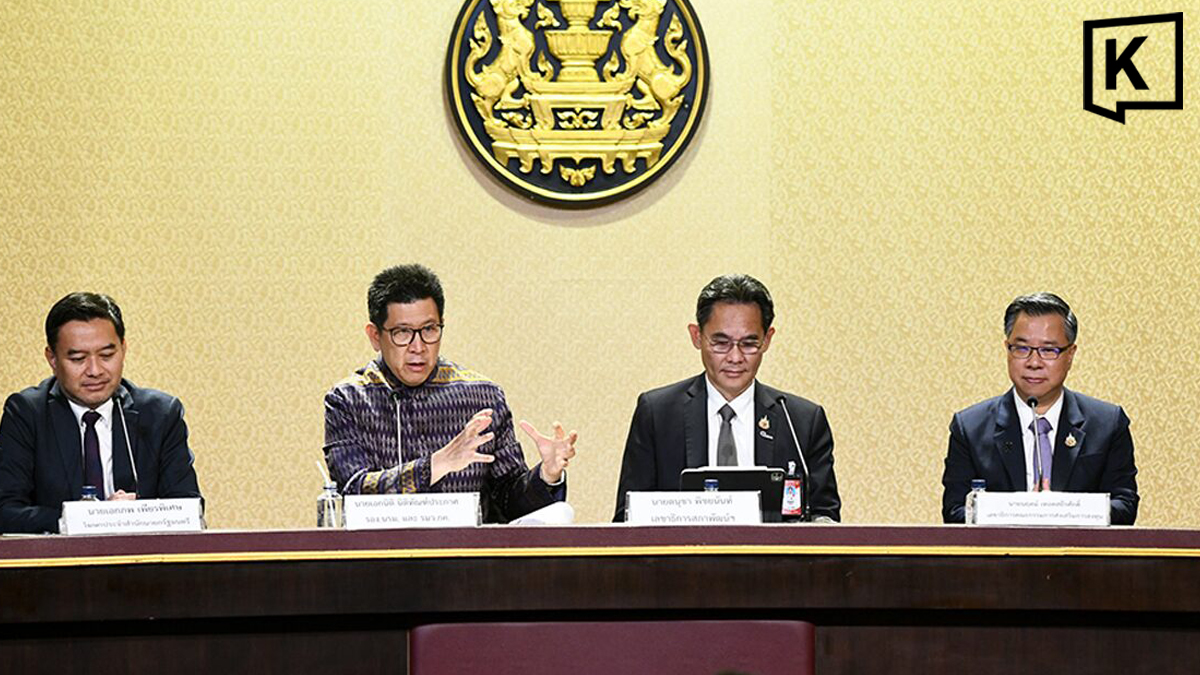
BANGKOK — 10 November 2026, Thailand’s Cabinet has approved in principle a new regulatory framework for data centres after more than 110 applicants requested over 30,000 megawatts (MW) of electricity, despite estimates that only about a quarter or fewer have genuine investment plans.
Deputy Prime Minister and Finance Minister Ekniti Nitithanprapas, who chairs the Data Centre Business Policy Committee, said the new framework would establish unified standards for data centre investment, resource management and environmental protection while supporting the country’s digital economy and artificial intelligence (AI) development.
The government plans to introduce a One Stop Service system to screen investment proposals, prevent speculative reservations of electricity and water supplies, and ensure that new projects deliver tangible economic benefits to Thailand.
Power demand far exceeds actual investment plans
Ekniti said one of the biggest challenges was the excessive reservation of electricity and other utilities by developers who might not proceed with actual investments.
More than 110 applications associated with data centre projects have been submitted, representing combined electricity demand exceeding 30,000 MW.
However, authorities estimate that only about one-quarter of the applicants, or possibly fewer, have concrete investment plans.
He explained that some of the inflated demand resulted from the industry’s contracting structure, in which a platform operator might engage several engineering, procurement and construction (EPC) contractors for the same project.
Each contractor could independently reserve electricity and water supplies, creating multiple applications for a single development.
For example, a data centre requiring 100 MW could generate electricity reservations totalling 400 MW.
The government therefore plans to introduce a screening committee and financial guarantee requirements to discourage speculative reservations and prevent intermediaries from securing utility allocations for resale.
One Stop Service to screen data centre investments
Under the Cabinet-approved policy, the Ministry of Digital Economy and Society will establish a One Stop Service system to consolidate project information and coordinate approvals across relevant agencies.
Ekniti said Thailand previously lacked a comprehensive regulatory framework for data centres, with responsibilities divided among several authorities and project information scattered across different agencies.
The government has now compiled information covering approximately 90% of the sector, allowing officials to better assess investment proposals and identify overlapping or speculative utility requests.
The new framework has three main objectives: protecting communities through minimum environmental and safety standards, providing regulatory certainty for legitimate investors, and ensuring that investments generate economic value for Thailand.
New proposals will be assessed not only on investment value but also on job creation, workforce development, technology-related opportunities and the participation of Thai businesses in supply chains.
Existing projects operating legally will be allowed to continue, while those under development will receive appropriate transitional arrangements.
Seven categories based on electricity consumption
Danucha Pichayanan, Secretary-General of the National Economic and Social Development Council (NESDC), said data centres would be classified into seven categories based on their total facility electricity load.
Category
Electricity consumption
- Level 1: Below 0.5 MW
- Level 2: 0.5 MW to below 5 MW
- Level 3: 5 MW to below 10 MW
- Level 4: 10 MW to below 20 MW
- Level 5: 20 MW to below 50 MW
- Level 6: 50 MW to below 200 MW
- Level 7: 200 MW and above
Facilities consuming 0.5 MW or more will fall under the regulatory framework, while smaller facilities, typically internal data centres operated by banks or other organisations, will remain outside its scope.
Regulatory requirements will become stricter as facility size increases.
Data centres consuming less than 20 MW may operate in commercial zones, while those requiring 20 MW or more must be located in industrial areas or industrial estates.
The zoning requirements are intended to ensure that large-scale facilities are developed in locations suitable for their electricity and water consumption and potential environmental impact.
Environmental standards to cover water, heat and noise
Ekniti said protecting communities would be a priority under the new rules.
Not every data centre will be required to undergo a formal environmental impact assessment (EIA), as many facilities primarily consist of buildings housing computer servers and related equipment.
However, operators must comply with applicable environmental standards, including controls on noise from backup generators, temperatures near property boundaries, water and electricity efficiency, and wastewater discharged from cooling systems.
Facilities within industrial estates must follow existing estate regulations, while those outside industrial estates will be subject to additional environmental Codes of Practice (CoP).
Danucha said further public consultations would be conducted before detailed technical requirements were finalised.
Existing projects given one year to meet environmental rules
The government will introduce transitional measures based on the status of construction permits and investment promotion approvals.
Projects that received construction permits or Board of Investment (BOI) promotion approval before 14 August 2026, when the relevant Prime Minister’s Office regulation took effect, will be permitted to proceed through the One Stop Service review process.
These projects must hold all required permits and will be given one year to bring their operations into compliance with the environmental Code of Practice.
Projects applying for construction permits after 14 August 2026, along with new investment proposals, will face more detailed screening of their feasibility, resource requirements and economic benefits.
Danucha stressed that the regulations must also treat investors fairly, particularly those who committed funds before the new framework was introduced.
BOI reports 57 approved data centre projects
Narit Therdsteerasukdi, Secretary-General of the Board of Investment, said 57 data centre projects had received investment promotion approval as of April 2026.
Of these, 17 were already operational, while another 40 were at various stages of development.
Approximately half of the 40 projects had obtained construction permits and were under construction, while the remainder were preparing their investments.
Ekniti reiterated that future data centre investments should compete on the value they create for Thailand rather than simply the amount of capital committed.
The government will prioritise projects that create jobs, develop Thai workers’ skills, support related industries and integrate domestic businesses into global technology supply chains.
The objective, he said, is to ensure that Thailand’s growing digital economy delivers concrete benefits to Thai people while making efficient use of the country’s resources.
KioskNews shows a cleaned-up reading view extracted from the publisher’s page — the original always lives on their site, not ours.