You could live in a converted Cold War missile silo for just $1.6 million
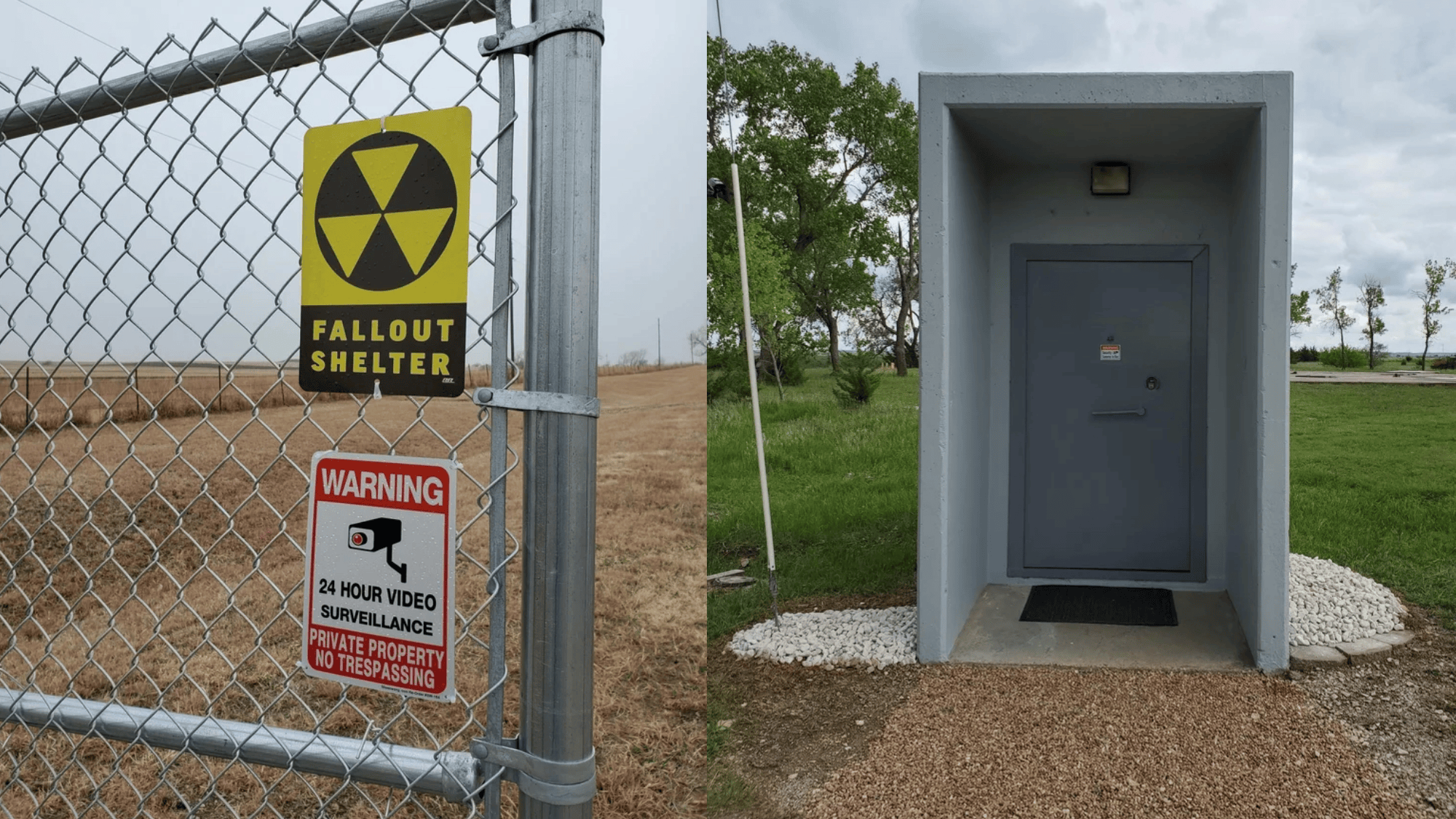
When it comes to buying a home, many people pay a premium for privacy. But one new listing Carlton, Kansas, takes the cake. For a measly $1.6 million, someone can call a converted Cold War Atlas intercontinental ballistic missile (ICBM) silo home. Though the site sits on 18.2 acres of rural grassland, nearly the entire complex is hidden underground, save a single ominous steel door. The silo trenches down 182 feet, eventually leading to a two floor launch control center retrofitted to fit the modern world.
Surrounding the entire complex are 600 tons of steel rebar and six-foot-thick epoxy concrete walls meant to withstand nuclear blasts and 500 mph winds. The listing’s website calls it quite possibly “one of the most hardened structures ever built by man.” Once the staging ground for nuclear Armageddon, the indoor launch control center has been converted into a 2,200-square-foot, two bedroom, two bath, home outfitted with generic modern appliances. To top it all off, it is caked in a fresh coat of muted millennial gray and white paint.
From launch control to living room
This particular missile silo was part of the United States Air Force’s Atlas F Intercontinental Ballistic Missile Program. The Atlas program began toward the end of World War II, and produced the country’s first operational ICBM. At its peak, from late 1962 to mid-1964, 132 of these Atlas sites were built around the country.
According to the National Park Service, north-central Kansas’ Atlas F was “by far the best” of the Atlas variants ever deployed. The missile stood 82 feet tall and carried a 4.5 megaton warhead, roughly 300 times as powerful as the 15-kiloton bomb dropped on Hiroshima. Aside from the Kansas location, there were 72 Atlas missile sites stationed on bases in Nebraska, Oklahoma, Texas, New Mexico, and New York.
Though advanced for its time, the Atlas was soon eclipsed by the even stronger Titan and then Minuteman systems.The majority of the Atlas systems were decommissioned in 1979, when President Richard Nixon signed the SALT (The Strategic Arms Limitation Talks) treaties. That meant dozens of the massive structures were left dormant. Many of those relics have taken on new lives as luxury apocalypse bunkers or gimmicky rentals.
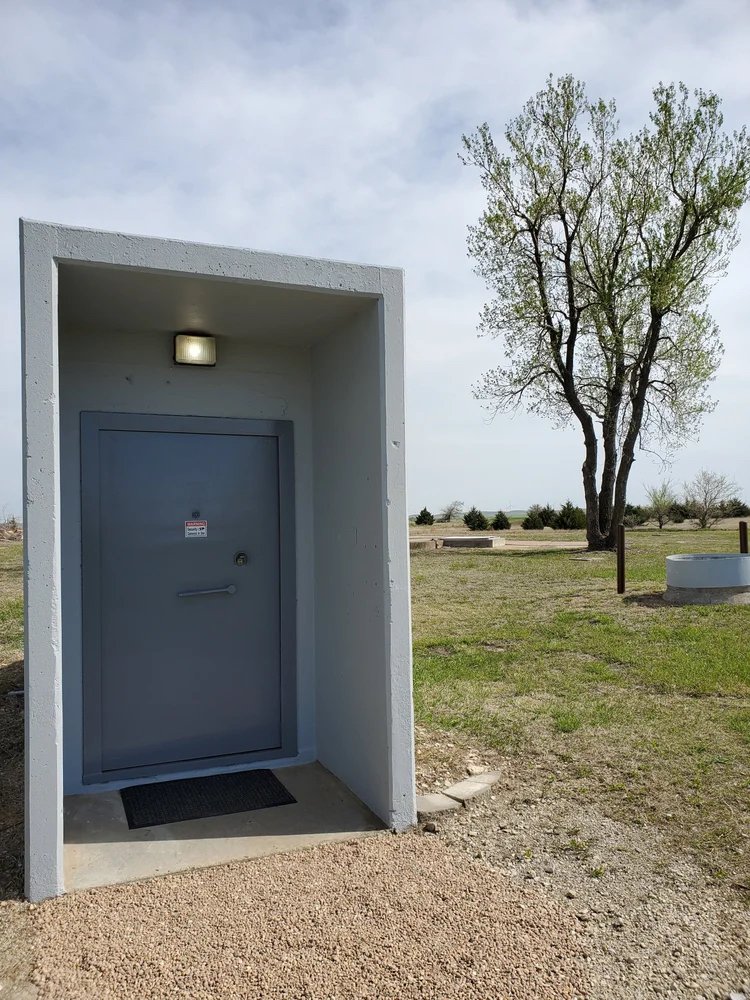
A buyer interested in viewing the North Star Missile Silo in Kansas would really have to know what they’re looking for. Getting there requires driving through a seemingly nondescript stretch of grassland before eventually coming up on a large gated fence with the iconic yellow “Fallout Shelter” signage on its side. Once inside, a surreal-looking steel door jutting out of the quiet countryside offers a clue to the shelter. It looks like a portal to some eerie, distant world, which, in some sense, it really is.
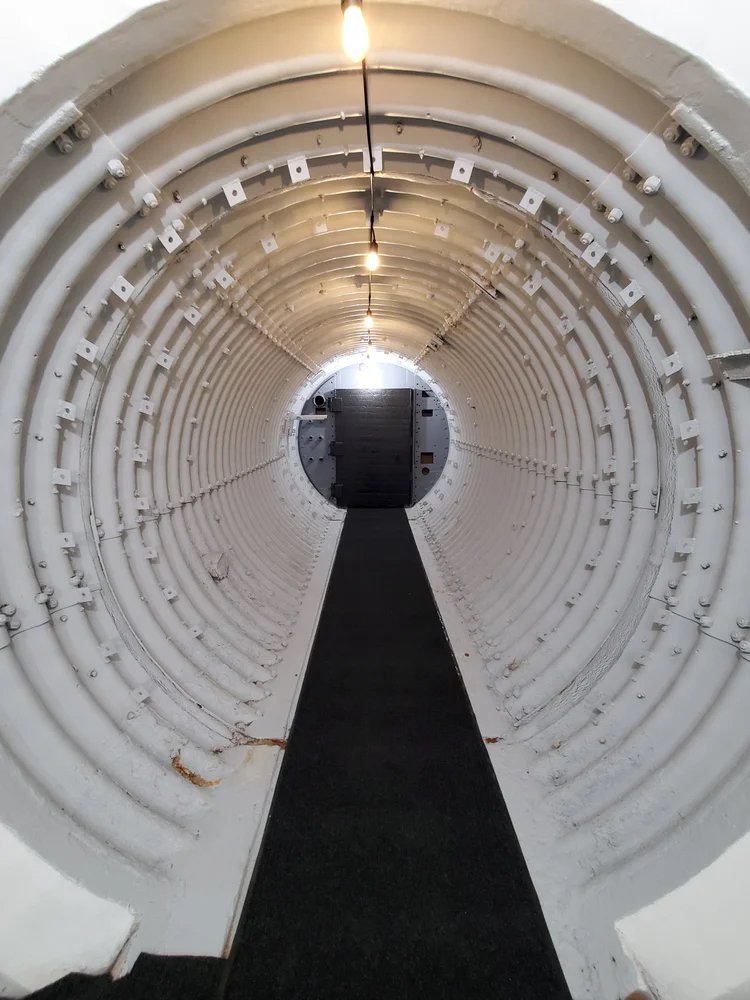
Once through the door, visitors descend a metal staircase that leads to a 40-foot tunnel. Photos show a narrow, claustrophobic walkway encased in a ring of white metal beams. At the end of the walkway stands a pair of imposing 7,000-pound blast doors. Home sweet home!
But the weirdest part about the retrofitted missile silo house is how remarkably normal much of it looks on the inside. The living quarters feature a floor plan with two bedrooms, two kitchens, and two bathrooms spread across two floors. Stainless steel appliances and a washer and dryer sit alongside standard wooden cabinets, none of which would look out of place in any hastily built rental unit across the country. The central area is laid out loft-style, showing off the control center’s massive support column. Visually, everything seems out of context. It evokes a slightly off not quite right AI-generated version of a house, or a modern millennial apartment that a visiting alien might describe to fellow interstellar travelers.
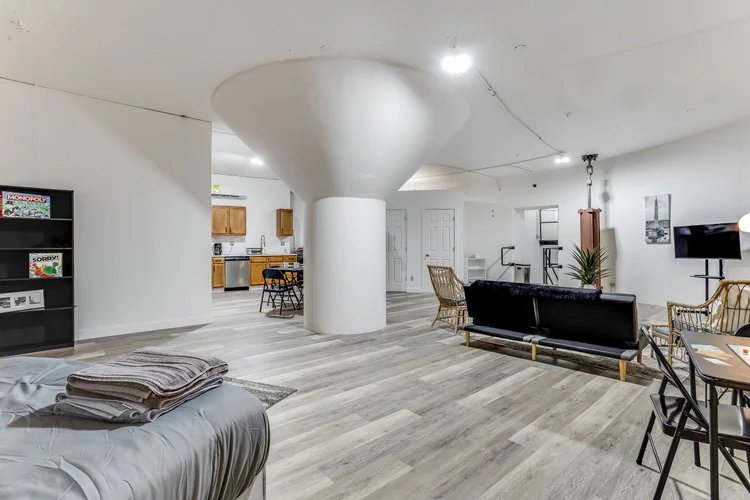
It’s an undeniably weird place to live full time, but not a half-bad survival bunker. The listing notes that it features two separate sewage systems (one above ground and one underground) humidity control, a cellphone phone signal repeater and a solar power powered seven foot chain link gate. It also has ample room for solar or wind energy installation, though the buyer would have to install those. It’s also not necessarily limited just to survival or end time doomers. Realtor.com notes that the silo was previously used as a rental, though he also said there was interest in using it as an off-the grid conference site or even a wedding venue.
A new era of fancy bunkers
Many Cold War relics have taken on new lives as quirky rental and luxury condominiums. Airbnb shows a number of silos available for short term stays in New Mexico, Kansas, and southern Texas. Some of these explicitly court “prepper” audiences with fat wallets. Possibly the best known of those is Survival Condo, located about 200 miles outside of Kansas City, That sprawling Atlas Missile Silo was converted into a 15 floor luxury condominium outfitted with a pet park, climbing walls, swimming pool (with a slide) library and a movie theater. The starting asking price for one of the units? Around $1 million in 2020 dollars.
And while Cold War bunkers are relics of the past, new interpretations of the structures are still being built. In the U.S. and abroad (New Zealand attracts a particular amount of attention) a subset of the world’s wealthiest elites are reportedly constructing their own apocalyptic lairs. Some of the best known examples of those billionaire bunker builders are in the tech industry with some racing to build advanced AI models that are increasingly putting them at odds with public opinion. Aside from escaping the pitchforks, the Kansas listing also notes one more potentially enticing incentive.
KioskNews shows a cleaned-up reading view extracted from the publisher’s page — the original always lives on their site, not ours.