Indonesian durian farmers stand to benefit from minister’s visit to China
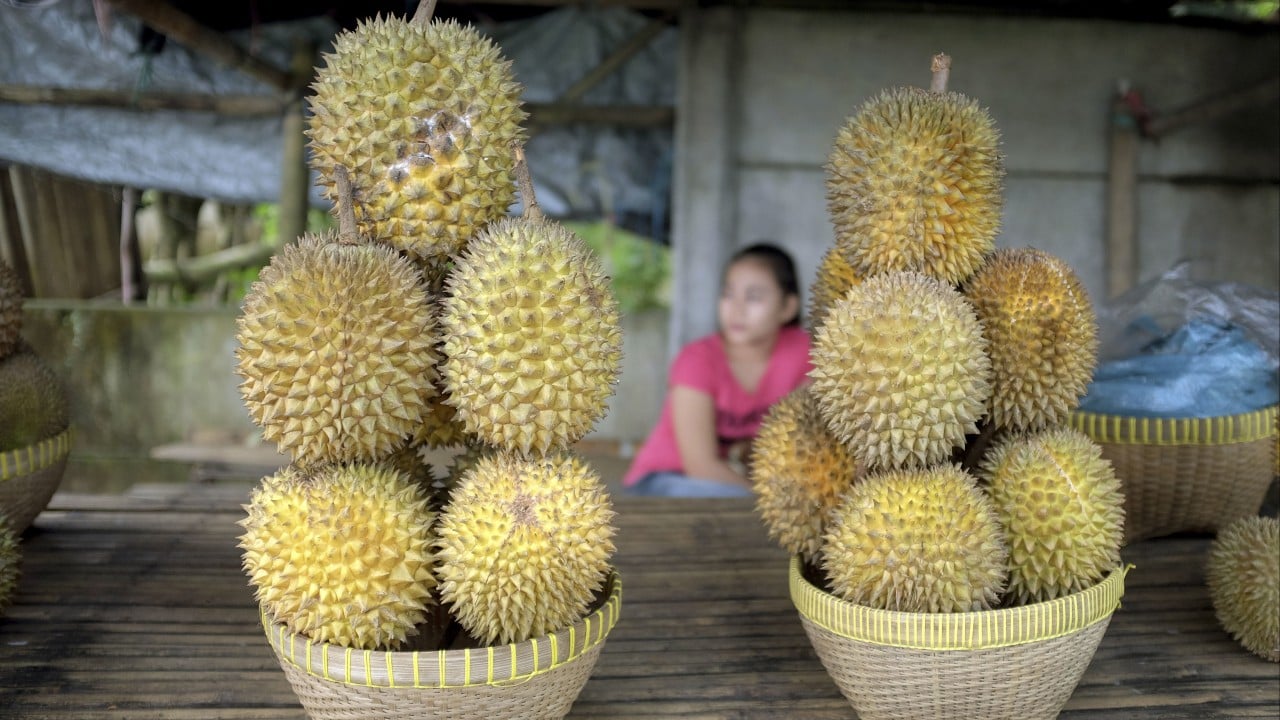
Indonesian officials, looking to alleviate poverty in their country and eyeing the rise of rural economies in China, are turning to Beijing for help that may include stoking the exports of a potentially lucrative durian crop.
Indonesian Transmigration Minister Muhammad Iftitah Sulaiman Suryanagara began a seven-day visit to China on Monday, with Indonesia’s state-owned Antara news agency saying consultations with Beijing’s Ministry of Agriculture and Rural Affairs, companies and academic institutions were on his agenda.
Before he left for his visit, the news agency quoted Suryanagara as saying that Indonesia wanted to “learn from China’s experience in building industry and developing rural economies”.
The minister has held talks in China this week about modern agriculture, technology transfers and industrialisation with a view towards creating jobs in Indonesia’s “transmigration” areas.
Transmigration is an Indonesian government programme that relocates poor or landless people from densely populated parts of the sprawling archipelago – home to 288 million people – to less populated ones, including rural areas. As of 2023, more than 7.2 million people had been relocated.
China’s experience integrating agriculture, infrastructure development, industrialisation and “workforce quality improvement” could serve as a “reference” for developing transmigration target areas, Antara quoted Suryanagara as saying.
Paramitaningrum, an international relations lecturer at Bina Nusantara University in Jakarta, said: “Focusing on developing rural areas is important for the government because it can improve the people’s living conditions and reduce poverty.”
China declared in 2021 it had eliminated extreme poverty after an eight-year campaign. President Xi Jinping attributed the campaign’s success to strategies focused on households and individuals, with tailored measures to lift productivity.
Tax cuts, government subsidies and transitions from farm work to higher-paid labour in factory, construction and service jobs have helped raise rural incomes in China.
The [Indonesian] government needs to put more attention on the fruit industry
Durians grown in the Indonesian province of Central Sulawesi – along with coconuts, sugar cane and coffee raised in other parts of the archipelago – could become a “focus of the exploration” between institutions in the two countries, Antara said.
China consumes about 90 per cent of the world’s durians, with the pungent spiky fruits often given as gifts on special occasions.
“The [Indonesian] government needs to put more attention on the fruit industry, set higher priorities for fruit production and help loosen investment regulations, especially for durians,” said Mohamad Reza Tirtawinata, director of the Nusantara Durian Foundation.
“I understand that investors from China are willing to invest in durian plantations in Indonesia, but there’s been no significant progress up to now.”
Investments must be made in plantations across Indonesia to sustain a year-round harvest for the China market, he said, and growers should avoid harvesting at the same time as durian export giants Thailand and Vietnam.
Suryanagara had meetings with four Chinese companies on Tuesday, including drone developer Shenzhen DJI Innovations and agricultural trading firm China National Township Enterprises.
China National Township Enterprises presented contracts to acquire a combined 14,000 tonnes (15,432 short tons) of Indonesian mung beans and seaweed worth a total of US$19.59 million, Antara reported.
KioskNews shows a cleaned-up reading view extracted from the publisher’s page — the original always lives on their site, not ours.