10 Gripping Detective Shows Where Every Episode Is a Puzzle


Liam Gaughan is a film and TV writer at Collider. He has been writing film reviews and news coverage for ten years. Between relentlessly adding new titles to his watchlist and attending as many screenings as he can, Liam is always watching new movies and television shows.
In addition to reviewing, writing, and commentating on both new and old releases, Liam has interviewed talent such as Mark Wahlberg, Jesse Plemons, Sam Mendes, Billy Eichner, Dylan O'Brien, Luke Wilson, and B.J. Novak. Liam aims to get his spec scripts produced and currently writes short films and stage plays. He lives in Allentown, PA.
Audiences love being able to follow along with mysteries on the small screen, and the best way to ensure that they aren’t ahead of the story being told is to tell it from the perspective of someone who is well-versed in solving cases. Drama shows tend to work best when their characters are somewhat competent, and thus it should come as no surprise that detective shows have been popular since the inception of the medium.
There is no one right way to do a detective show, as they can range from something as comedic as The Man on the Inside to as high-concept as House. The most important aspect is that the character is someone who the audience buys into being intelligent enough to solve a puzzling case, and that the mystery at the heart of the series is one that can be solved. The strongest detective shows turn that basic formula into a constant mental challenge, giving audiences new clues to piece together in nearly every episode.
10 'True Detective' (2014–2024)
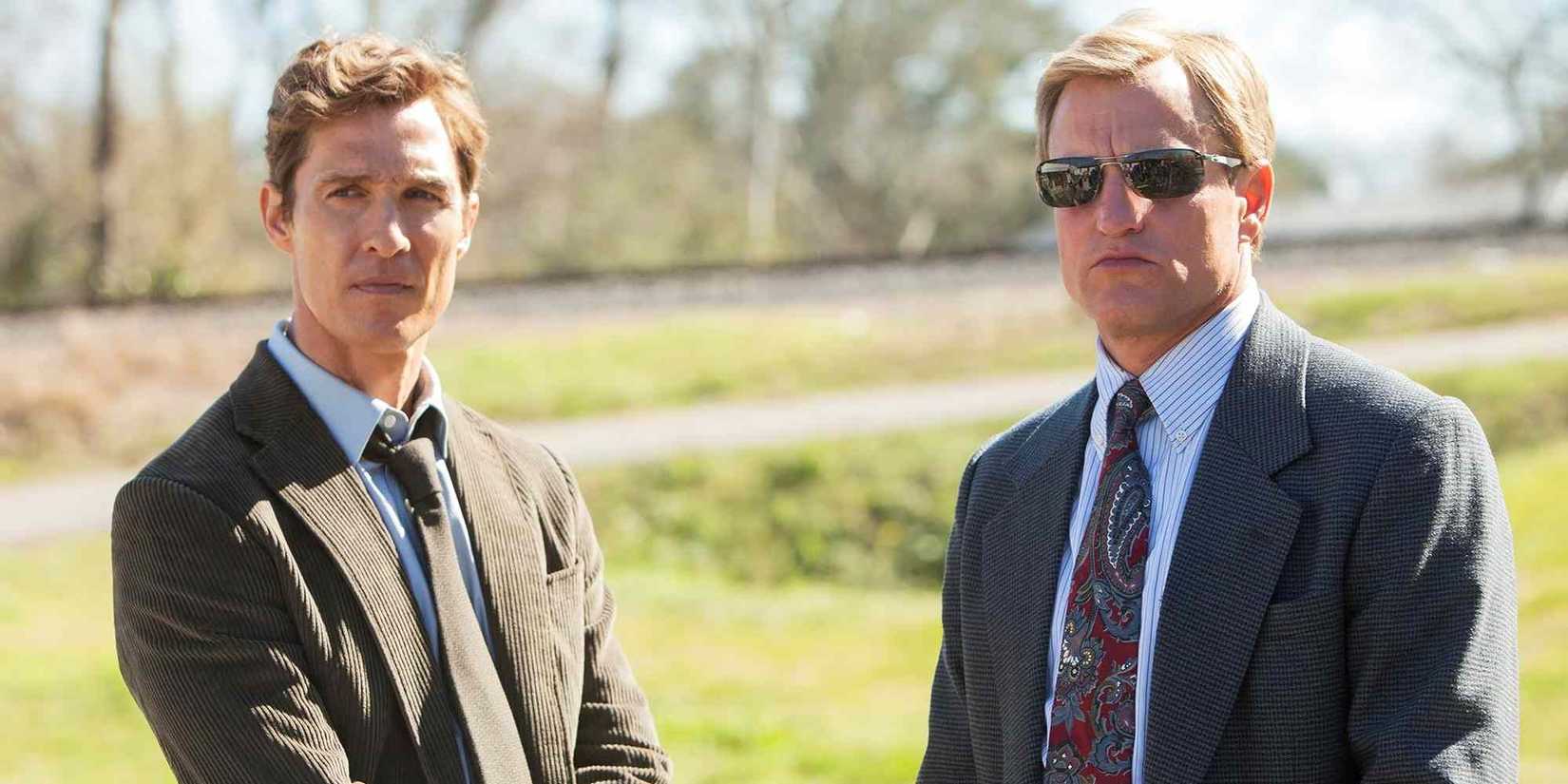
True Detective was a radical reinvention of what a detective series could be because it took a prestige angle to a subgenre that had traditionally been used as the subject of procedurals. It was a major deal in the history of HBO because it marked one of the most significant occasions of A-list movie stars working within the small screen; Matthew McConaughey and Woody Harrelson are two very consistent actors who have appeared in a number of great films, but the first season of True Detective might be the best thing that either of them has ever done.
What keeps True Detective so gripping is how each episode adds another layer to its central mystery, especially in Season 1. The first season of True Detective is a masterpiece that includes some of the most inventive filmmaking ever seen on TV, particularly within the fourth episode’s now famous tracking shot, but the third season is also worth checking out because of the great performance from Mahershela Ali.
9 'Mindhunter' (2017–2019)

Mindhunter is a true hidden gem that sadly was cancelled after the end of its second season, but should be a priority watch for anyone who loves David Fincher’s detective films like Se7en and The Girl With The Dragon Tattoo. Loosely based on the true story of FBI Agent John Douglas, who inspired the character of Will Graham in the Thomas Harris novels, Mindhunter follows Agent Holden Ford (Jonathan Groff) and his partner Bill Tench (Holt McCallany) as they interview the nation’s most ruthless serial killers while helping local law enforcement officers solve crimes that have been deemed inexplicable.
Mindhunter has a tremendous sense of style and succeeds at exploring the fine line between obsession and psychopathy, offering fascinating new wrinkles within some of the most infamous true crime cases ever, such as the “Son of Sam” child killings in Atlanta. Mindhunter makes every interview feel like a psychological puzzle in which seemingly minor details can reveal how a killer thinks.
8 'Hannibal' (2013–2015)

Hannibal was a daring series that took on a tremendous amount of expectations because it was drawing from the same source material as Manhunter and The Silence of the Lambs, both of which had already been adapted into acclaimed films. Thankfully, Hannibal took an interesting new stab at the cyclical relationship between Agent Graham (Hugh Dancy) and Dr. Hannibal Lecter (Mads Mikkelsen) by exploring a chaste obsession as they find themselves working together to investigate other killers as the secrets hang in the air.
Hannibal is one of the boldest and most original shows to ever air on a network, as it is downright astonishing that a series with such existential themes and arthouse flourish was able to go up on a network like NBC that had never truly been known for having prestige projects that came from auteur showrunners. Few detective shows are as deliberately cryptic as Hannibal, where symbolism and carefully hidden motives make every episode feel like something that has to be decoded.
7 'Mare of Easttown' (2021)
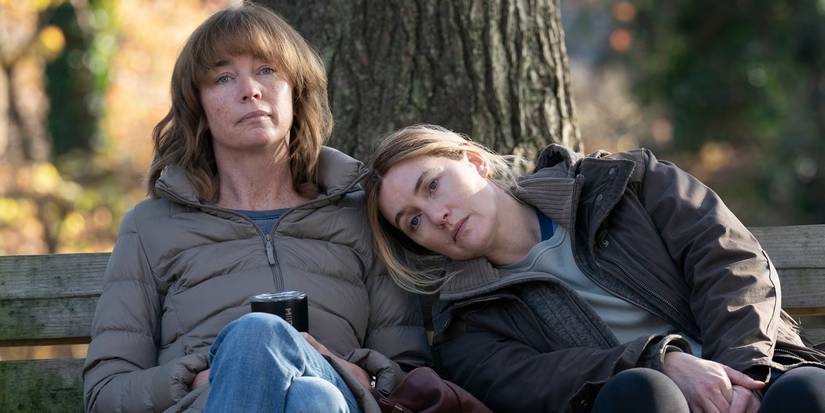
Mare of Easttown is a perfect crime miniseries that features one of Kate Winslet’s best performances, but the show is about much more than just another gritty detective out to solve a brutal murder. It is instead the story of how a community responds to a shattering tragedy that shakes it to its core, causing secrets to be released, relationships to be questioned, and paranoia that causes people to reveal their true selves.
Mare of Easttown is daring in its storytelling with shocking twists and turns along the way, but it also ends on a poignant note that ties in a powerful theme of forgiveness and fate. With almost every resident carrying a secret, Mare of Easttown keeps rearranging its suspect pool and turning each new revelation into another piece of a much larger puzzle.
6 'Luther' (2010–2019)

Luther was proof that Idris Elba is one of the best actors of his generation, and it’s easy to see why so many fans wanted him to play James Bond after catching up with the series. It’s not only a great character study about a troubled, yet brilliant investigator who becomes involved with all sorts of dangerous killers, but a show that reinvented what the “British mystery” could be by taking the genre in a far grittier direction.
Luther is a show so satisfying that each episode approaches a cinematic level of complexity and depth. Each investigation pushes Luther into a battle of deduction with criminals who are often several moves ahead, giving the series the tense rhythm of a constantly shifting puzzle. It's no surprise that it has turned into a franchise. Although the show wrapped up with a satisfying Season 5, Elba returned to reprise his role in the spinoff film Luther: The Fallen Sun, which featured Andy Serkis as a new serial killer.
Collider Exclusive · Villain Personality Quiz Which Criminal Mastermind Would Be Your Nemesis? Lecter · Joker · Moriarty · Chigurh
Four of the finest criminal minds ever put on screen. One of them would look at you and see something worth their time. Eight questions decide which one comes for you, why they picked you, and what they would want when they arrived.
🍷Lecter
🃏Joker
♟️Moriarty
🪙Chigurh
01
What would a criminal mastermind notice about you first? Great villains choose their opponents carefully. Something about you got their attention.
02
How do they make first contact? The introduction tells you everything about what is coming next.
03
What do you actually believe about right and wrong? Every nemesis is really an argument about the thing you believe most.
04
What finally gets under your skin? Everybody has a pressure point. Finding yours is the whole plan.
05
They have made their move. How do you fight back? This is the part of the film where the audience finds out who you are.
06
What would they use against you? A good villain never brings a weapon you have not already handed them.
07
What do they actually want from you? The money is never the point. Something else always is.
08
How does it end between the two of you? Eight questions in, this is the one that decides who comes for you.
The Case File Is Complete Your Nemesis Is…
Four criminal masterminds. One of them was always going to be yours. Here is who comes for you, why they picked you out of everyone available, and what they want from the encounter.
Hannibal Lecter
Your nemesis does not want to beat you. He wants to know you completely, and he is patient enough to wait for it. The frightening part is how good the conversation is.
- Lecter is the most dangerous kind of opponent: the one who finds you interesting. He never raises his voice, because he has never needed to.
- You keep a great deal to yourself and you are careful about what you show. That reserve is exactly the door he would knock on.
- The films understood something other thrillers missed. The horror is not the violence. It is being perfectly understood by the wrong person.
- He would be unfailingly polite about all of it. That is the worst part.
The Joker
Your nemesis is not after money, territory or revenge. He is after a demonstration, and you are the person he has chosen to prove his point on.
- The Joker only picks opponents who believe in something. Your decency is not a defence against him. It is the entire reason he showed up.
- He has no plan you can predict and nothing you can take away, which removes every tool you would normally reach for.
- His whole argument is that you are one bad day away from being him, and you would spend the rest of your life proving him wrong.
- He would call it a magic trick. You would call it the worst night of your life.
Moriarty
Your nemesis respects you, which sounds flattering until you work out what it means. He chose you because nobody else was worth his time.
- Moriarty is the original criminal mastermind, the template every later one borrows from: a mind the equal of the hero's, pointed the wrong way.
- You enjoy being the cleverest person in the room. He is counting on exactly that, and he has already built the room.
- This is the rare nemesis who would be genuinely disappointed if you lost badly. He needs the game to be worth playing.
- It ends the way these things always end. Two people, one problem, and only one way down.
Anton Chigurh
Your nemesis has no personal interest in you whatsoever, and that is precisely what makes him unsurvivable. You are not a rival. You are a stop on the way.
- Chigurh does not negotiate, gloat or explain. He arrives, he asks one question, and the answer was decided long before you opened your mouth.
- You trust yourself to handle things. He is the one problem in the world that has no interest in how capable you are.
- No Country for Old Men rewrote the screen villain by removing the thing audiences quietly rely on: the sense that talking might work.
- Call it. He will wait.
5 'Twin Peaks' (1990–2017)
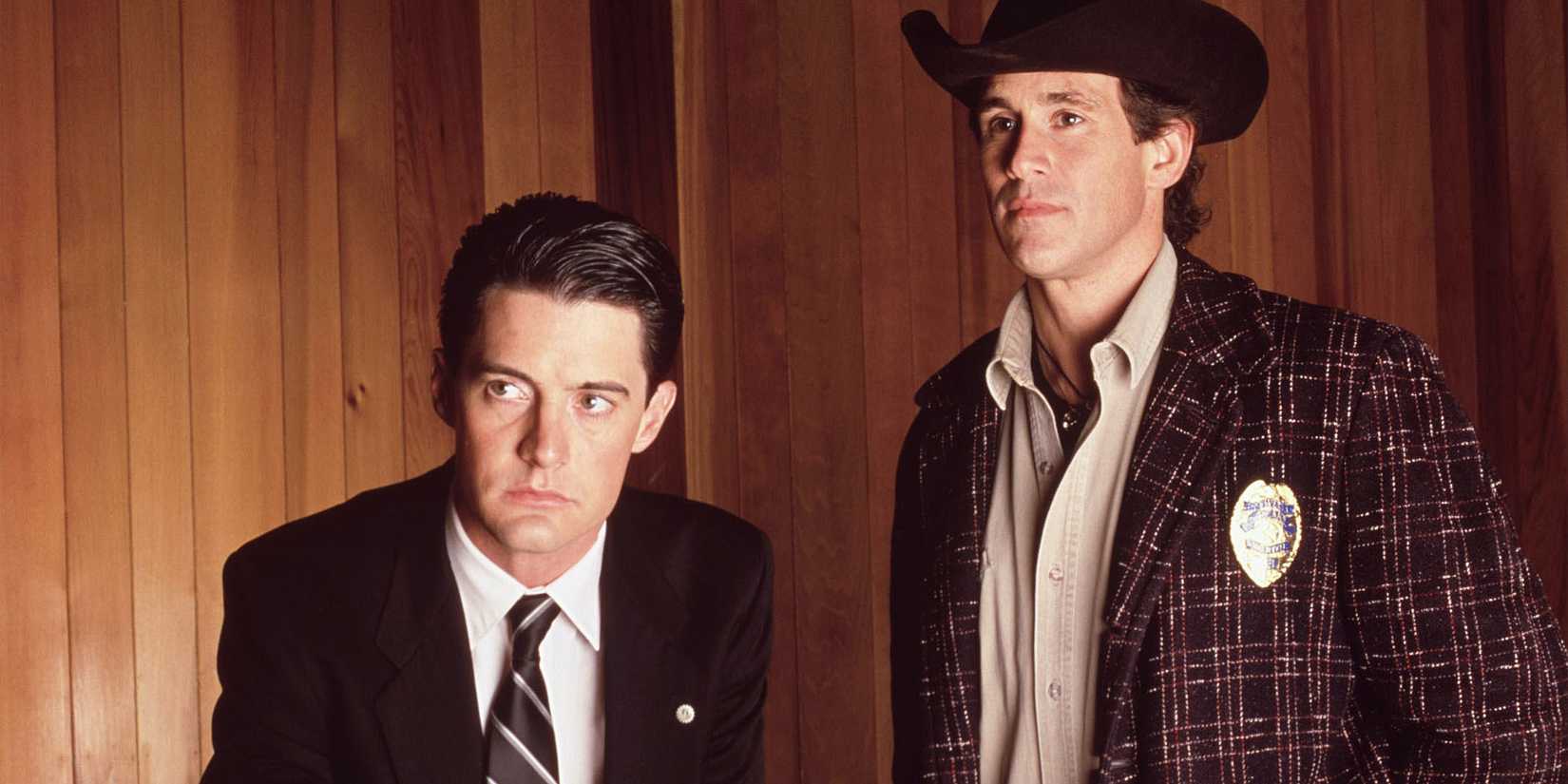
Twin Peaks is the single most influential show of all time because David Lynch and Mark Frost created the first true “watercooler” series that heightened in popularity because audiences had been tuning in each week to see the next clue in the case of “who killed Laura Palmer (Sheryl Lee).” Although the mystery itself makes for one of the most puzzling in all of television, Lynch was making a larger point about the ease at which both media and journalism look past the plight of the victim and who they impacted in a chase to “solve” a crime that can’t be reversed.
In Twin Peaks, every clue seems to open the door to another mystery. The show evolves from a crime series into one of the scariest horror shows ever made, and it was 26 years after being unjustly cancelled that Lynch returned to make a third season that stands as one of the most definitive texts of the 21st century.
4 'Sherlock' (2010–2017)

Sherlock was a creative new take on Arthur Conan Doyle’s Sherlock Holmes stories that was set in the modern day, with Benedict Cumberbatch stepping in to play the titular detective and Martin Freeman giving a breakthrough dramatic performance as his trusted assistant Dr. John Watson. Despite being reframed within the modern day, Sherlock is faithful to many of the original stories, adapting several of them like “A Scandal in Belgravia” and “The Hounds of Baskerville.”
Sherlock embraces the puzzle-box side of detective fiction more directly than most shows. It may not have been consistent in quality throughout, but it did feature one of the best television villains of the 21st century with its new take on Moriarty, portrayed by Andrew Scott in a bold new version that set the standard for what Holmes’ archnemesis would look like. Even at its weakest points, Sherlock was entertaining because of the chemistry between its two stars.
3 'The Wire' (2002–2008)

The Wire is one of the most important shows of the 21st century because it actually took a realistic approach to what contemporary detective work looked like by examining the fundamental flaws within America’s justice and law enforcement offices. Creator and showrunner David Simon had spent over a decade as a journalist working on the crime beat in Baltimore before he started working on The Wire, and his real experiences informed many of the cases and characters that would end up appearing in the show.
The Wire has one of the most impressive ensemble casts of any crime show and touches upon multiple areas of interest, but the emotional core of the series has always been within the budding relationship between the detectives McNulty (Dominic West) and Bunk (Wendell Pierce), who desperately try to provide some modicum of legitimate justice. Instead of relying on tidy weekly mysteries, The Wire turns police work into a long-form puzzle built from small discoveries that only gain meaning over time.
2 'The Prisoner' (1967–1968)

The Prisoner was a groundbreaking show that was decades ahead of its time, and was cited by Christopher Nolan as being one of his all-time favorites. The series stars Patrick McGoohan as a secret agent who is fleeing his organization with valuable information, only to be trapped within a mysterious community that is completely walled off from the rest of society.
The Prisoner was an example of challenging, Kafkaesque storytelling told on the small screen that reflected new capabilities within the medium, and it has aged very well now that it can be studied for its attention to detail and allusions to philosophical concepts. The show constantly withholds crucial information about the Village and its inhabitants, transforming nearly every episode into a new riddle. It is also one of the rare television shows to gain credibility among high-profile film scholars as being a legitimately inventive work of cinema, as it was recently restored within the Criterion Collection with new background and behind-the-scenes material.
1 'Top of the Lake' (2013–2017)

Top of the Lake was a feminist slant on the detective thriller concept from Jane Campion, the Academy Award-winning filmmaker. The series explores a deeply personal disappearance case, with Elisabeth Moss taking on a lead role that is one of the finest of her career. Top of the Lake is purposefully discomforting, as it deals with taboo subjects and presents its characters in an authentic way that does not have the “coziness” that some audiences look for when they are watching a procedural mystery. Its mystery unfolds through fragmented testimony, requiring audiences to gradually assemble the truth alongside Robin Griffin.
It is nonetheless a terrific achievement in storytelling and execution that offers a welcome alternative to a male-dominated genre, and the sequel series Top of the Lake: China Girls offers such a definitive conclusion to this specific crime story that there is no concern about audiences missing out on the chance to get a Season 3.
KioskNews shows a cleaned-up reading view extracted from the publisher’s page — the original always lives on their site, not ours.