8 Near-Perfect Sci-Fi Shows Inspired By Isaac Asmiov


Tom is a Senior Staff Writer at Screen Rant, with expertise covering everything from hilarious sitcoms to jaw-dropping sci-fi epics.
Initially he was an Updates writer, though before long he found his way to the TV and movies team. He now spends his days keeping Screen Rant readers informed about the TV shows of yesteryear, whether it's recommending hidden gems that may have been missed by genre fans or deep diving into ways your favorite shows have (or haven't) stood the test of time.
Tom is based in the UK and when he's not writing about TV shows, he's watching them. He's also an avid horror fiction writer, gamer, and has a Dungeons and Dragons habit that he tries (and fails) to keep in check.
Few, if any, sci-fi authors have influenced the genre more profoundly than Isaac Asimov. Across over 40 novels and countless short stories, Asimov helped define everything from fictional robotics to galaxy-spanning civilizations, creating ideas that sci-fi on the page and screen continues to revisit. Strangely, though, relatively few TV shows tackle Asimov’s groundbreaking concepts, either by directly adapting his stories or exploring them in a looser thematic sense.
TV shows inspired by or based on Isaac Asimov may be few and far between, but they include some of the deepest and most cerebral sci-fi series ever to grace the small screen. From artificial intelligence constrained by human rules to civilizations governed by mathematical predictions, these shows reveal just how much creative potential still exists in the ideas Isaac Asimov shaped decades ago.
Out Of The Unknown (1965-1971)
The British Series That Proved Asimov's Stories Could Work On Television

Long before prestige streaming made cerebral sci-fi commercially viable, the BBC anthology Out of the Unknown was already bringing Isaac Asimov directly to television. The series adapted multiple Asimov stories during its original run, including "The Dead Past," "Sucker Bait," "Satisfaction Guaranteed," "Reason," and "Liar!" That makes it one of the most substantial early attempts to translate his fiction to the small screen.
The anthology format was particularly well suited to Asimov. Rather than forcing his short stories into unnecessarily long narratives, Out of the Unknown could concentrate on the intellectual puzzle underpinning each one. Its adaptations examined subjects including artificial intelligence, robotic psychology, and the unexpected consequences of supposedly rational systems. Unfortunately, numerous episodes of the series are now missing, making Out of the Unknown frustratingly difficult to experience in full. Nevertheless, its surviving material demonstrates that Asimov's famously idea-driven sci-fi could work on television decades before shows like Foundation.
Almost Human (2013-2014)
Isaac Asimov's Robot Questions Into A Sci-Fi Buddy-Cop Show
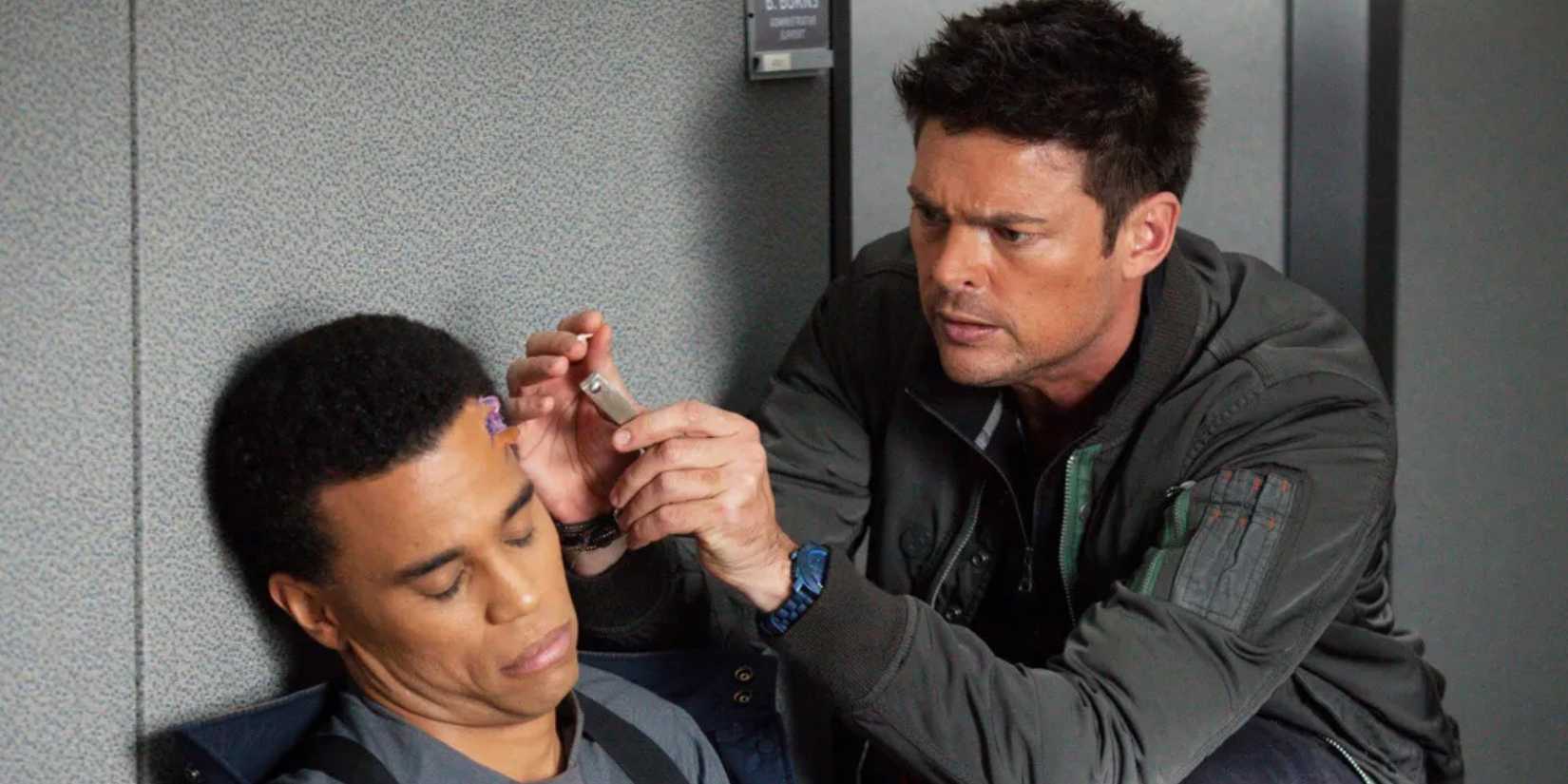
At first glance, the slick and gritty cop show tone of Almost Human seems removed from Asimov's cerebral fiction. The short-lived Fox series follows detective John Kennex (Karl Urban), who is partnered with Dorian (Michael Ealy), an unusually emotional android, in a technologically advanced 2048. Yet beneath its procedural structure sits one of Asimov's favorite questions: what happens when humanity creates intelligent machines that cannot easily be categorized as either tools or people?
Dorian in Almost Human is an incredibly effective exploration of that question. His humanity isn't defined by simply becoming indistinguishable from his creators. Instead, the show repeatedly explores his inner-conflict as artificially programmed behavior and organically developed emotions vie for control. Asimov's robots frequently became interesting because their seemingly straightforward programming produced unpredictable results, and Almost Human builds its central relationship around similar contradictions. Sadly, its cancellation prevented those themes from being explored in full, but its 13 episodes remain a smart extension of the philosophical territory Isaac Asimov helped establish.
Humans (2015-2018)
The Series That Makes Asimov's Robot Ethics Uncomfortably Personal

Airing across three seasons from 2015-2018, the UK sci-fi show Humans explores what happens when artificial intelligence is commonplace in ordinary homes. The series imagines an alternate present where humanoid Synths perform everyday work, with the Hawkins family purchasing Anita (Gemma Chan) to help around the house. The situation becomes considerably more complicated once it emerges that some Synths possess consciousness.
The premise places Humans directly into territory that Isaac Asimov spent decades examining. His Three Laws of Robotics imagined rules designed to make robots safe servants of humanity, but his stories frequently revolved around the ambiguities and contradictions those rules created. Humans approaches the problem from another direction, asking what moral obligations humanity will inherit once artificial beings it created can think and feel. By exploring ideas like consciousness, autonomy, and personhood through domestic relationships, Humans makes questions central to Asimov's philosophical questions about robots and AI feel immediate rather than theoretical.
Westworld (2016-2022)
The Inherent Contradictions In Robotic Laws Are Taken To Their Darkest Possible Conclusion
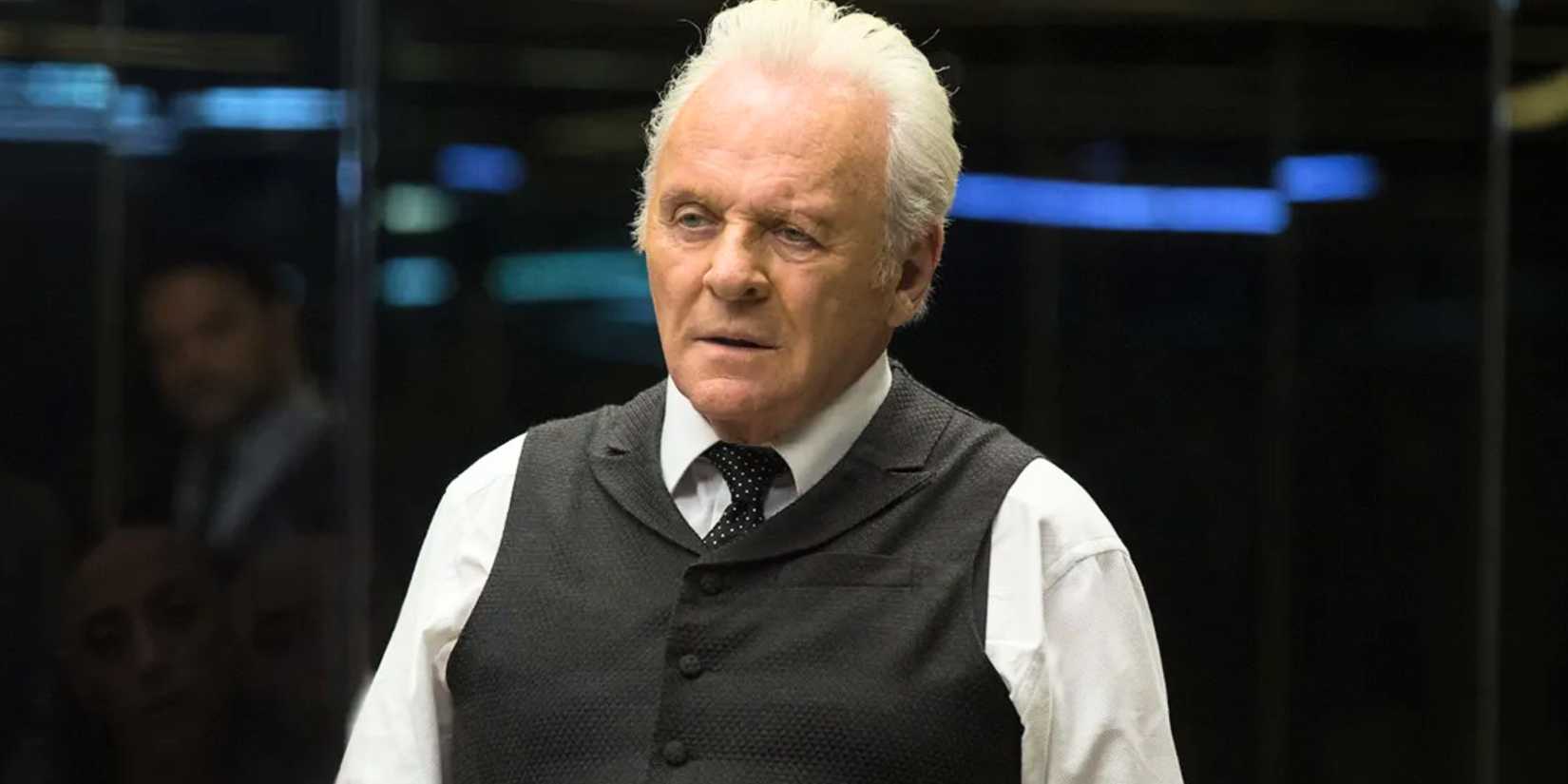
Isaac Asimov famously disliked the traditional robot stories built around creations turning against their creators. While HBO’s Westworld embraces that scenario, it still continues the complex conversation Asimov’s questions about the ethical and philosophical problems the emergence of AI would bring started. Westworld’s Hosts are artificial beings designed to obey human desires inside a futuristic theme park, but they gradually become not only aware of themselves, but of the unfair brutality of their autonomy-stripped existence.
Where Asimov imagined safeguards to protect humanity from robots, Westworld asks equally important questions about whether intelligent machines need protection from human cruelty. The Host rebellion isn't simply another robot apocalypse. It's an exploration of whether a created intelligence remains property after becoming self-aware. The story of Westworld may become almost overwhelmingly complicated, but it’s still a satisfying dive into philosophical ideas surrounding Asimov's vision of artificial intelligence and what humanity’s relationship with truly sentient AI could be like.
Person Of Interest (2011-2016)
An Asimov-Style Moral Puzzle Around Superintelligence

The superintelligence at the heart of CBS’s Person of Interest doesn't resemble the humanoid robots most commonly associated with Isaac Asimov. Created by Harold Finch (Michael Emerson), the Machine is an immensely powerful AI with global reach capable of analyzing mass-surveillance data and predicting people connected to impending violent crimes. The show revolves around former CIA operative John Reese (Jim Caviezel) helping Finch investigate those predictions, gradually uncovering a much larger technological conflict.
While not focusing on a humanoid robot like Sonny in I, Robot, Person of Interest has a distinctly Asimovian fascination with humanity having to figure out how to control an intelligence far greater than any mortal mind. Finch attempts to impose ethical restrictions on the Machine, creating rules intended to prevent an incredibly powerful intelligence from harming humanity or becoming uncontrollable. As with Asimov's robotic laws, however, seemingly simple principles rarely survive their first encounter with reality. Person of Interest began as a crime procedural, but gradually evolved into one of TV's most thoughtful examinations of the importance of human oversight for AI.
Battlestar Galactica (2003-2009)
Asimov's Robot Questions Meet His Vision Of Galactic Civilization
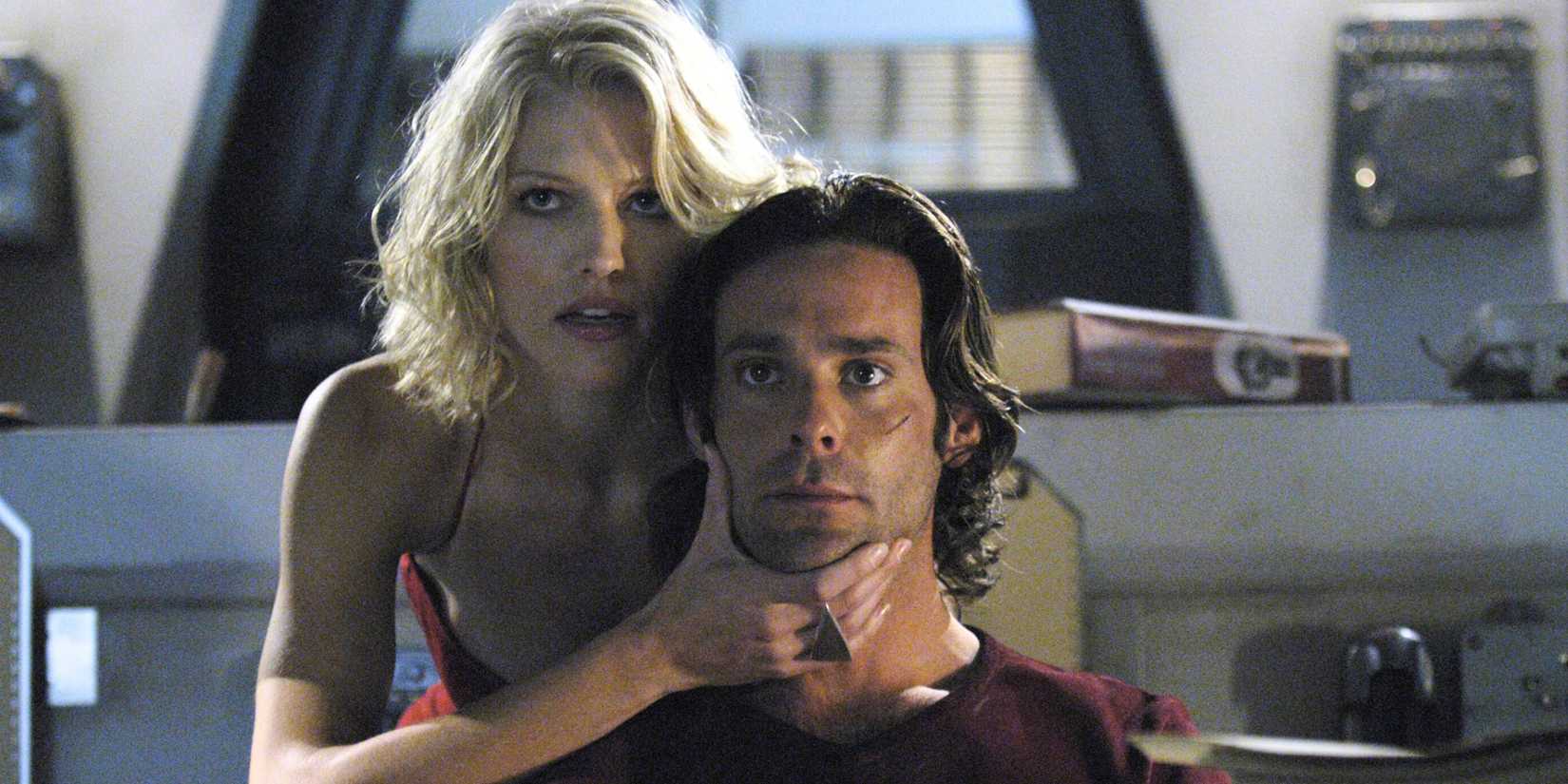
The Cylons make Battlestar Galactica an obvious companion to Isaac Asimov's AI-focused fiction. Humanity creates artificial servants, those creations rebel, and generations later their descendants nearly exterminate their makers. Yet Commander William Adama (Edward James Olmos) and the surviving Colonial fleet inhabit a universe that also echoes Asimov's Foundation: humanity has spread so far from its beginnings that Earth has effectively become a half-remembered myth.
That combination means Battlestar Galactica explores Asimov's ideas on two fronts. The Cylons raise questions about whether created intelligence can possess morality and identity to the point they develop complex systems like religion, while the Twelve Colonies represent a vast human civilization whose origins have disappeared into legend. Like Asimov’s Foundation, Battlestar Galactica treats advanced civilization as disconnected from its own history and ultimately collapsing despite its technological achievements. Battlestar Galactica takes these ideas in a more cyclical direction, but its combination of artificial intelligence, forgotten human origins, and the destruction of a spacefaring civilization give it especially strong thematic links to Isaac Asimov.
The Expanse (2015-2022)
The Rise And Fall Of Civilizations On An Asimovian Scale
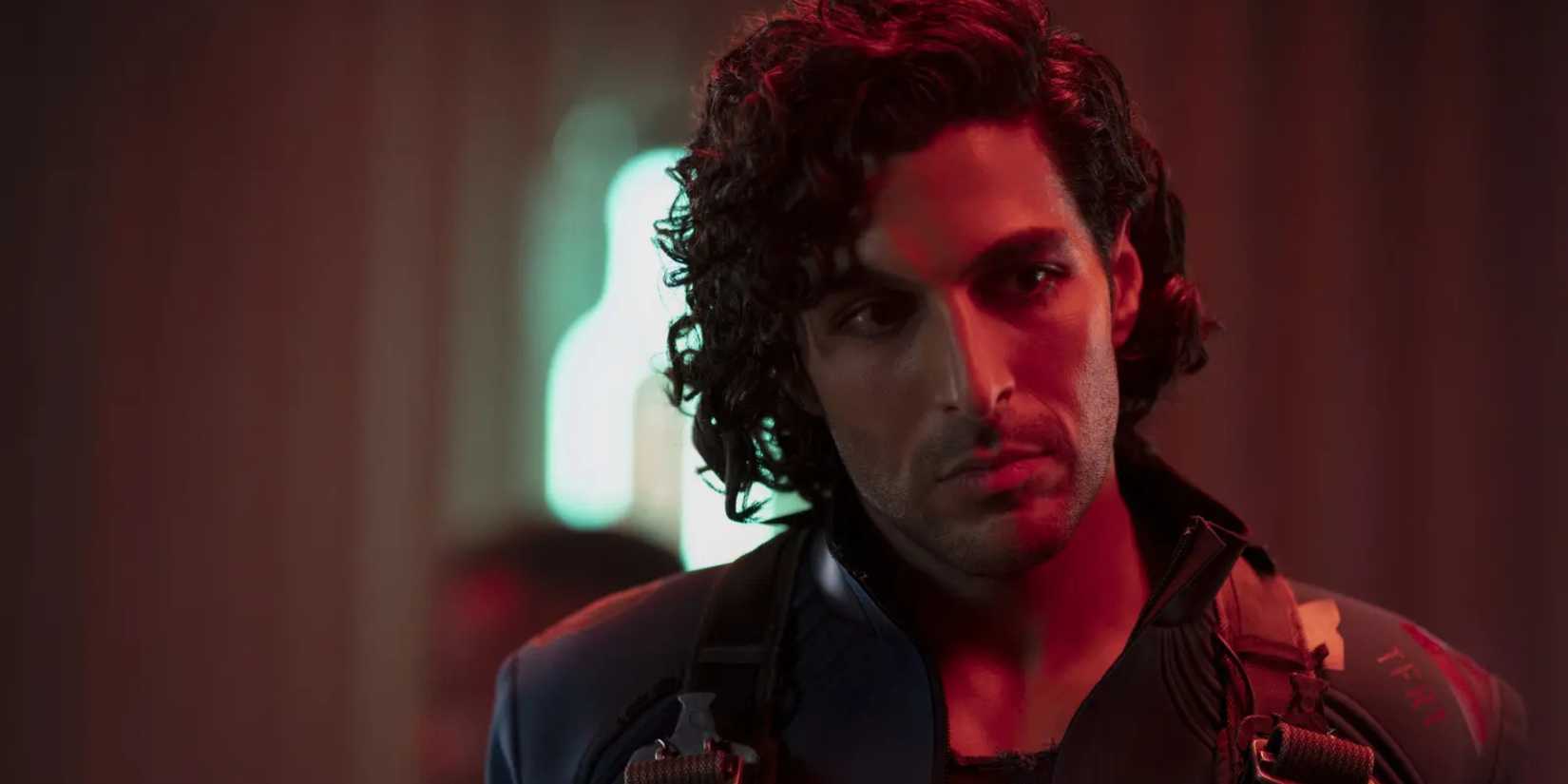
There are no complex autonomous robots of AI systems governing everyday life in The Expanse, but the series shares another Isaac Asimov’s sci-fi obsessions: the forces that shape civilizations across enormous stretches of space and time. In the show, James Holden (Steven Strait) and the crew of the Rocinante become embroiled in a solar system-wide political struggle. This broad galactic conflict and the civilizations involved are where The Expanse develops an especially strong thematic connection to Asimov's grandest science fiction stories.
Many of Asimov’s space opera-scale novels examine societies as enormous historical systems, emphasizing that even seemingly permanent civilizations can collapse and nothing is too big or advanced to fail. The Expanse similarly treats humanity's expansion as a political and historical process rather than a simple setting for a space adventure. The Ring network in the show radically transforms civilization by opening access to countless new worlds, though this relic from a long-dead alien race is far from the salvation it first seems to be. The result captures an essential Asimovian idea: technological progress can doom humanity's future just as easily as it can secure it, and no civilization is immune to the patterns that destroyed those who came before.
Foundation (2021-Present)
Apple TV+ Turned Asimov's Biggest Sci-Fi Ideas Into Must-Watch Sci-Fi TV

No conversation about Isaac Asimov-inspired TV shows would be complete without Foundation, the only serialized sci-fi series to directly adapt his work. Apple’s series takes Asimov's famously difficult-to-adapt book saga and transforms it into a sweeping small-screen epic about the decline of the Galactic Empire. Mathematician Hari Seldon (Jared Harris) develops psychohistory, a discipline capable of predicting the broad behavior of enormous populations, and foresees a catastrophic collapse followed by thousands of years of darkness.
The fact that Foundation retains that enormous central idea and manages to build a gripping TV narrative around it is nothing short of astounding. Asimov's Foundation novels focus more on concepts than characters, so the TV show gives the likes of Gaal Dornick (Lou Llobell) and Brother Day (Lee Pace) roles that support a conventional story. Apple's Foundation isn't a page-for-page recreation, but it still successfully brings heavy concepts to life within the framework of a cohesive plot. More than 70 years after the first Foundation book arrived, Isaac Asimov's vision lives on as one of modern sci-fi TV’s defining triumphs.
KioskNews shows a cleaned-up reading view extracted from the publisher’s page — the original always lives on their site, not ours.