Nuclear plant restart review advances
COURSE CHANGE: The shift comes amid pressure from chipmakers for stable, low-carbon electricity. Officials said Ma-anshan could be restarted as early as 2028
Taiwan has approved a preliminary plan to restart an idled atomic power plant, marking a reversal of the ruling party’s anti-nuclear stance as the nation pursues greater energy security.
The Nuclear Safety Commission has cleared its review of an initial proposal to restart the Ma-anshan Nuclear Power Plant, it said in a statement on Thursday. Taiwan Power Co (台電) will still need to carry out follow-up work including safety inspections, before submitting another report on implementation for review, the commission said.
The earliest the plant could resume operations is 2028, according to previous reports in local media, citing Minister of Economic Affairs Kung Ming-hsin (龔明鑫).
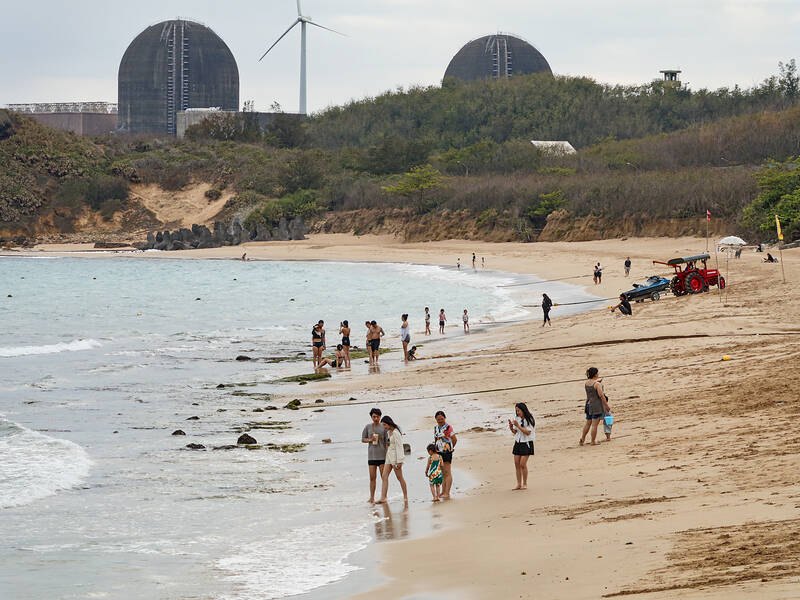
The Ma-anshan Nuclear Power Plant in Pingtung County’s Hengchun Township, is pictured on March 24.
Photo: CNA
Ma-anshan was the last of three Taiwanese nuclear plants to cease operations when its 40-year operating license expired in May last year. By moving to restart the facility, Taiwan is walking back a decision taken a decade ago to phase out nuclear power generation.
The rethink mirrors a wider revival of nuclear power globally, as governments shed much of the caution that followed the 2011 Fukushima disaster due to the need to reduce emissions while also dealing with surging electricity demand from data centers. Japan is restarting reactors, while China, South Korea, India and Bangladesh are among Asian countries building new atomic plants.
The war in the Middle East has also prompted Asian governments to try and reduce their dependence on imported fossil fuels, with prolonged supply disruptions driving natural gas prices to the highest in years and draining public finances.
In Taiwan — home to some of the world’s biggest chipmakers — the government has softened its stance on nuclear power. Last year, lawmakers revised a bill to allow atomic plants that could previously only operate for 40 years to renew or extend licenses.
Premier Cho Jung-tai (卓榮泰) also signaled support for the industry earlier this year, saying that the government embraced advanced nuclear technologies from around the world and would assess whether atomic power might offer greater reassurance to industry.
Chipmakers such as Taiwan Semiconductor Manufacturing Co (台積電) are increasingly in search of clean and stable electricity supplies. Around the world, tech giants such as Meta Platforms Inc and Alphabet Inc’s Google have signed deals to tap power from nuclear reactors to feed demand from the artificial intelligence boom.
In an islandwide referendum in August 2025, about three-quarters of those who voted backed the reopening of Ma-anshan, although the result was ultimately discounted due to insufficient turnout.
KioskNews shows a cleaned-up reading view extracted from the publisher’s page — the original always lives on their site, not ours.