Robin Williams' R-Rated Fantasy Cult Classic Is Still A Near-Perfect Tragic Masterpiece

Simon Gallagher has worked in movie and TV journalism for more than 17 years. He has written more than 6000 articles and reviews, and edited thousands more. He is an expert in the entertainment industry, particularly in the golden age of screen superheroes. Simon is also a Rotten Tomatoes approved critic.
Fantasy wasn’t quite booming in the 1990s, but the genre was in significantly better shape than it had been in the ‘80s. It’s probably best to consider the decade transitional, as Hollywood remained anxious about going hard on true high fantasy before The Lord of the Rings and Harry Potter proved the audience.
That did at least leave some room for weirder, more urban fantasies like Ghost, Death Becomes Her, and Groundhog Day. In other words, movies with fantastical elements that sort of hid their affiliation with the worlds of wizards and dragons. There were some more traditional high fantasy released at the same time, of course, like Dragonheart and The Neverending Story II and III, but the majority came from Disney’s 1990s Renaissance, and the likes of Fern Gully and The Pagemaster.
During the same period, Robin Williams, who played such a key role in both Aladdin’s success and FernGully’s underrated quality, was at an interesting crossroads. He’d gone from explosive stand-up comic to mainstream movie star, despite his self-confessed comfort following a path more like that of Peter Lorre over Humphrey Bogart. Nevertheless, his star was bright after Good Morning, Vietnam and Dead Poets Society, and the 1990s saw him cement his leading man role with a far more diverse spectrum of roles than he’s ever given credit for.
Obviously, the likes of Jumanji, Mrs Doubtfire, Aladdin, and Toys were all family blockbusters, but he always brought emotional depth and pathos even to his funniest characters. And in Terry Gilliam’s The Fisher King in 1991, he hit his stride incredibly well, earning an Oscar nomination for Best Actor, in a movie that is still deeply affecting today.
The Fisher King Has Only Got Better With Age

Watching The Fisher King now, decades after its release, Gilliam’s mournful fantasy feels remarkably forward-thinking. Under Gilliam’s imaginative direction, the movie balances the harsh realities of modern urban decay with beautiful moments of magic, like the iconic Central Station waltz sequence. Contemporary praise focused on The Fisher King’s unique visual style and the explosive chemistry between Williams and an equally excellent Jeff Bridges, and it’s very hard to argue with any of it. It deserves to be classed as one of Robin Williams' best movies.
Revisiting the movie today, you cannot ignore how deeply its themes of guilt, trauma, and redemption resonate. There is an admirable conviction not to sanitize the story’s darkest elements - for which it earned one of Williams’ many R ratings (far more than you’d ever think of the Jumanji star, but which make sense when you watch his stand-up material). It’s a terribly emotional movie that takes in real world issues like profound mental illness, survivor’s guilt, and balances them with a disturbing fantasy element that Gilliam’s surrealist eye made all the more impactful. The effects may seem rudimentary by modern standards, but the story is eternal, and there’s a charm to the limitations.
The Fisher King Might Be Robin Williams' Best Performance

It’s difficult these days to separate Williams’ more tragic performances from the sad story of his passing, as fans go back to find added real-world meaning to the authentic emotion he brought to his roles. That says a lot more about his quality as an actor than it does anything else, and there are a lot of beautiful, deep performances in a CV often remembered for kinetic comedy. His heartwarming sincerity in Good Will Hunting, and his terrifying turns in both Insomnia and One Hour Photo are right up there at the top of any ranking of his work, but The Fisher King stands at the absolute pinnacle of his work because it best captured all elements of his ability.
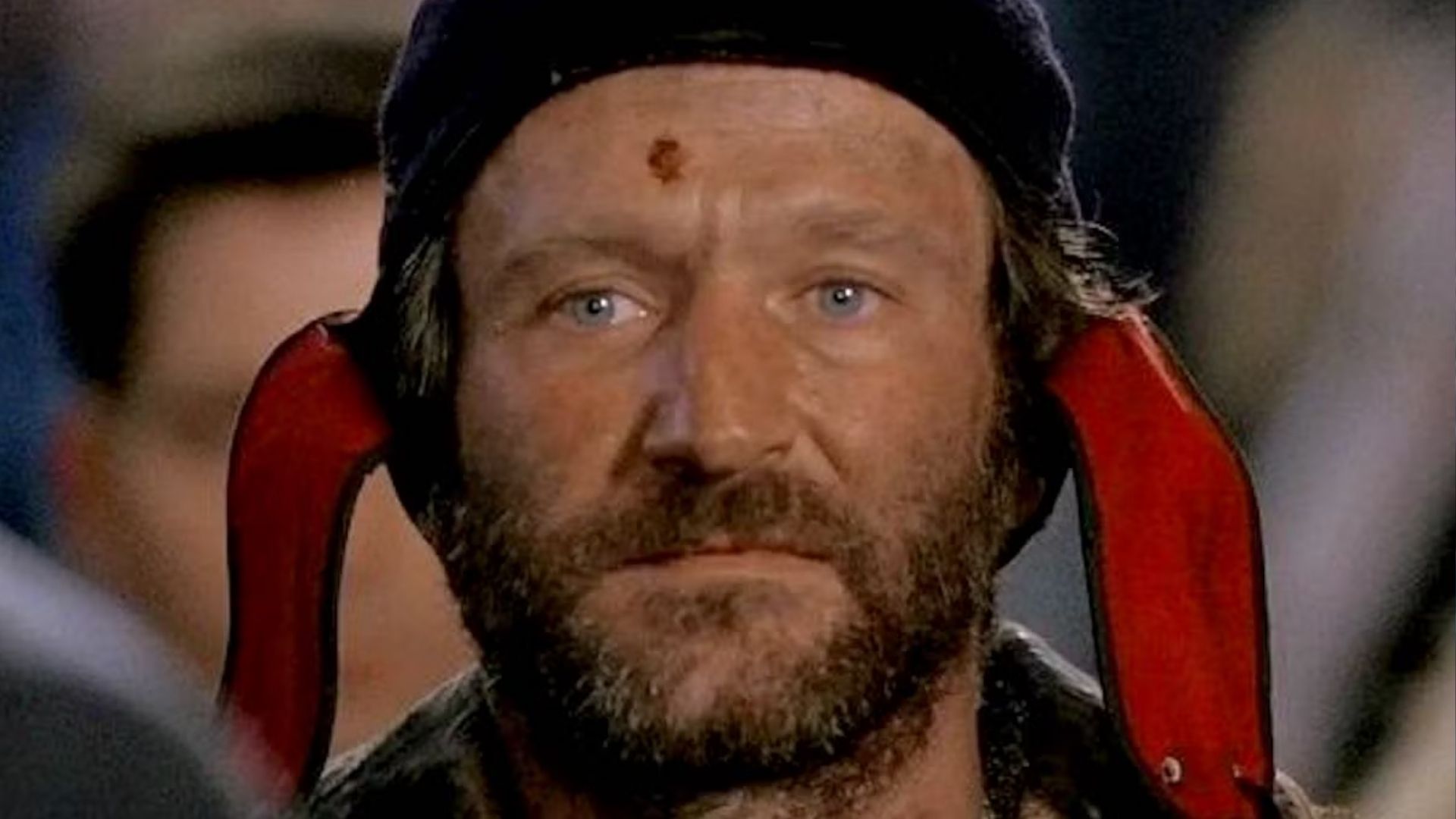
The Fisher King is the redemptive story of Bridges’ Jack Lucas, who callously, but indirectly caused the deaths of seven innocent people by goading a caller to his radio show into a murder-suicide attack on a restaurant. He’s later saved by Parry, a homeless man played by Williams, whose wife was one of the victims, and who had a psychotic break after her death, which manifests in visions of a Red Knight, borne out of the trauma of seeing his wife shot at close range.
As Parry, who is on a mission to recover the Holy Grail, Williams is both wild and infinitely fragile, frenetic and wounded. It’s a spellbinding performance, punctuated by frequent reminders of his unthinkable origin and his fear of the Red Knight. This was Williams at the peak of his emerging powers, and watching his soul pricked raw is an absolute masterclass in a movie that deserves every accolade.
KioskNews shows a cleaned-up reading view extracted from the publisher’s page — the original always lives on their site, not ours.