Opinion: Tulum will recover, but it won’t look the same
Lately, almost every conversation I have about Tulum starts with the same question: Is it over? Buyers ask me, friends ask me, people who visited five years ago and read the headlines ask me.
I understand why. This has been a hard year, and anyone who lives and works here has felt it.
The numbers are not pretty, and I don’t want to pretend they are. In September 2025, hotel occupancy in Tulum fell to 49.2%, when a year earlier it was 66.7%. This summer, the Tulum Hotel Association reported occupancy down over 20% between May and July, and some hotels on the coast were running at around 15%. Between January and July, about a third fewer tourists arrived than in the same months last year.
Restaurants were quiet, some hotels closed for the season, and a few airlines dropped their routes.
United Airlines cancels all its remaining flights to Tulum starting in January
So yes, something happened. But I see it differently from the collapse story, and I want to explain why. In my view, what Tulum lost was a moment, and what it keeps is a place.

More than a beach
When people talk about Tulum falling, they usually talk about the beach: the sargassum, the fees, the prices. The beach matters, of course. But Tulum was never only a beach.
The cenotes are still there, and seaweed never reaches them. The ruins have been standing on that cliff for centuries. Sian Ka’an, which UNESCO declared a World Heritage site in 1987, is still one of the largest protected coastlines in Mexico. And the food, the wellness culture and the architecture that made people around the world copy the “Tulum style” did not disappear in one bad summer.
A place that depends on one thing is fragile. Tulum has many things, and most of them have nothing to do with what the sea brings in.
The sargassum is a serious issue, and this year was the worst we have seen. By the end of July, around 96,000 metric tons had been collected along the Mexican Caribbean. But it is a condition of the whole region, it returns every year, and the destinations that handle it well are the ones that invest in handling it. That investment is now happening. In July, the federal government announced a plan of 2.64 billion pesos, led by the navy, with collection boats at sea, 35 kilometers of barriers and an early warning system, and Tulum is one of the five priority zones.
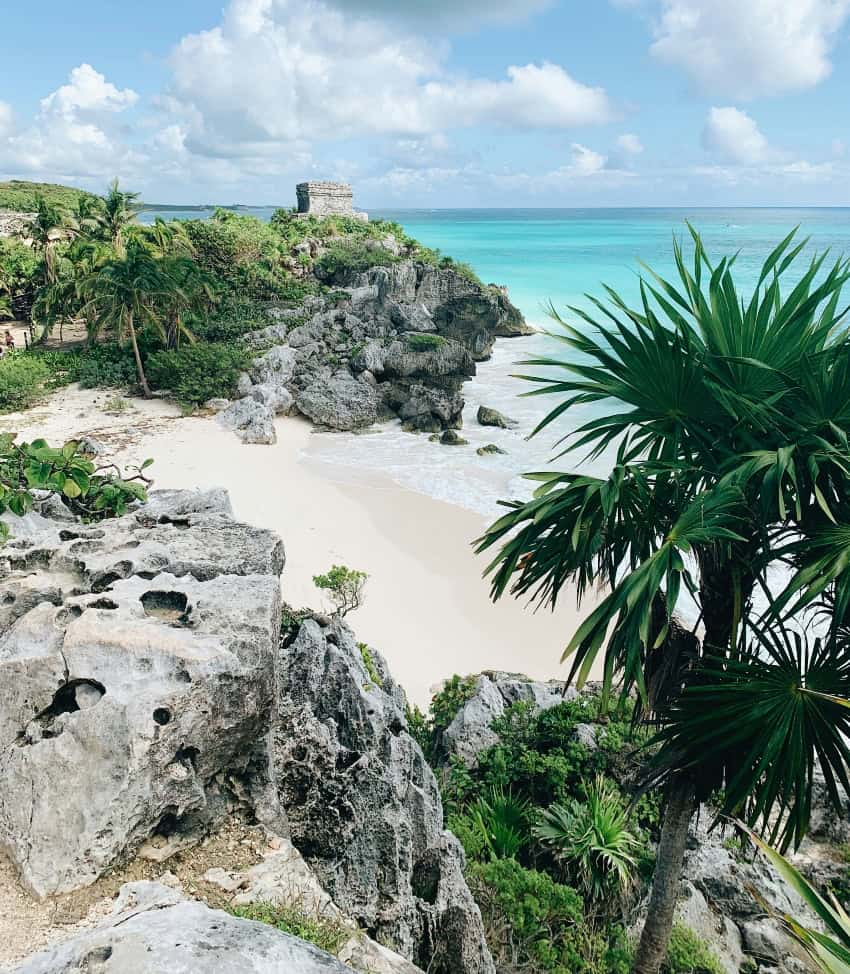
Some of the damage, let’s be fair, Tulum did to itself. Visitors felt they paid too much and were not welcome on beaches. That is changing, too. With Plan Tulum Renace, which started in November 2025 and was expanded this July, there are now 10 free public accesses to the beach, entry to the Parque del Jaguar is free, the fees for the archaeological zone were cut by up to half and prices are being monitored. For me, this matters as much as the sargassum boats, because reputation is what brings people back.
An identity money cannot build
There is one more reason I believe in Tulum, and you will not find it in any occupancy report. Cancún was designed. In 1969, a team from the central bank studied hundreds of sites and chose an empty sandbar, and the hotels came after the roads and the airport. It is a success, and it will keep working.
Tulum happened in a completely different way. It grew slowly: a road, some cabañas, a certain kind of traveler, a certain kind of architecture. Over the years, that turned into an identity, and an identity is something money cannot build. You can put up thousands of rooms in a year and a half. You cannot create the reason people want to be in them.
I also want to be clear about what recovery means, because I think this is where many people get it wrong. Tulum will not go back to 2021, and I don’t think it should. That period was a distortion, with too much construction, prices that made no sense and infrastructure that could not keep up. Some of the businesses closing now should close. The market is correcting its own excess, and that is healthy.
The history of Cancún: How Mexico built a paradise from scratch
There are already signs of the next stage. The high season last November opened with occupancy of 75.8%. This winter, United, Air Canada, Air Transat and WestJet are bringing back eight international routes, and Mexicana is adding 24 flights. And new construction has almost stopped, as the state developers’ association reported no new housing projects registered in Tulum as of August.
A selective recovery
What I expect is a recovery that chooses. People will come back to a town that can no longer support everything the boom created, and they will choose what is well-located, well-built, fairly priced and well-designed. In my work, I see the same with property. The homes that have something real to offer will come back first, and stronger, because there is less noise around them.
In the meantime, Tulum is doing what a place should do in a quiet period. It is cleaning its coast, opening its beaches, controlling its prices and trying to deliver what it promised. I don’t see that as a town in decline. I see a town getting ready to deserve its premium again.
The spirit was always the hard part, and Tulum has it. The rest is maintenance.
Jana Mihalikova is the founder and managing director of Heron Real Estate, a buyer-side real estate advisory in the Riviera Maya.
KioskNews shows a cleaned-up reading view extracted from the publisher’s page — the original always lives on their site, not ours.