India’s winter crops face risks as El Nino strengthens, soil moisture stays low
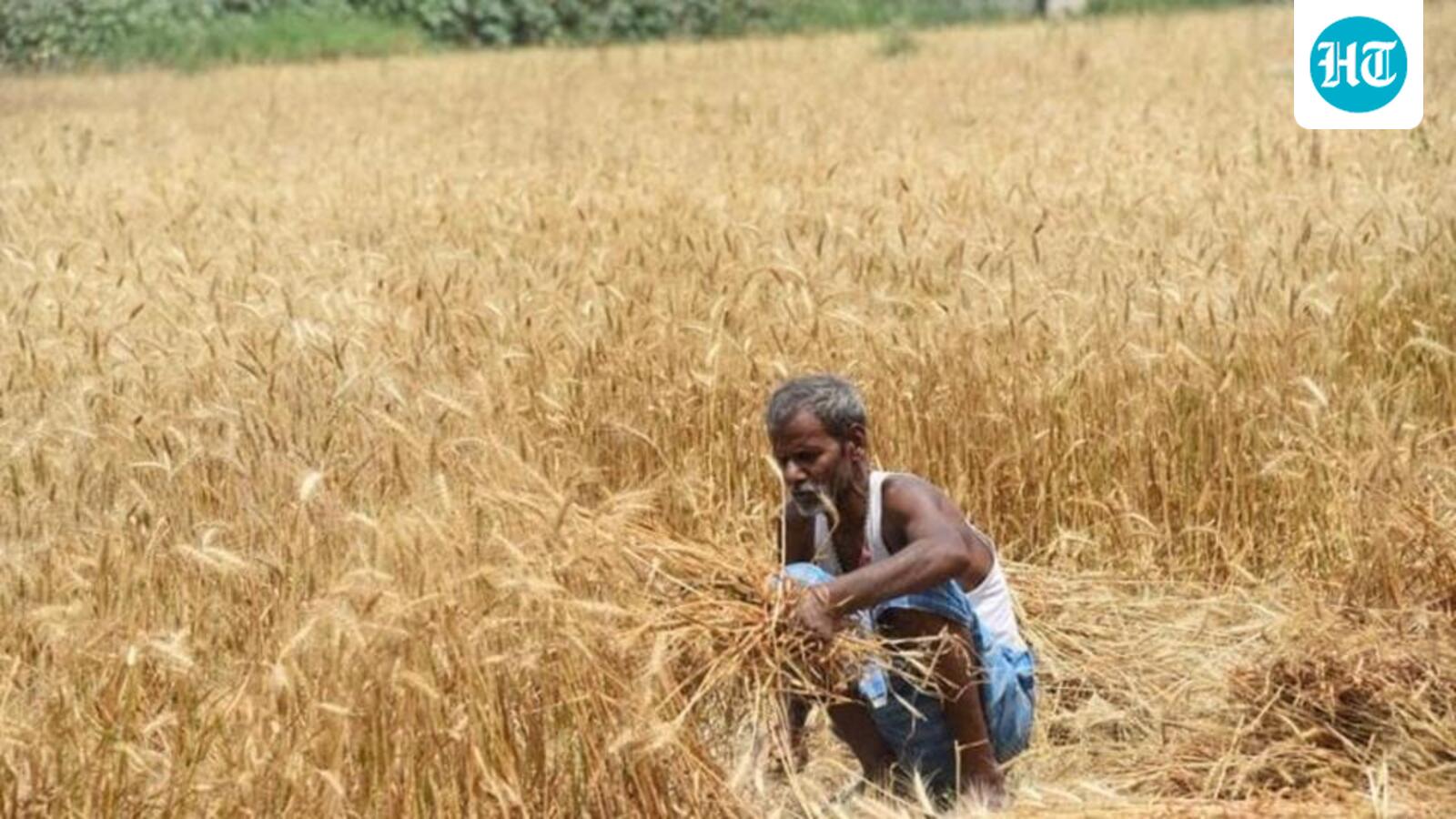
Farmers are preparing for the winter cropping season, but India is entering a period of uncertainty as depleted soil moisture and a strengthening El Nino raise the risk of delayed sowing, lower acreage and weaker yields, while also putting pressure on water availability and food supplies.
The concern comes after the southwest monsoon ended with rainfall 12.6% below normal, making it the fourth-lowest monsoon rainfall since 2001. East and northeast India recorded a 25% deficit, while south peninsular India was 24% below normal, leaving several farming regions with limited moisture as the winter crop season approaches.
“The deficient southwest monsoon of 2026, closed with a 13% below the long-period average and 21% below last year, has left large tracts of the country with inadequate soil moisture,” founder of HnyB Tech-Incubations Pvt. Ltd Deepak Pareek said. “Combined with the prospect of a dry October under a strengthening El Nino, [this] spells serious trouble for rabi sowing and overall crop prospects.”
El Nino is the periodic warming of the central and eastern tropical Pacific Ocean that can disrupt global weather patterns. Several global weather models, as well as the India Meteorological Department (IMD) in its latest forecast, have indicated that the phenomenon is strengthening and is expected to become very strong towards the end of this year, in November, when most of India sows its crops.
Soil moisture runs low as rabi sowing season nears
Rabi crops are sown after the southwest monsoon recedes, making the moisture accumulated during the monsoon crucial for planting. A Crisil Economics assessment said soil moisture levels as of August 20 were below the decadal average in Karnataka, Maharashtra, Andhra Pradesh, Telangana, Tamil Nadu, Rajasthan, Madhya Pradesh, northern Jharkhand, Bihar, Punjab, western Gujarat and parts of the northeast.
The IMD’s district-level data showed that 32% of districts were in the deficient rainfall category in September and another 16% in the large-deficient category.
High temperatures are also worsening the moisture stress. India’s average maximum temperature in September was 32.05°C, the highest for the month since 1901. The mean temperature of 27.72°C was the fifth-highest. According to the Indian weather bureau, October is also expected to see above-normal maximum and minimum temperatures across most of the country.
“Residual moisture is under strain in key rainfed belts of central, southern peninsula and east and northeast India,” Pareek said. This is particularly important for rainfed farmers, who have limited ability to compensate for a dry spell through irrigation.
Wheat has water cover, but gram and jowar face bigger risks
The rabi season accounts for roughly half of India’s foodgrain production. Wheat accounts for about 70% of rabi output, while rice, coarse cereals and pulses contribute roughly 10% each, according to a Crisil assessment.
More than 60% of India’s pulses production, largely gram, comes from the rabi season, while nearly 70% of jowar is grown during the season. Wheat has a relatively large irrigation buffer. More than 95% of wheat acreage is irrigated, compared with about 52% for gram and 25% for jowar.
That makes gram in Rajasthan and jowar in Karnataka and Maharashtra particularly vulnerable to inadequate soil moisture.
The impact will therefore not be uniform. Irrigated farmers may be able to maintain sowing by using groundwater and canals, while rainfed farmers could delay planting, reduce acreage or shift crops depending on water availability, Crisil noted.
Reservoirs offer a buffer, but water reserves are thinning
Meanwhile, the backup for rabi sowing—reservoirs—is already under pressure. As of October 1, storage in 178 major reservoirs was 1% below the long-period average and more than 20% lower than the same period last year.
Former agriculture secretary Devesh Choudhary said reservoir levels have so far held up to some extent because last year’s surplus rainfall helped maintain storage. “But this is not the same for several states, especially in the southern region where rabi crops will suffer,” he said.
The southern region faces the sharpest gap, with reservoirs holding 27.46 billion cubic metres, or 49.2% of live capacity, against 87.8% a year ago. Northern storage is at 60.5% of capacity, compared with 91% last year, while western reservoirs are at 84% against 97.1%. Central storage stands at 88%, down from 92.7%, and eastern storage at 82.7%, compared with 79% last year.
Reservoir levels are especially low in key rabi-producing states including Tamil Nadu, Andhra Pradesh, Rajasthan and Karnataka.
Maharashtra is the country’s largest producer of gram and jowar. Rajasthan is also a major producer of both gram and mustard. Karnataka is the second-largest producer of jowar, and Andhra Pradesh and Telangana grow maize and pulses in rabi.
With less water available for irrigation, farmers in these states may be forced to delay or reduce rabi sowing, while crops that do get planted are likely to face higher irrigation costs and lower productivity, said Choudhary**.**
He added that India would depend on western disturbances bringing winter rain and lower temperatures in the north for a good crop.
Drought footprint adds to the pressure
Even the latest drought assessment points to widespread moisture stress. Drought conditions, ranging from abnormally dry to more severe categories (D0+), covered 47.4% of the country’s area. States with the largest share of their area under any drought category included Goa at 100%, Arunachal Pradesh at 87.8%, Assam at 84.9%, Mizoram at 83.8%, Maharashtra at 82.4% and Sikkim at 81.8%.
Regionally, drought covered about 78% of the West, 74% of the Northeast, 52% of the South, 42% of the Northwest, 40% of the North, 32% of the East and 29% of Central India, according to the assessment.
El Nino clouds the rabi outlook
The immediate weather outlook is already pointing to a difficult start.
The IMD expects October rainfall to be below 85% of the long-period average for India as a whole. It expects below-normal rainfall over most parts of the country during October-December.
If the weather pattern produces a prolonged dry spell, farmers in rainfed areas could struggle to establish crops. Higher temperatures would further reduce available soil moisture, while inadequate winter rainfall could subsequently affect crop growth and productivity.
The government is also wary of what is to come. In a two-day rabi conference in Delhi held this week, agriculture secretary Atish Chandra said the coming rabi season is likely to be challenging for rainfed areas because of the El Nino weather pattern and that foodgrain production could be affected.
Agriculture minister Shivraj Singh Chouhan said Maharashtra, Karnataka, Telangana and Andhra Pradesh need crop plans based on water availability and soil moisture, with separate strategies for rainfed and irrigated areas. He also said delayed sowing could affect germination and productivity, making advance preparation essential.
The government has asked states and districts to first assess water availability and soil moisture, and then choose crops accordingly. In water-stressed areas, the government has called for less water-intensive crops such as pulses and oilseeds rather than wheat**, which** could run short of irrigation later.
According to Chouhan, the government is also preparing state-specific rabi plans, including drought-resistant crop strategies for Maharashtra and Karnataka, while states with better water availability—such as Madhya Pradesh, Bihar, Chhattisgarh, Jharkhand and West Bengal—may be asked to pursue more intensive production.
KioskNews shows a cleaned-up reading view extracted from the publisher’s page — the original always lives on their site, not ours.