After Uttarakhand, Gujarat and Assam UCC Bills cleared by President Murmu
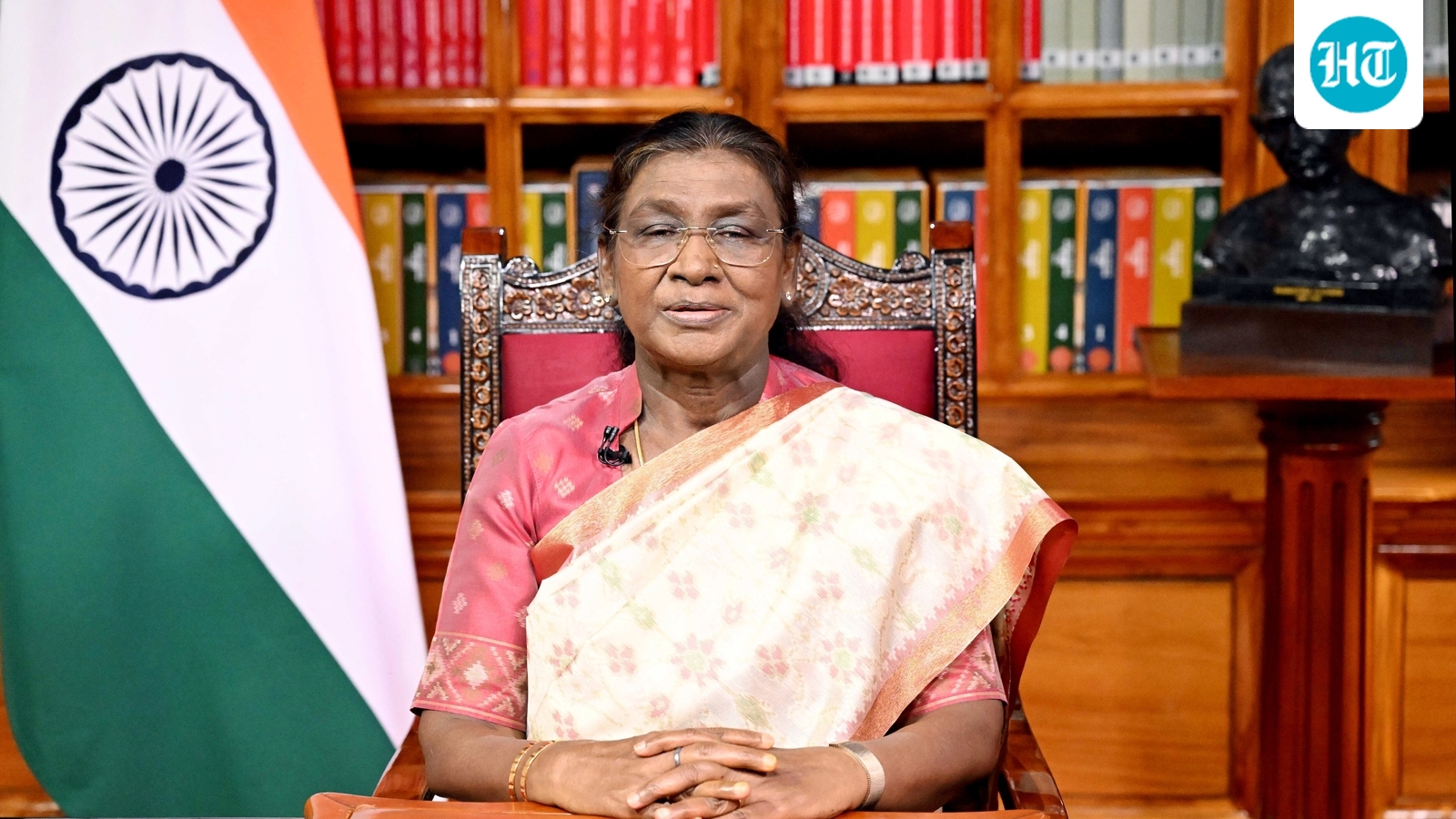
President Droupadi Murmu has given her assent to the Gujarat and Assam Uniform Civil Code (UCC) Bills, 2026, taking the number of states in independent India to codify a common set of personal laws to three, including Uttarakhand.
The Assam bill received the approval on September 29, while Gujarat was cleared on September 17. The Gujarat legislation was published in the extraordinary gazette dated October 1.
The state governments will now notify the rules for the code, after which the law will come into force.
The Gujarat Uniform Civil Code (UCC) Bill, 2026, passed after an eight-hour debate on March 24, exempts the state’s Scheduled Tribe (ST) population. Chief minister Bhupendra Patel tabled it a week after a panel headed by retired Supreme Court judge Justice Ranjana Prakash Desai submitted its report. Justice Desai had previously headed the committee that drafted the Uttarakhand code.
Also read: BJP’s state-by-state push for UCC raises a key question: Is it ‘uniform’ code?
BJP welcomes assent as step towards equality
Gujarat BJP chief spokesperson Dr Anil Patel welcomed the President’s assent, saying that the legislation marked a significant step towards women’s empowerment and equality in the state.
“When the architects of the Constitution, including Babasaheb Ambedkar, drafted the document, they clearly articulated the need for a Uniform Civil Code in the country. That objective has been realised in Gujarat today,” he said, adding that the law would address several issues relating to marriage, divorce, live-in relationships and succession that had previously been governed differently across communities and religious sects.
Congress questions need for Gujarat UCC
State Congress president Amit Chavda, however, criticised the UCC, saying that the BJP government had pushed through the legislation despite Gujarat’s diverse communities, traditions and customs.
He said the Congress had demanded that the Bill be referred to a Select Committee and that consultations be held across the state before it was passed.
“The UCC will yield no benefit to any tribal person, Dalit, OBC individual or any Gujarati citizen. It is merely an attempt to distract people from the government’s all-round failures. It will benefit neither the people of Gujarat nor a single Gujarati family,” Chavda told reporters.
Soon after coming back to power in this summer assembly polls, the Assam assembly passed the UCC on May 27 with the draft bill prepared in about 10 days. The Assam UCC bill, too, excluded scheduled tribes, which comprise 12.45% of the population in the state.
Also read: Uniform Civil Code to be introduced in all NDA-ruled states before 2029: Amit Shah
Assam passed UCC after five-hour assembly debate
The legislation was passed by voice vote in the state assembly after more than five hours of discussion amid sloganeering from both ruling and Opposition benches. The Assam government had introduced the bill without constitution of an expert panel, as done by Uttarakhand and Gujarat governments.
On the UCC, Congress leader Wazed Ali Choudhury said forcible implementation of UCC in a diverse country like India could create “social and religious tensions”.
He argued that existing laws dealing with child marriage, polygamy and women’s rights were already sufficient.
All India United Democratic Front MLA Mazibur Rahman said implementation of UCC based on Article 44 of the Constitution’s directive principles would violate protections available under personal laws, especially for Muslims.
TMC MLA Sherman Ali Ahmed said, “I support few provisions of the new law like ban on triple talaq, child marriages, but there’s clear violation of the Quran’s guidelines.”
Three BJP-ruled states now have comprehensive UCCs
The UCC is the third of the three core agendas the ruling BJP has championed since its inception, the other two being the construction of Ram temple in Ayodhya and scrapping of Article 370 that gives special status to Jammu and Kashmir.
With this, three BJP-ruled states have enacted a comprehensive UCC — a common set of laws governing marriage, divorce, and inheritance. Madhya Pradesh has also passed UCC legislation, but it hasn’t been implemented yet.
Maharashtra, Chhattisgarh, and Rajasthan — also governed by the BJP — have set up drafting committees to introduce a UCC Bill.
Notably, Goa is uniquely governed by the pre-independence Portuguese Civil Code of 1867, though it was not enacted through a modern legislative UCC framework.
Also read: BJP’s state-by-state push for UCC raises a key question: Is it ‘uniform’ code?
What does the UCC provide?
Under the legislation, marriage registration is compulsory, typically within 60 days. Failure to comply can attract a fine of up to ₹10,000. Polygamy and bigamy are prohibited. A marriage solemnised through force, coercion, or fraud carries an imprisonment term of up to seven years.
Divorce requires court approval and registration. An out-of-court or customary divorce is invalid and may carry up to three years in jail. Triple talaq and nikah halala are barred. Women may remarry without additional conditions. Sons and daughters receive equal property rights. Couples in a live-in relationship must register their partnership and inform the authorities when it ends. A child born out of such a relationship is treated as legitimate and has a legal claim on the father’s property. A woman deserted by a live-in partner can petition for maintenance.
KioskNews shows a cleaned-up reading view extracted from the publisher’s page — the original always lives on their site, not ours.