RESILIENT RECOVERY: Brainstormed: How Kruger Park is rethinking the humble culvert
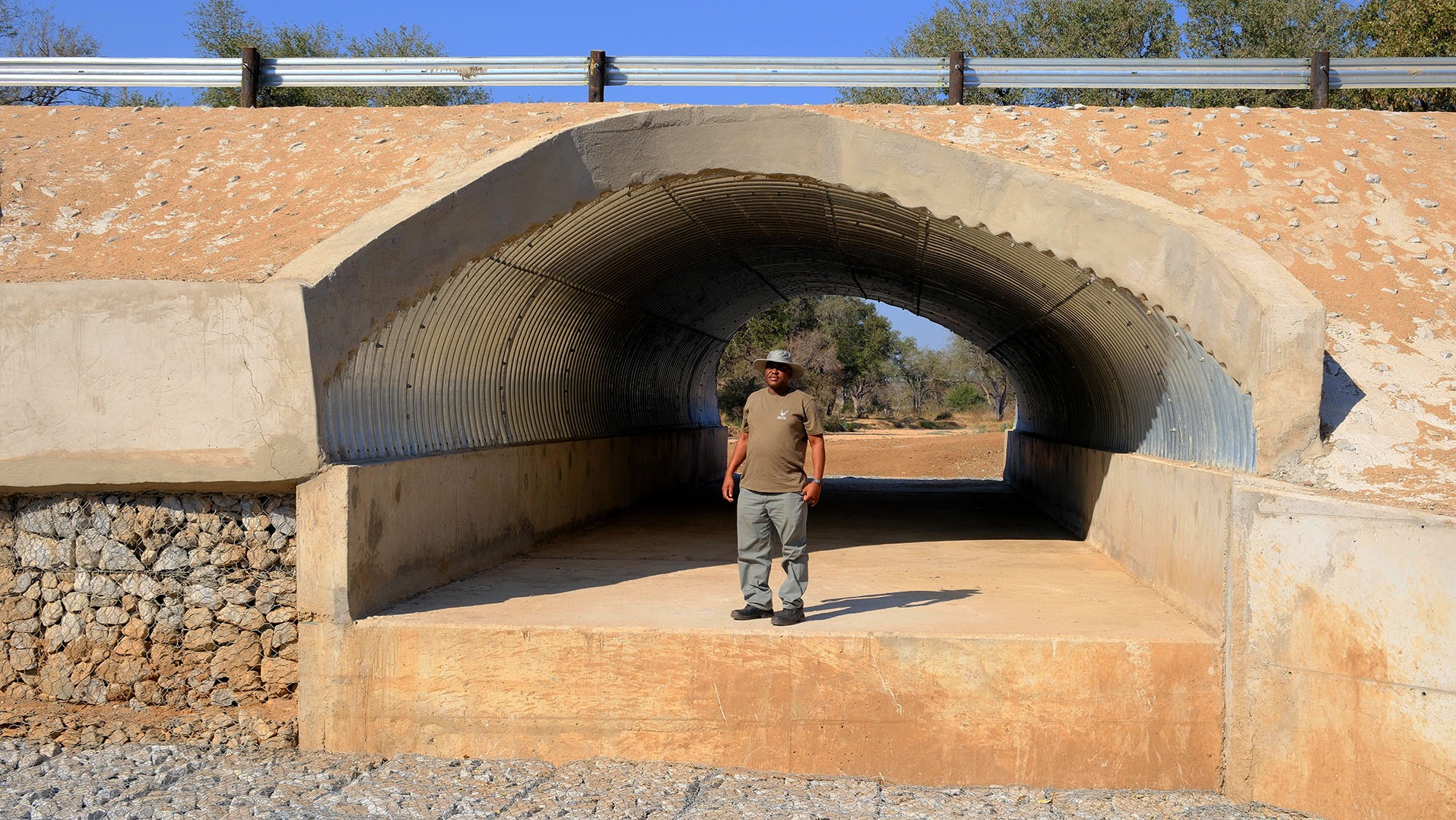
For infrastructure engineer Bharat Gulab, a culvert is where roads, rivers and a changing climate meet – and rebuilding one properly is a far bigger job than it appears.
Gulab joined SANParks in 2022 after working as a consultant and spending 10 years in the infrastructure department at Johannesburg Water. His work in Kruger has brought him face to face with the damage that extreme floods can cause to roads, bridges, buildings and management routes.
The park’s recent floods demonstrated the scale of the challenge. The estimated damage to infrastructure was about R950-million. Although insurance, government funding and SANParks’ own resources have covered part of the cost, the organisation still faces a shortfall of roughly R400-million.
The deeper challenge is that replacing damaged infrastructure exactly as it was is no longer enough.
Many of Kruger’s structures are already 50 or 60 years old. At the same time, Gulab says assessments of the park’s vulnerability show that floods are bringing volumes of water that existing infrastructure was never designed to handle. In some places, flood levels exceeded the line associated with a one-in-100-year event – the standard traditionally used when designing major bridges.
That means the new approach is to “build back better”.
/file/attachments/orphans/Krugerfloods-41_195927.jpg "Kruger’s infrastructure engineer Bharat Gulab: big park, big job reconstructing after the floods. (Photo: Don Pinnock)")
Reconstructing a culvert begins below the surface. Engineers first install subsoil drains beneath the structure. These give groundwater a controlled route out, preventing pressure and trapped water from weakening the foundation.
The road is then rebuilt carefully, layer by layer. At some damaged sites, teams have had to replace more than 5m of fill – the compacted material that supports the road and its approaches. It’s slow, precise work, but every layer helps the finished structure withstand the forces that arrive with the next major storm.
The approaches on either side of a culvert or bridge are just as important as the structure itself. During a flood, fast-moving water can scour away unprotected soil, leaving the concrete intact but making the road unusable.
/file/attachments/orphans/Krugerfloods-22_115982.jpg "New construction on the Lataba high-level is designed to duct water away from the vulnerable bridge edges. (Photo: Don Pinnock)")
/file/attachments/orphans/Krugerfloods-38_285248.jpg "New construction systems have a fortress-like feel and they need to be strong. (Photo: Don Pinnock)")
At the Letaba high-level bridge, for example, the approaches had not been sufficiently protected and were badly damaged. The rebuilt approach now includes stone pitching and concrete drainage channels. These measures guide water away, protect the soil and reduce the risk that future floods will wash out the road again.
The same thinking is being applied to culverts on the Lower Sabie road. Some are being enlarged so they can carry greater volumes of water. Rather than forcing a swollen stream through an opening that is too small, the wider structures allow floodwater to pass more freely, reducing pressure on the road embankment.
This resilience does not come cheaply. Large culvert projects can cost more than R4-million each. Work on the Letaba bridge took about three-and-a-half to four months before traffic could cross again, with the full repair lasting close to six months.
Yet the investment protects far more than concrete and tar. Kruger’s roads connect visitors to camps and wildlife experiences, while also allowing rangers, emergency teams and park staff to do their jobs. A stronger culvert can keep an entire route functioning when it is needed most.
/file/attachments/orphans/Krugerfloods-39_557189.jpg "The new culverts are built to withstand what a changing climate throws at them. (Photo: Don Pinnock)")
There is something encouraging in that. Each reconstructed crossing is an opportunity to apply new knowledge, improve drainage and prepare for more unpredictable weather. The park is not simply replacing what the floods took away. It’s creating infrastructure that’s more thoughtful, more adaptable and better suited to Kruger’s future.
The next time visitors cross one of these structures, they may still see “just a culvert”. Beneath their wheels, however, will be months of engineering – and an example of how Kruger is learning to live more resiliently with water. DM
This is part 3 in a series on Kruger National Park. Parts 1 and 2 can be read below:
KioskNews shows a cleaned-up reading view extracted from the publisher’s page — the original always lives on their site, not ours.