ULA's Vulcan rocket is set to return to flight on Friday the 13th
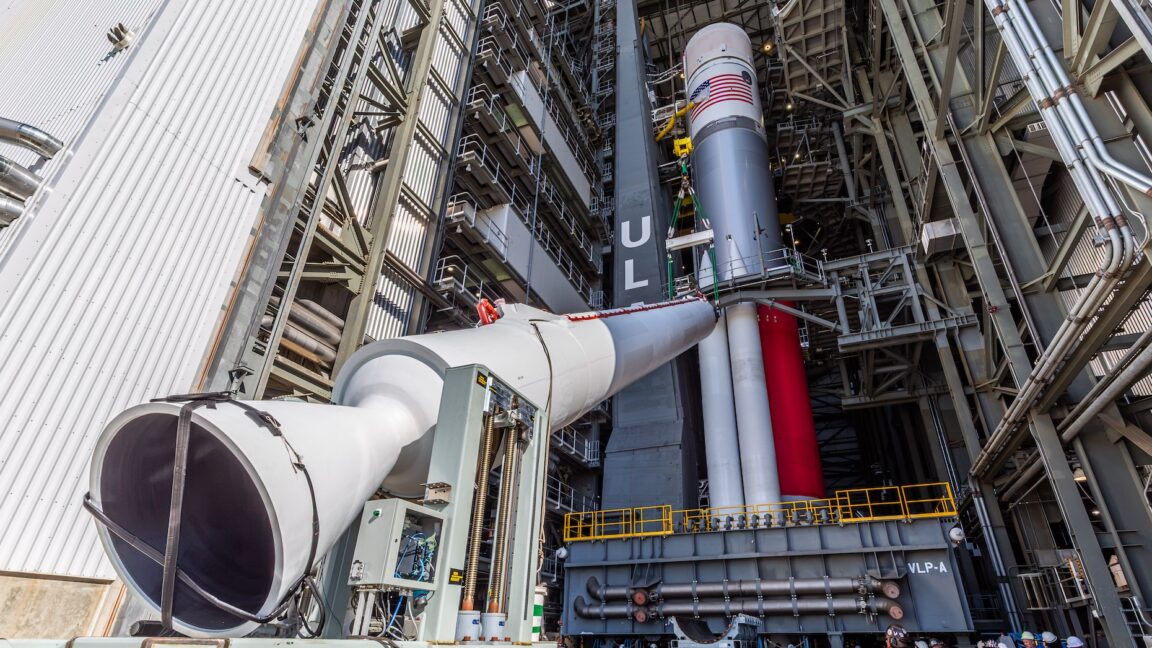
United Launch Alliance announced Wednesday it plans to return its Vulcan rocket to service on November 13, nine months after a solid rocket booster anomaly threw the company’s 2026 launch schedule into oblivion.
The return-to-flight mission will launch 40 satellites for the Amazon Leo broadband constellation, the first of 38 Vulcan flights Amazon has booked to deploy the bulk of its network. The mission will lift off from Cape Canaveral Space Force Station, Florida, and ULA said the launch date is pending range approval.
The launch is critical for ULA after its new flagship rocket suffered nozzle failures on its solid rocket boosters on two of its first four missions, most recently during a flight in February. In both cases, the rocket overcame the nozzle failure and completed its mission, but officials at the US Space Force, ULA’s primary customer, lost confidence in Vulcan.
Space Force officials will closely scrutinize Vulcan’s return-to-flight mission. The Pentagon has entrusted ULA’s Vulcan rocket for roughly half of its major launches through the early 2030s. The Space Force certified the Vulcan rocket for national security launches in 2025, then flew two missions on Vulcan before its grounding after the February booster incident.
Making strides
In a statement, United Launch Alliance said engineers “made great strides” in understanding the booster anomaly that occurred in February. Engineers “have identified several potential contributors, which have been mitigated through design and process improvements to the nozzle,” ULA said.
“To support our customers, this upcoming launch will utilize the improved nozzle design, and additional testing and analysis will continue in parallel with the mission,” ULA said. “By flying the improved design, ULA gains valuable flight data that validates these improvements and is the most beneficial path in support of all our customers.”
KioskNews shows a cleaned-up reading view extracted from the publisher’s page — the original always lives on their site, not ours.