Hong Kong to make bid-rigging for renovation projects a crime after deadly Tai Po fire
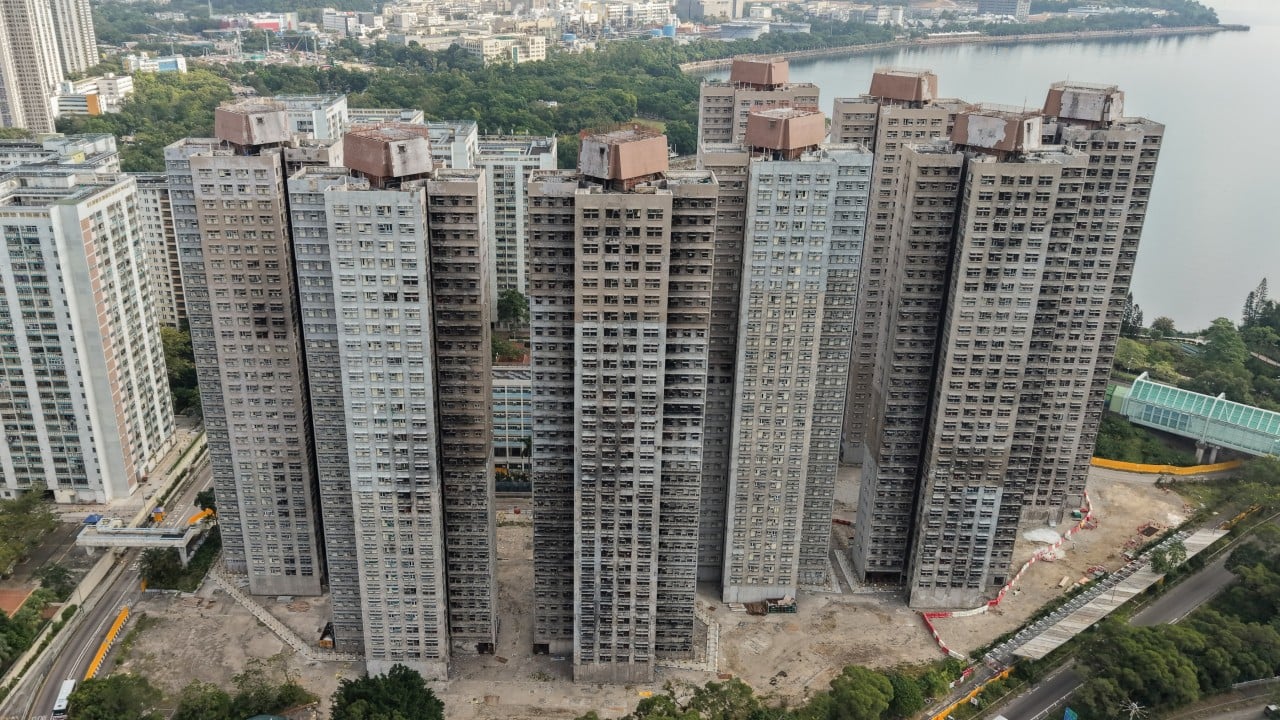
Hong Kong’s leader is expected to announce reforms introducing criminal penalties for bid-rigging on Thursday, when the government will also release the final investigation report into the Tai Po inferno, the South China Morning Post has learned.
Chief Executive John Lee Ka-chiu and his senior officials will announce the proposed measures and give an update on efforts to pursue “administrative accountability” at a press conference on Thursday, a government source said on Wednesday.
Senior officials responsible for coordinating the bureaus will attend, along with ministers overseeing the relevant policy areas. Separate briefings on specific topics will be held on Friday to explain the measures in greater detail.
“There will be a formal announcement about a two-tier administrative accountability investigation that has been launched. Although the task force has yet to arrive at conclusions, there will be a timetable, and the investigation will not last long,” a source said.
Sources earlier told the SCMP that a special task force was being set up under the Public Service Commission, the statutory body advising the city leader on civil service appointments, to follow up on efforts to establish accountability for the fire.
First-tier investigations cover relatively minor problems and are handled by department heads.
Serious or systemic problems within the government, or cases involving permanent secretaries or department heads, trigger second-tier investigations conducted by the commission.
“The arrangement of hosting more press conferences aims to help the public better understand the measures, as they involve structural reforms,” the source said.
The fire broke out at the Wang Fuk Court residential estate on November 26, 2025, killing 168 people and displacing nearly 5,000. It was the city’s deadliest fire since 1948.
Following the blaze, Lee established an independent committee chaired by High Court judge David Lok Kai-hong to investigate the causes of the fire and systemic problems in the city’s building maintenance sector.
After 30 rounds of public hearings, the committee submitted its 12-chapter report to Lee last week. Authorities are expected to release a redacted version on Thursday.
According to a source, the government will propose legislation to criminalise bid-rigging, an issue the city’s competition watchdog has investigated and made recommendations on.
Other measures expected to be announced include changes to building maintenance procedures and substantial increases in fines for contractors and professionals who breach the rules.
The source said a steering committee chaired by the chief secretary would oversee the reforms.

Sources told the SCMP last week that the committee’s “incisive” final report had singled out four government bodies for accountability.
One source said the Housing Bureau’s Independent Checking Unit should bear the greatest responsibility, as its inadequate oversight of renovation work at Wang Fuk Court had contributed to the death toll.
But the report did not name any bureau secretaries in connection with the blaze.
Lee said earlier this month that the government would implement comprehensive reforms as soon as possible and pursue accountability based on the report’s findings.
At the time of the fire, Wang Fuk Court was undergoing facade renovations required under the city’s Mandatory Building Inspection Scheme.
Suspicions of bid-rigging emerged after project consultant Will Power Architects was found to have secured its role at an unreasonably low fee.
The hearings also revealed that, when assessing bids for the renovation contract, the consultancy awarded Prestige Construction and Engineering full marks for its litigation record, despite the contractor having been convicted 24 times of occupational safety offences between 2017 and 2023.
The scoring helped Prestige win the HK$336 million (US$42.8 million) contract.
Although determining whether bid-rigging had occurred at Wang Fuk Court fell outside the committee’s terms of reference, the Competition Commission told the public inquiry that the case was a “textbook example” of such collusion, in which a consultant secures its role at a low fee and subsequently awards the works contract to a connected firm.
In response to the fire, the watchdog proposed criminalising bid-rigging to strengthen deterrence.
Bid-rigging cases under the Competition Ordinance are currently heard in civil proceedings, although breaches must be established to the criminal standard of proof.
Related conduct can, however, attract criminal charges under other laws, including conspiracy to defraud.
Senior counsel Jat Sew-tong, chairman of the Competition Commission, said in July that the watchdog was considering proposing a maximum prison term of 10 years for the new offence, up from seven years previously proposed.
The commission also called for other anticompetitive practices, including information exchange, market sharing, credential-sharing and phantom bidding, to be made criminal offences.
It said it was considering a “dual-track” legal framework that would give it the flexibility to pursue cases through either criminal or civil proceedings.
KioskNews shows a cleaned-up reading view extracted from the publisher’s page — the original always lives on their site, not ours.