DPP criticizes proposed KMT referendum rule
UNDERMINING DEMOCRACY: The rule, which would target Constitutional Court judgements, is seizing power not rightly arrogated to it, DPP officials said
By Lin Hsin-han and Jake Chung / Staff reporter, with staff writer


The Democratic Progressive Party (DPP) yesterday criticized the Chinese Nationalist Party (KMT) caucus’ decision to list a proposed amendment allowing national referendums to overturn Constitutional Court judgments as priority legislation saying it would introduce chaos and undermine the entire democratic system.
The proposal stems partly from a dispute over amendments to the Constitutional Court Procedure Act (憲法訴訟法) passed by the Legislative Yuan in December 2024.
The amendments, proposed in January last year, required at least 10 Constitutional Court justices to participate in deliberations and at least nine to agree before the court could declare a law unconstitutional. With only eight justices then in office, the changes would have prevented the court from hearing constitutional cases.
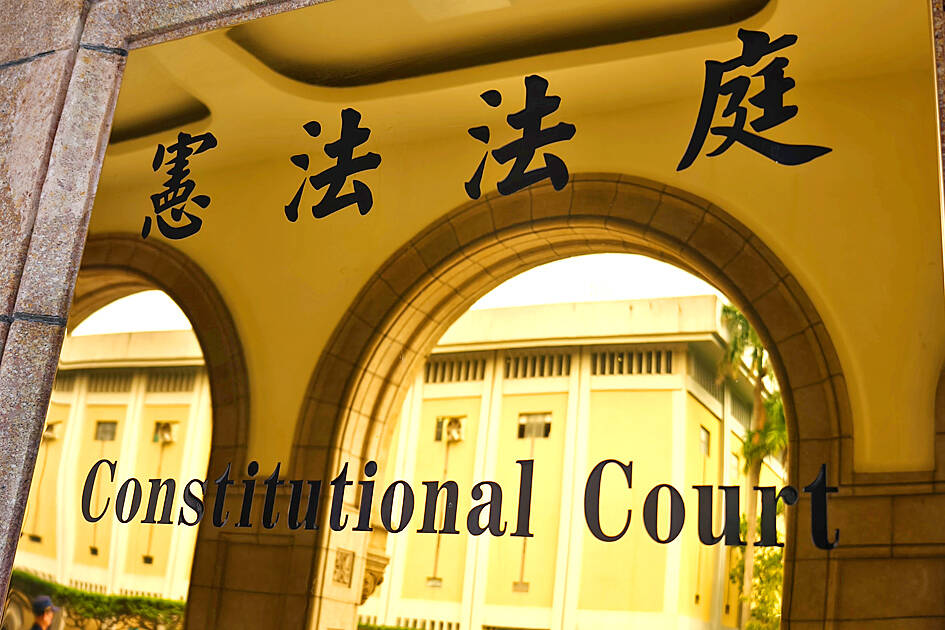
The Constitutional Court in Taipei is pictured in an undated photograph.
Photo: Wang Yi-song, Taipei Times
However, the Constitutional Court on Dec. 19 last year ruled that the amendments were unconstitutional and violated the constitutional principle of separation of powers, ordering the provision to be repealed immediately.
The KMT’s amendment to the Referendum Act (公民投票法) would allow referendums to target Constitutional Court judgements except those concerning the impeachment of the president or vice president.
Under the proposal, a law, local ordinance or Constitutional Court judgement rejected by voters in a referendum would be nullified three days after the result was announced. A law declared unconstitutional because of the rejected law would be restored.
The proposal would require the president or appropriate government agency to implement an approved referendum within three months, while executive agencies would be barred from reversing a major policy approved or rejected by referendum for three years.
The KMT has argued that voters should be able to challenge Constitutional Court judgements they consider unacceptable or unlawful, saying such judgements do not have the same legal status as the Constitution itself.
It cited past cases in which Constitutional Court justices changed previous interpretations, arguing that the court’s judgements should not be beyond challenge. As constitutional amendments proposed by the Legislative Yuan must themselves be approved by voters, Constitutional Court judgments should likewise be subject to referendums, the KMT said.
DPP caucus deputy chief executive Chen Pei-yu (陳培瑜) said on Facebook that the proposal was another attempt to expand legislative power and place the legislature above the judiciary and executive branches.
Chen cited former Constitutional Court justice Huang Hung-hsia (黃虹霞), who said the referendum system allows voters to approve or reject laws, establish legislative principles or decide major public policies, but does not extend to judicial decisions.
Unless the Constitution is amended, no government institution or person, including the president, has the authority to declare a Constitutional Court judgement invalid, Huang said.
The Legislative Yuan cannot amend the Referendum Act to empower voters to overturn or invalidate a Constitutional Court judgment through a referendum, she said.
Chen said the KMT’s decision to list the proposals as priority legislation showed that it was trying to expand legislative power while undermining the authority of the judiciary and the executive branch.
KioskNews shows a cleaned-up reading view extracted from the publisher’s page — the original always lives on their site, not ours.