‘Below’ Star Mackenzie Davis Weighs In on Possible Season 2 After That Brutal Ending

Editor's note: The following contains spoilers for the Netflix series Below.
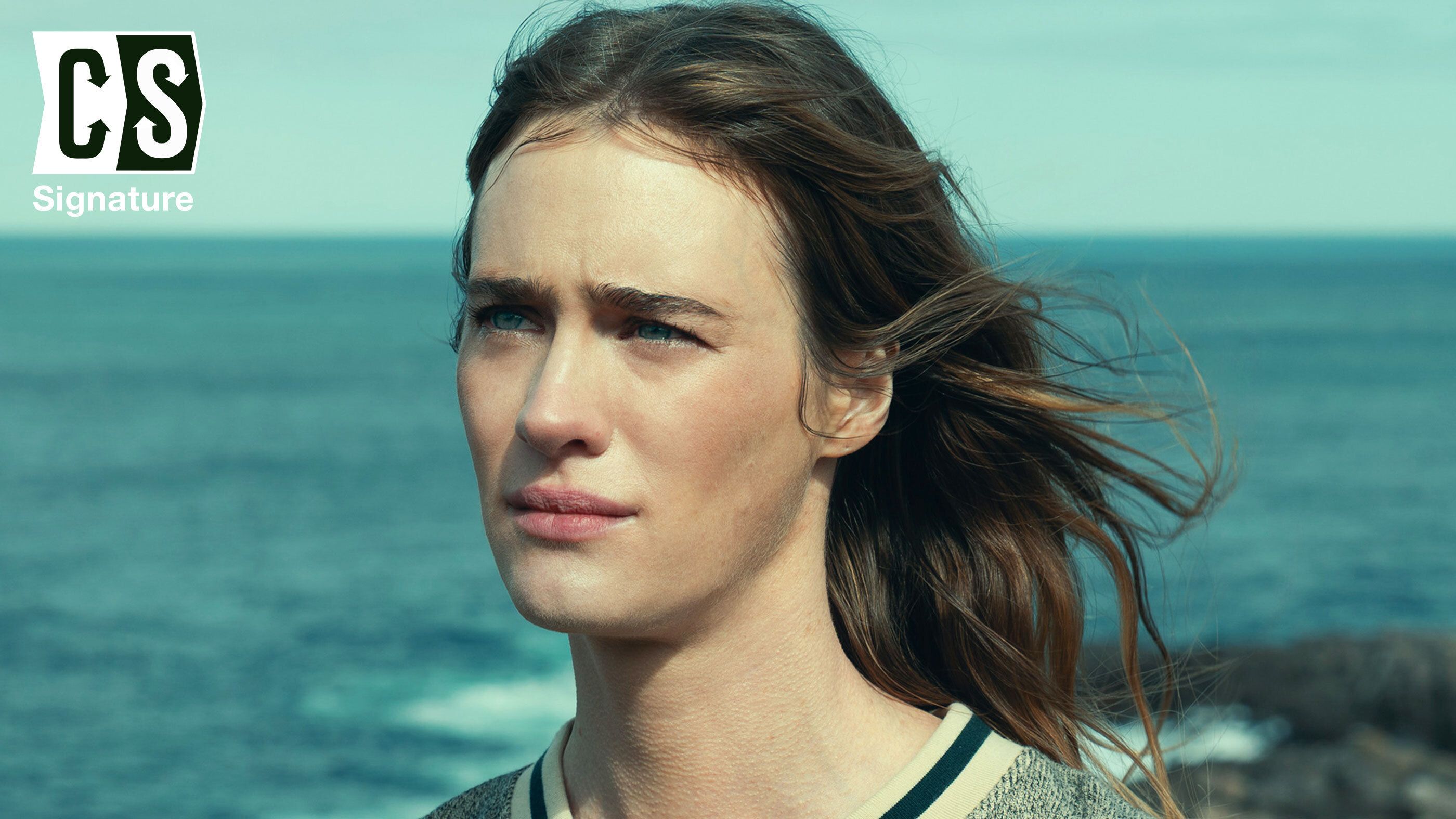
Set in a remote Newfoundland fishing village, the six-part Netflix series Below follows a fisherman named Calvin Penney (Josh Hartnett), a widowed father of three who realizes that something is attacking townsfolk underneath the surface of the water. And Calvin understands better than anyone, having experienced a tragedy of his own at the age of 10 when his own father was dragged under while his family was attempting to relocate across the ocean. While the residents are being pushed to accept a buyout and vacate their land, Calvin crosses paths with marine biologist Dr. Fonda Howander (Mackenzie Davis) as she’s tracking the pattern of behavior that seems to be occurring anytime someone drinks the water and starts to experience mysterious symptoms.
Sure, tangling with a tentacled creature under the sea would be enough to terrify anyone. But when you learn that, in reality, it’s a giant squid doing whatever it takes to protect its young in waters that are proving increasingly inhospitable due to climate change, you find yourself identifying with it more than the wealthy family looking to extract resources without ever properly compensating in return. Although Calvin and Fonda do everything they can to help keep the village safe, they can’t reverse the environmental issues that got them there in the first place.
In this exclusive Collider Signature in-depth conversation, Davis discussed the monster horror story with a family drama at its core, why she loved playing Dr. Fonda, and how glad she was they didn’t try to throw in a love story. During the interview, she talked about why it was important to keep the look of the giant squid a bit of a mystery, the experience of working in Newfoundland, that dead flamingo, getting to throw a punch, how she felt about the ending, and why she’d be on board for another season. She also spoke about the possibility of continuing the story told in Station Eleven, voicing Big Barda for the upcoming animated Mister Miracle TV series, working with Jamie Dornan in the Netflix series The Twin, and figuring out what’s next.
With a Monster Story Like ‘Below,’ the Family Drama Is Equally As Important
"If you're scared of a monster, you're also scared for your family."

COLLIDER: The thing that I love about Below is the same thing that I love about Station Eleven, which is that even though it has this bigger concept in its story, whether it’s something in the water or a devastating flu, at its heart is the relationships between the characters. Was that something that was important to you when you read the scripts and had conversations with the creative team? Does it have to be more than a monster story or more than a post-apocalyptic story to get you on board?
MACKENZIE DAVIS: Yeah, definitely. I don’t think it’s interesting to play with a vibe because it’s just so unrealistic. If you’re scared of a monster, you’re also scared for your family and trying to coordinate with them. The relationships are the only important part. It’s not about the object of the fear. It’s about how a community is dealing with that fear, especially with monster things because it’s not there. I never met the squid. If that’s the only thing that you’re interacting with, I think it would be a pretty hollow experience.
I actually love that we never really get a good look at the full squid out of the water. It keeps the monster mysterious.
DAVIS: Yeah, it’s just a surefire way to lose people when you get to hold the entire thing in your eyes and be like, “I don’t buy it,” rather than just these glimmers. And it makes it seem so enormous to never be able to see around the whole thing.
There is a family drama at the center of this, and you’re not a part of the Penney family, but you’re a part of this larger community family. What did you connect with most when it came to the community that exists in this?
DAVIS: Jesse [McKeown], who wrote the show, didn’t grow up in Newfoundland. He’s not a Newfoundlander, but he’s an honorary one. His wife is a multi-generational Newfoundlander. The script reflected a such an intimacy with the culture and the people, and such a devotion to them, and an appreciation and love for this place, that kept it away from any broadness that you couldn’t pin down and say, “But no, that’s real.” Even if it’s funny or it’s unusual to your ear hasn’t picked up this accent before, it’s accurate and it’s real, and it’s portrayed out of affection and admiration. It’s really easy to tell when you read a script if it’s coming from a place of intimate knowledge or just somebody from a great distance trying to set their story in a kooky town. This one felt extremely grounded.
That specificity is so appealing because you get to travel, not just physically travel to corners of the world with this job, but you get to just learn about these professions or cultures or places. You get to transport into these places, and it’s so exciting and satisfying and alluring to be like, “Oh, here’s a really specific, lovely place that I haven’t had a chance to spend time in or know about. And the person who’s telling me and us is, if not like the ultimate authority, then definitely an avid amateur who loves it very much.” It’s just so appealing when something feels incredibly specific.
Mackenzie Davis Was Able To Relate to Her ‘Below’ Character in One Important Way
"I know what it’s like to really love something and travel far and miss loved ones to keep pursuing it."
Personally, I find the world under the sea and sea life to be fascinating and frightening. It feels like there are things living underwater that most of us will never see or even know about, but your character really seems to have quite an interest and a reverence for those things. How did you feel about that side of Dr. Fonda Howaner?
DAVIS: I think it’s the most expensive, spookiest, and full of potential world. It interests me much more than space or anything like that. I feel like the oceans are it. As for my character, she’s a marine biologist, so it’s her life. Her interest is not passing. It’s her whole life. And she comes from away, which is how people who are not from Newfoundland are referred to. She’s from the other side of Canada and is choosing this pretty isolated existence. She’s not very integrated in the community. She’s reluctantly thrust into this save the day mission, but she’s not really in the world. So, I think that passion that draws her away from all other contexts in her life is something I relate to. I know what it’s like to really love something and travel far and miss loved ones to keep pursuing it because it satisfies some other deep, throbbing passion.
I love that your character is a little bit weird. She’s got the weirdness of someone who is a lab nerd and loves studying things, which felt very real. Was all of that scripted, or were there bits of things that you wanted to bring to her?
DAVIS: I don’t have a list of anything. To Jesse’s credit, the character was written so much the way that she is on screen. Obviously, whoever plays the characters is going to add their own tweaks, but the big gestures about Fonda were very much written into the script. I had such a point of departure to add anything to, but it was really there in the data of the original script. I think she’s got a real difficulty with big social interactions. There was a lot of comedy in Jesse’s script, of her being continually grasped at by the community to occupy this doctor role and she’s like, “I’m a marine biologist.” There was just a funny, reluctant hero’s journey.
Since it feels like a place many people will never get to, what was the best thing about shooting in Newfoundland, and what was the most surprising thing about shooting there?
DAVIS: Even growing up in Canada, it felt very far away. It’s such a big country. When I was in Newfoundland, it felt further than being in London from my parents in Vancouver. There’s just something very isolated about it. The most surprising thing was that I didn’t know anybody from Newfoundland, so the incredible kindness and humor and generosity of everybody that I worked with was a constant gift. It’s quite a rugged, intense place to shoot. We had quite good weather while we were there. There were lots of things that we lucked out on. But it’s a brutal part of the world in some ways. The weather and the cliffs and the sea, there’s just this confrontation with nature that feels substantial and a bit daunting. The people who live there just love it so much and are so thankful to be in this magical place. Every day on the drive to work, somebody would just give a huge sigh who’s lived there for their entire life and be like, “God, it’s just the best place in the world.” That’s so nice to be around and such a rare quality, to not get cynical at some point. That was really lovely and a lovely aspect of shooting there.
I love a memorable character introduction, and we meet your character when she’s standing next to a dead flamingo. Was that always her introduction? How did you feel about that moment of humor?
DAVIS: It was walking barefoot down a hallway, and then there she is, next to the flamingo. For the first read of a script, it was a really nice, “Oh, I like this lady,” way into it. I felt great about it. The crazy thing, which I didn’t know until we were actually shooting the scene, is that it’s a real story. Jesse had heard of a friend of a friend who had a flamingo land on his house in Logy Bay, which is chilling. It’s getting into plague territory. It’s a funny visual. What I think the show handles so well is that there’s a lightness and levity, and there’s the genre stuff, but the heart of it is this deep existential sadness about what’s happening to the planet. I do think you have to smile through some things because, what are you going to do? If you’re not in charge of making the global changes necessary, then you do have to find some joy in it. And I think the show finds a really nice way of doing that.
There’s also just something heartbreakingly sad about this poor flamingo.
DAVIS: It’s bizarre. It shouldn’t be there. We had a crazy heatwave in London this summer. The world has just flipped on its axis a bit. It’s nice because it’s hot and it doesn’t get to be hot all the time in London. But there’s something really dissonant and dark about experiencing something so other than what you’re supposed to experience in that place. And a flamingo in Newfoundland, I would say, is one of them.
In Episode 6, you punch Natasha Henstridge, which feels like something that Dr. Fonda probably wouldn’t have done when we meet her at the beginning of this series, but she does after everything that’s happened. What was your reaction to that moment? How did you feel about her acting on impulse like that?
DAVIS: I loved it. It’s a bizarre moment for her, but there’s something so endearingly Canadian about acting on impulse, acting violently, and then before you’ve even withdrawn your hand, apologizing. I thought it was a really funny beat in the script. The show has a lot of genres that it’s playing with. At the end, the team saves the day, and people are having these moments of revelation and growth, but that are really sweet. I liked it.
Davis Loved the Heartbreaking Resolution to the Story Told in ‘Below’
"It doesn't matter what this one town did."

After everything that happened, and after everything Calvin and Fonda did to help save the squid and her young, how did you feel about the squid dying and the babies being unable to survive in the warm water?
DAVIS: I loved it. We watch sci-fi, especially, as this salve that the worst things in the world can be on the horizon, but one chosen man, and sometimes woman, will be able to stop this global devastation in its tracks. We watch it in this strange, cathartic way that divorces us from reality. I thought it was quite a gentle way of doing it, but really heartbreaking to come to the end of this big, heroic journey where they come up with a big plan at the end and save the day. But then, it doesn’t matter what this one town did. There are these huge, existential, unimaginable problems, and it’s great to recycle, but it doesn’t matter if you recycle. That’s not going to offset drilling in the North Sea. It’s one of my favorite moments in the show, not because I’m in it, but because of the wry sadness of, “It’s just going to get worse. But also, let’s look at the horizon and appreciate how beautiful it is right now.” I think that’s a very sad thing to say, but it’s what it feels like to be alive right now.
By the end of these episodes, Calvin is closer to his kids and he’s mended his relationship with Wade, but there are these new blocks of ice out in the water and new questions about what’s going on. Obviously, this is a limited series and the story has concluded, but if you got a call that there was more story to tell, would you want to return to this character and this world?
DAVIS: Oh, my God, yeah. I thought it was so fun and truly a murderer’s row of lovely people that made the show. I’d do it in a heartbeat. I thought it was a dream. If you can justify it, and the opportunity presents itself, then we must because there’s actually a good idea. At the end of shooting last year, Josh [Hartnett] had a really good pitch for a Season 2. I’m curious about that. Time will tell. I’m open to anything. I just love working with nice, talented people, and this really satisfied that.
Davis Would Be Interested in Seeing More of ‘Station Eleven,’ Even if She Weren’t Directly Involved
"I think there’s a world of many characters and stories and people who are lost and seeking each other."

When one of my co-workers spoke to the showrunner for Station Eleven back when it came out, he had said that he felt there was more story to tell that could come from that world. How would you feel about that? Would you want to return to that character and tell more story in that world?
DAVIS: Yeah, I love that world. I think at the time I didn’t because I was like, “What is the next story?” The story is about Kirsten and Jeevan, in the book and in our show. But I think there’s a world of many characters and stories and people who are lost and seeking each other, or what happened in the interim years, maybe the younger Kirsten. I think there are many stories to tell. I’m not sure where you’d go with me as the adult Kirsten and Himesh [Patel] as the adult Jeevan because we got that lovely conclusion to it. But (creator) Patrick [Somerville] has got one of the great minds on the planet, so if anyone could figure it out, he would do it. So, I wait and see. I haven’t heard anything, so it might be a longer wait than one may think.
DC Studios recently announced that you’re a part of the Mister Miracle animated series and voicing a character there. How did you get involved with that?
DAVIS: I got involved because they reached out while I was shooting in Newfoundland, and I met with them and put my voice down. I was not familiar with anything, just because I have a very limited field of focus and I just didn’t know about Tom King and I didn’t know about Mister Miracle and Big Barda. And then, I read the scripts and Tom’s graphic novel. Are you familiar with it?
A little bit now because I’ve been reading up on it myself.
DAVIS: It’s so beautiful. It’s very dark. Well, not dark, but it’s dealing with true pain and depression. It’s placed in this superhero world, but it’s about a couple and a suicide attempt and a marriage and loving somebody and holding the pain that they’re in. And then, there is this greater context that they’re in. But Tom has just written the most exquisite, painful, grounded show that happens to be about these two superheroes. It’s kind of crazy.
Does that feel like you have freedom to play? Are you recording fully solo, or do you get to record with Josh Hutcherson at all?
DAVIS: I’m recording with Josh, always. I think it would be hard. It’s such a two-hander of this couple dealing with a traumatic event and trying to navigate the healing of that and their marriage continuing. It’s quite a dense thing. I can’t imagine doing it, just saying the lines out into a void. I got to record with Josh, and he was incredible.
Obviously, there’s also always the possibility that you could play the character in live action, especially with James Gunn saying that that’s always the plan when they cast people. Is that something you’d be interested in doing? Is it a character you think would be fun to explore in live action?
DAVIS: Yeah, she’s really cool. I think it would be really fun to explore in live action. She’s really funny and strong and angry and has a very traumatic childhood. There’s lots of interesting stuff about her. Coming from complete unfamiliarity and now knowing her quite well, I think she’s incredible … For me, everything has been a discovery. I believe Big Barda and Mister Miracle were less prominent characters in the DC world, and then Tom King wrote this extraordinary graphic novel a few years ago that really brought a lot of attention to them. And that’s what we’re using for our show.
You also have another Netflix series, The Twin, with Jamie Dornan. What made you want to be a part of telling that story? How did you find the experience of working with him while he was playing twins?
DAVIS: Great. Jamie is an absolute delight. I love him and he’s so fun to work with. The twin thing was fun and fine. Mostly, it was just one-on-one scenes with us, so I didn’t have to contend with the twinship a lot, but when I did, I was titillated. How did I come to it? I met with Jeremy Lovering, who directed the series, about it and I just adored him. The scripts were really compelling, and I’d be playing a Scottish woman in the Highlands, which felt like its own challenge. And the character felt like a challenge. It just seemed like a really unavoidably good experience, and it was.
What was it like to find two different relationships with the same actor within the same project?
DAVIS: Yeah, definitely. Luckily, they brothers are very distinct, so it wasn’t that confusing who I was speaking to at any given moment. It was exciting. It was more challenging for Jamie than for me, but it was interesting. It was amazing to watch someone do really great work, and how physical and how minor the adjustments can be, you’ll completely understand the difference between the characters that you’re speaking to.
Davis Enjoyed Solving the Mystery in ‘Below’ With Josh Hartnett but Is Glad Their Characters Didn’t Have To Force a Love Story
"The convention of people always falling in love feels like the more foreign thing to me."

What I loved about the relationship between your character and Josh Hartnett’s character in Below is that typically, in this type of story, there would be some sort of romance and you’d have to take time away from the story to have a relationship. And this series doesn’t have that, but there is a really layered dynamic between your characters. What was it like to figure that out and find that with Josh Hartnett?
DAVIS: You can probably attest to this, but not every man you meet, you think that maybe you’ll fall in love with him. It’s more a convention that’s placed on us. I’m not going to be like, “I wonder if he wants more kids.” I loved that about the script. It wasn’t hinted at. These two are just people who are solving a problem together, and have an appreciation and affection for each other, but they’re thrust together out of necessity, and they don’t then need to have a romance. It wasn’t a thing to navigate it at all because I have many friendships like that. The convention of people always falling in love feels like the more foreign thing to me. But Josh made it very easy. He’s as lovely as everyone would like him to be. It’s easy to like solving a mystery with him. It’s funny how programmed we are to want that thing to happen. At the end of it, it was like, “Is there something here?” But we were like, “No, there’s not.” You’re just so used to that narrative that your body chemistry works to draw it out in scenes. I love that it’s not a part of the story because there are more important things at hand.
They really have nothing in common and probably never would have ended up as friends otherwise.
DAVIS: It’s like friends you meet when you travel. You can be extremely close and have a real intimacy, and it’s not that that isn’t a real experience, but it’s the context of the place and the circumstances that makes the relationship so intense. When you try to just hang out casually, you’re like, “Oh, I actually needed there to be a life-or-death catastrophe on the horizon for us. I don’t know what to say to you outside of that.” I think that’s so funny.
Do you know what you’re going to do next, or are you someone who doesn’t have to know right away?
DAVIS: I neither like nor dislike that. If there were tons of things that I wanted to do and they were all lined up, that would feel quite safe, I imagine, in a good way where I’m like, “Okay, I have my whole year planned.” But I’ve never felt that there were that many things that I really wanted to do. I’m much more about sitting with it and then using that as a test of character to be present and not anxious and just believe in the process. I like to create little learning lessons out of things in my life, so that’s probably why I’m so thankful. I’m in the stage of not knowing right now. When I was younger, I used to feel a lot more anxious about not knowing all the time, but I just don’t anymore. I think it’s good to wait until you’re really compelled to do something. That’s how I like to work, even if it’s a bit painful in the periods where you’re like, “I’d really like to be compelled right now.” I also like to be busy with other things. I don’t like the feeling of not being active, so I have to fill my life with a lot of other things.
Below is available to stream on Netflix.

- Release Date
- 2026 - 2026-00-00
- Network
- Netflix
- Showrunner
- Jesse McKeown
Cast
-

Calvin Penney
-
Fonda Howander
-

Wade Penney
-

Ruby Stokes
Mary Penney
KioskNews shows a cleaned-up reading view extracted from the publisher’s page — the original always lives on their site, not ours.