Surprise, technology key to India’s future military preparedness, says Rajnath Singh
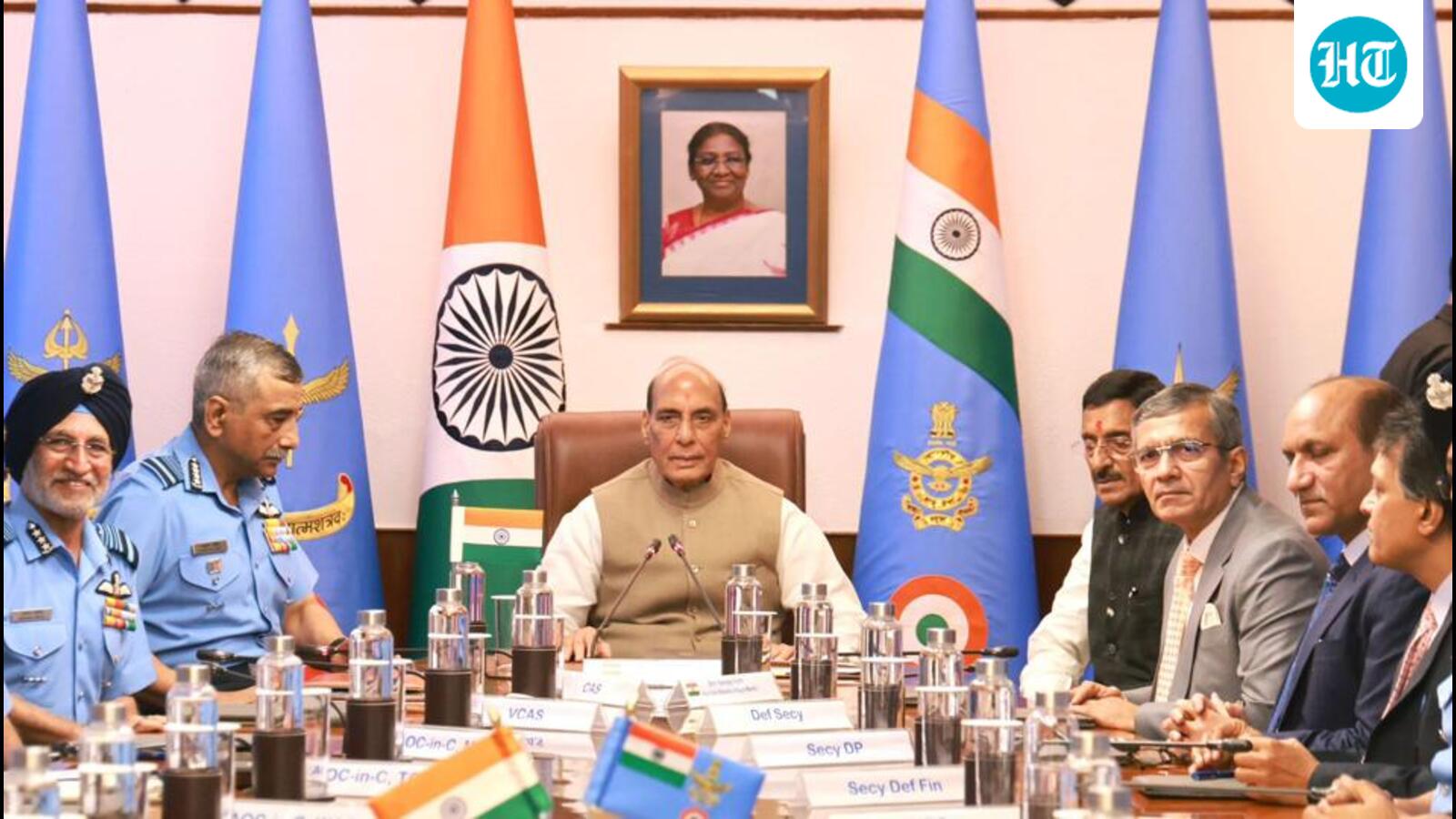
Surprise, technological superiority and jointness will be critical to boosting the operational readiness of the armed forces to meet future security challenges, defence minister Rajnath Singh said on Friday.
Identifying potential threats before they unfold is equally important, he said.
Charting the way forward for military preparedness at the Air Force Commanders’ Conference, he said, “Our defence forces must develop capabilities and methods that leave the adversary with no time to react or recover, while simultaneously ensuring that we are never caught off guard. Surprise can manifest in various forms, both conventional and electronic. Our intelligence and surveillance mechanisms must be further strengthened to respond effectively to any emerging challenge.”
Indian Air Force (IAF)’s Air Chief Marshal Ashutosh Dixit and defence secretary Rajesh Kumar Singh were present.
Singh said the revamped Agnipath scheme would further strengthen the three services.
He said contemporary conflicts are extending beyond traditional battlefields into non-contact domains, with missiles, drones and advanced weapon systems playing a significant role. Referring to the Russia-Ukraine and Israel-Hamas conflicts, he said that drones and air defence systems have emerged as critical components of modern warfare. He asked commanders to remain prepared for emerging challenges such as kamikaze drones and counter-UAS (unmanned aerial systems) operations.
Also Read: From Op Safed Sagar to Sindoor: New IAF chief Ashutosh Dixit’s 4-decade-long decorated career
“Victory in future conflicts will depend not merely on the number of aircraft, but also on technological sophistication, speed of response and precision in planning.”
The armed forces are undergoing a transformative phase, encompassing reforms in areas such as organisational structures, jointness and integration, and operational concepts, he said. The lessons learnt during Operation Sindoor are reflected in the IAF’s evolving operational procedures, particularly the increased emphasis on drones and air defence systems, he said.
On the “second tour of duty” for Agniveers, Singh said the Agnipath model was revamped following feedback received from the armed forces, reiterating the government’s commitment to incorporating the services’ suggestions into policy decisions. The revised model guarantees full-term military service to all existing Agniveers.
The Centre approved the revamped scheme on November 4, giving Agniveers who fail to make the cut after their initial four-year service an option to continue in uniform for two more years with higher salaries. It also gives them a route to enrol as regular soldiers at the end of the extended period, making them eligible for pension, gratuity and other benefits, including medical and canteen facilities.
The move came weeks before the three services were set to release 75% of Agniveers from their first batch, retaining only the 25% selected on merit for another 15 years under the Agnipath scheme’s earlier
KioskNews shows a cleaned-up reading view extracted from the publisher’s page — the original always lives on their site, not ours.