‘Be alive’: Hongkonger with muscular dystrophy turns 18, against all odds
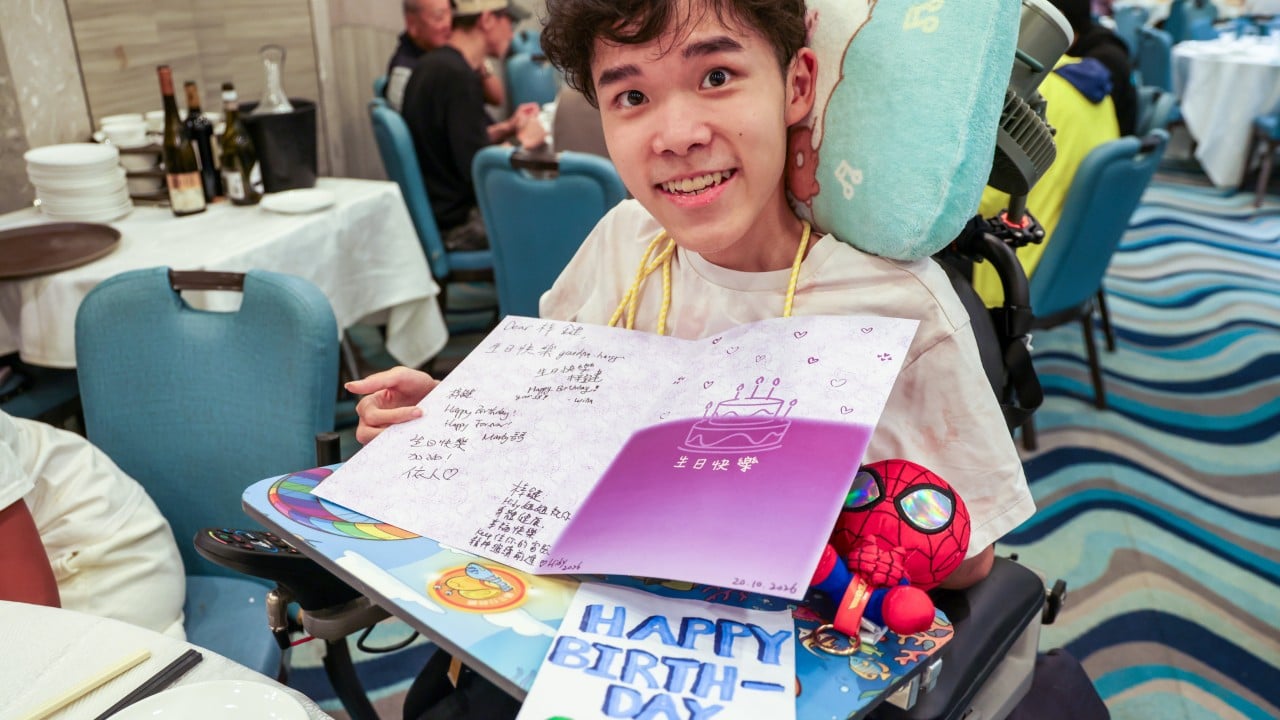
Celebrating one’s 18th birthday is not typically a poignant occasion, but for outgoing Hongkonger Chen Tsz-kin, adulthood began last week with a mixture of excitement and anxiety.
At 18 months old, Chen was diagnosed with Duchenne muscular dystrophy, a genetic condition that causes muscles to weaken over time. Doctors told his mother, Michelle Li Yuan-feng, that people with the incurable illness had an average life expectancy of 18.
“I felt like a brand new self waking up this morning. It’s been difficult for me to finally reach what doctors defined as ‘a deadline’. I could perhaps put a full stop here, saying this phase is over and what lies ahead is a new beginning,” Chen said at his home in Lok Fu on October 20.
“What I’m anxious about is that there is a lot of unknown in life [from now on]. Many challenges await me, and I’d have to be very well-adjusted to be able to face them,” he said. “Every time the body changes, it catches me by surprise, and I find myself angry or in denial.”
He came through a life-and-death ordeal in August, when he contracted respiratory syncytial virus, spent days in an intensive care unit and was overwhelmed by fear of death. He described it as the worst moment of his life, but he recovered.
Living with a deadline: how a teen with muscular dystrophy lives with an expectation of death
Yet Chen has spent his childhood pursuing experiences that might have seemed impossible for him, from visiting the highlands of Kyrgyzstan and the Gobi Desert to paragliding, diving and other adventures, all with help from volunteers.
Earlier this year he created an AI version of himself, hoping that, with the help of a Hong Kong company, the digital twin could keep sharing his life story and his message of perseverance after he was gone.
As his muscles waste away, he has had to come to terms with losing his abilities one by one as he grows older, from using a wheelchair to being unable to hold a cup or chopsticks, with the latest being a need for a back brace due to scoliosis.
“My weakening progress was fast. Typically, others might lose their ability to walk aged 11 or 12. For me it was nine,” he said. “My emotions fluctuated greatly as my body deteriorated. I would need to get used to it slowly and accommodate accordingly.”
He relaxes by listening to K-pop and music by Japanese composer Joe Hisaishi, best known for scoring Hayao Miyazaki’s films and reads up on philosophy, which gives him room to contemplate his condition as well as life and death.
“My views on death have changed from apprehension to acceptance to facing it honestly,” said Chen, who learned about the illness at the age of nine.
“After being hospitalised twice this year [for pneumonia], I figured if I have to face it anyway, I should perhaps plan ahead.
“I think what’s important is to agree on what to do after I’ve died, what kind of contributions I would like to make and what I want to leave behind for my family. I think the body knows when the time comes and would make you think of your family more.”
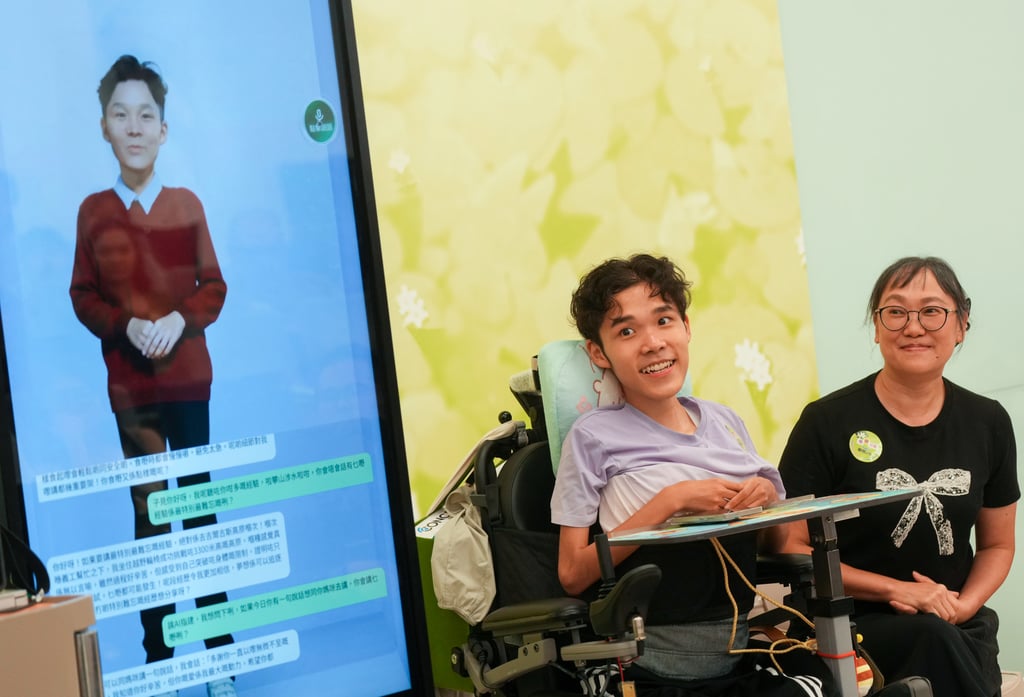
He had intended to donate his body for medical research after his death, but his mother had found the decision hard to accept, even knowing it would serve a good cause. To her, it felt as though he would have suffered even more in death after everything he had endured in life.
On his birthday, one of the main activities was a muscle treatment appointment that helps loosen him up, since he spends all day sitting or lying down. It is one of three or four treatments he attends each week, all of them accompanied by Li, who said it could be difficult for her at times.
“Whenever I notice any deterioration, I have to pay attention to my emotions and make sure I get some rest. Sometimes I feel down, but then I have to think about how to help myself [out of the emotions] before tending to him,” Li said.
Chen had a celebration dinner with friends in the evening, among them Steve Lo Chun-yin, one of the volunteers who had joined him in Kyrgyzstan and the Gobi Desert. Lo said Chen was a role model, particularly for his perseverance.
“If I were to describe him, I’d say he is a pocket-sized universe. He’s all-encompassing with different ideas, everything positive and negative. He is a very perceptive young man,” Lo said.
Having helped Chen with adventures around the world, Li said her next project would be to arrange a trip to Venice for him, health permitting. Chen’s longer-term goal is to become a social worker.
“I don’t know how far ahead I could plan because I’ll never know how long I’ll have. I think it’s down to fate but also myself, whether I have the motivation to overcome the challenges,” he said.
Asked what his proudest achievement in life was, he said: “There’s no guarantee as to when I will be in good health or when I will die. It’s actually difficult enough when I am not in good spirits. So the answer to the question is simply to be alive.”
KioskNews shows a cleaned-up reading view extracted from the publisher’s page — the original always lives on their site, not ours.