New gauge of poverty: 1 in 8 PH homes lack not just income
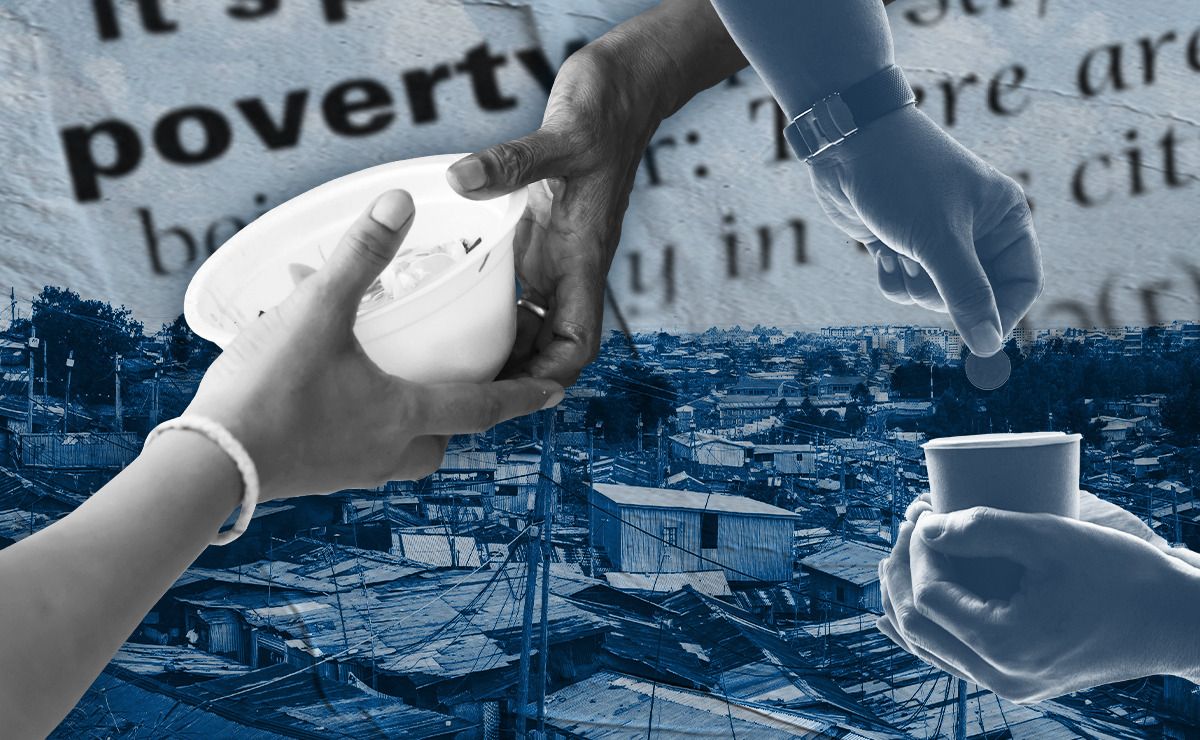
MANILA, Philippines — About one in eight Filipino households faced multiple deprivations in basic needs beyond income in 2024, with gaps in education, health, housing, sanitation and employment, according to the Philippine Statistics Authority’s (PSA) first Multidimensional Poverty Index (MPI).
The PSA said 12.4 percent of households were classified as multidimensionally poor under the new measure.
The MPI was developed to complement the traditional income-based poverty statistics by looking at whether families are deprived across several dimensions of well-being.
Article continues after this advertisement
At the individual level, 12.8 percent of Filipinos lived in households classified as multidimensionally poor.
FEATURED STORIES
NEWSINFO
NEWSINFO
NEWSINFO
Poverty beyond income
The national MPI stood at 0.045 at the individual level and 0.042 at the household level. The closer the index is to 1, the higher the level of multidimensional poverty.
“The MPI shows that poverty is not just about what people earn. It is also about whether Filipinos have access to essential services that allow them to live productive and dignified lives,” Economic Planning Secretary Arsenio Balisacan said in a statement.
“By assessing the specific deprivations, we can improve the targeting of programs, strengthen coordination across sectors, and make public investments more effective,” he added.
READ: Ibon: Gov’t poverty standard ‘outdated,’ ‘unrealistic’
Article continues after this advertisement
READ: Hunger down, but nearly 50% of Filipinos consider selves poor
The MPI assesses poverty through four broad dimensions: education; health and nutrition; housing, water and sanitation; and employment.
Article continues after this advertisement
Education was the largest contributor to multidimensional poverty, accounting for 40.7 percent of the overall MPI at the individual level. Housing, water and sanitation followed at 31.3 percent, while health and nutrition accounted for 18.5 percent and employment for 9.5 percent.
Among those classified as multidimensionally poor, the most common deprivations were low educational attainment and inadequate housing materials, each affecting 10.7 percent.
Other major gaps included lack of asset ownership, affecting 7.8 percent; food insecurity, 7.2 percent; lack of internet access, 6.8 percent; inadequate sanitation or toilet facilities, 6.1 percent; and inadequate water sources, 5.6 percent.
The broader figures show that deprivation in basic services and living conditions extends well beyond the population classified as multidimensionally poor.
Inadequate housing materials were the most widespread deprivation, affecting 38.7 percent of Filipinos. Lack of internet access affected 26.4 percent, while 24.1 percent lacked adequate sanitation or toilet facilities and 21.8 percent lacked sufficient asset ownership.
Education also remained a major concern, with 20.2 percent of Filipinos living in households where no adult age 19 or older had completed high school.
Historic low, constant gaps
The new index comes as official income-based poverty figures have reached a historic low. The PSA earlier reported that poverty incidence fell to 9.7 percent in 2025, the first time the share of Filipinos living below the official poverty threshold dropped into single digits.
That was equivalent to 11.08 million Filipinos, down from 15.5 percent, or 17.5 million, in 2023.
The annual per capita poverty threshold rose to P35,121 in 2025 from P33,296 in 2023, equivalent to about P96 a day.
Your subscription could not be saved. Please try again.
Your subscription has been successful.
But economists have cautioned that the income-based poverty rate does not fully capture the financial and social pressures facing many Filipino households, particularly as the official threshold remains below what some analysts consider sufficient to meet basic needs.
KioskNews shows a cleaned-up reading view extracted from the publisher’s page — the original always lives on their site, not ours.