Only half of primary school kids have ‘satisfactory knowledge’ of language and maths
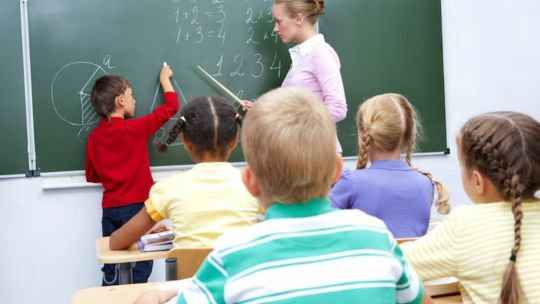
Ninety-four percent of pupils who start first grade of primary school in Argentina “reach sixth grade on time, without repeating a year or dropping out,” according to a report, but only 50 percent do so “with at least satisfactory knowledge of language and mathematics.”
The findings come from a report by the Argentinos por la Educación NGO. It concludes that the main issues are concentrated in mathematics teaching, with significant disparities between provinces.
The organisation's report looks at educational trajectories and learning outcomes. It drills down into government data to analyse how many children complete primary school within the expected timeframe, without repeating a year or dropping out, and how many of them simultaneously achieve satisfactory or advanced levels in language and mathematics.
This edition measures the cohort that started first grade in 2020 and reached sixth grade in 2025, using data from government assessments.
One of the report's key findings is that 94 out of every 100 pupils who started first grade in 2020 reached sixth grade without repeating a year or dropping out.
The figure remained stable compared with the previous cohort and confirms an upward trend compared with the first cohort analysed, from 2011 to 2016. In the provinces of Tierra del Fuego, Neuquén, Río Negro, La Pampa and Jujuy, virtually all pupils reached sixth grade on time; in Corrientes, Misiones and Entre Ríos, the proportion was below 90 percent.
The report also finds that among pupils who reach sixth grade without being over-age, 54 percent nationwide achieve at least satisfactory results in both Language and Mathematics.
The highest figures are recorded in the City of Buenos Aires (73 percent), Córdoba (62 percent) and Buenos Aires Province (55 percent), while the lowest are in Chaco (36 percent), Tucumán (42 percent) and Santiago del Estero (43 percent). In all areas, mathematics is the main area of difficulty.
When educational trajectories and learning outcomes are combined, 50 out of every 100 pupils who started first grade in 2020 reached sixth grade on time and with satisfactory results. The figure rose from 46 percent in the 2011-2016 cohort, to 49 percent in 2013-2018, and 50 percent in 2016-2021. It then fell to 45 percent in 2018-2023 as learning outcomes declined, before returning to 50 percent in the 2020-2025 cohort.
Another key finding is that the index is strongly correlated with pupils' average socioeconomic status, with the provinces in the report's chart ranked according to that measure.
KioskNews shows a cleaned-up reading view extracted from the publisher’s page — the original always lives on their site, not ours.