Minister backs neurorights protection in human rights bill
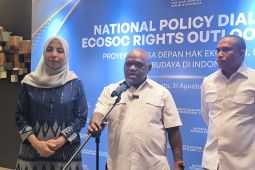
Jakarta (ANTARA) - Human Rights Minister Natalius Pigai supports regulating neurorights, or the right to mental privacy, under the Human Rights Bill (RUU HAM) as an anticipatory measure in response to advances in artificial intelligence (AI) and neurotechnology.
Pigai said technological developments need to be anticipated early because advances in neurotechnology have the potential to create new forms of human rights violations, including violations involving privacy and the human mind.
"There needs to be a law regulating this in the RUU HAM. One article on neurotechnology protection," Pigai said while presenting his policy direction here on Monday.
He said neurochip technology could in the future increasingly record or process information about a person's condition. According to him, this development needs to be accompanied by legal instruments capable of protecting individual rights.
"My thoughts could be stolen by other people. So there needs to be a law protecting against neurological theft, because neurotechnology today is more advanced," he said.
He considered neurorights protection part of the ministry's efforts to anticipate forms of rights violations that may emerge alongside technological development, rather than merely responding to human rights issues that have already occurred.
Pigai said the ministry does not act as fortune-tellers or futurologists but as technocratic planners for human rights development, designing policies for economic, social and cultural rights based on projections.
"So if, say, we project that by 2050 the economic, social and cultural conditions will be like this, then the technocratic planning projection must be designed accordingly," he said.
Pigai added that national development technocratic planning falls under the authority of the National Development Planning Ministry (Bappenas).
The ministry will also incorporate that perspective into the National Human Rights Development Planning Deliberation (Musrenbang).
Related news: Ministry launches Human Rights 2036 study to map social issues
Related news: Indonesia drafts business and human rights regulation
Translator: Devi, Kenzu
Editor: Primayanti
Copyright © ANTARA 2026
KioskNews shows a cleaned-up reading view extracted from the publisher’s page — the original always lives on their site, not ours.