The 6 Most Perfect Horror Movies Released Since 2010, Ranked
There is a particular kind of horror movie that makes people slightly annoying afterward. You start defending a sound cue. You insist the camera holding on an empty doorway for three extra seconds is important. Somebody says the movie was “pretty good” and suddenly you are explaining why the dinner scene, the goat, the teacup, or one horrible shape hiding near a ceiling has been living rent-free in your head for years. That level of attachment usually means the movie got almost everything right.
And horror is brutally unforgiving about getting things right. One stupid explanation can shrink a nightmare. One cheap scare can break the spell. The six movies here somehow keep their nerve. They know exactly what to show, what to hide, when to let the audience laugh, and when to leave a terrible image sitting there long enough that looking away starts feeling like surrender. Let’s get started.
6 'Train to Busan' (2016)

A father who has been failing his daughter in small, ordinary ways boards a train with her to Busan, and the country begins collapsing before they get there. Train to Busan barely needs time to establish the rules. The infected move fast, attack in swarms, and react to sight in ways that passengers gradually learn to exploit. Suddenly glass doors, train cars, tunnels, and luggage racks become survival tools.
The reason the movie hits harder than most zombie stories is that selfishness becomes just as dangerous as infection. Seok-woo (Gong Yoo) begins the trip thinking almost entirely in terms of protecting himself and Su-an (Kim Su-an). Sang-hwa (Ma Dong-seok), the enormous husband everyone immediately trusts in a crisis, approaches survival with a completely different instinct. Then Yon-suk (Kim Eui-sung) keeps proving how much damage one frightened man with social authority can cause. The station sequences are terrific, the bathroom maneuver is clever, and that run through packed train cars still makes you tense even when you know exactly who is waiting behind each door. It is a crowd-pleaser with teeth.
5 'It Follows' (2014)
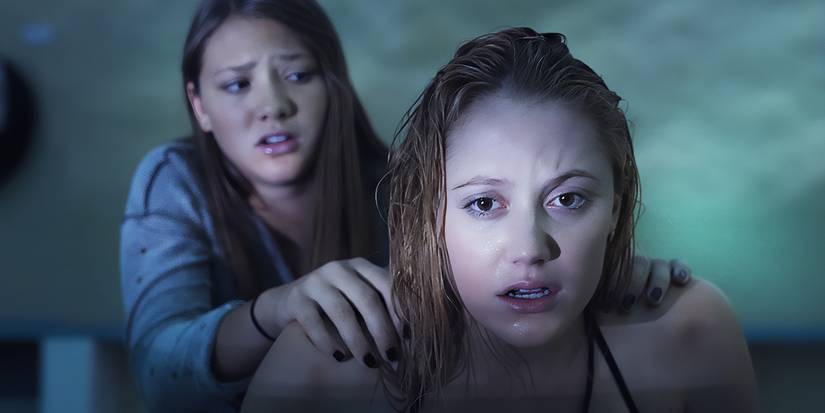
The horror arrives after sex, gets explained with almost embarrassing bluntness, and then starts walking. That is the genius-level simplicity behind It Follows. Jay (Maika Monroe) learns that something will pursue her continuously, taking the form of different people, and the only way to redirect it is to pass the curse to someone else. No elaborate mythology arrives to make the situation comfortable.
So you start scanning backgrounds like a paranoid person. Is that old woman supposed to be there? Why is that guy walking directly toward the camera? Why is nobody else reacting? The creature’s slow pace becomes worse than running would be because it turns distance into temporary relief rather than safety. Even Detroit feels slightly unstuck in time, with old cars, strange technology, and empty neighborhoods making normal life harder to place. The tall man entering the bedroom is still one of the nastiest visual jolts of the decade. The movie teaches you how to fear someone simply walking toward you, then lets your own imagination keep doing the work.
4 'The Wailing' (2016)

For a surprisingly long time, The Wailing lets Jong-goo (Kwak Do-won) be kind of a mess. He is a small-town policeman, scared easily, slow to understand what is happening around him, and hardly the guy you would choose when villagers start becoming violently ill after a mysterious Japanese stranger (Jun Kunimura) arrives nearby. The early investigation even has enough dark comedy to make the eventual dread feel like it sneaked in through a side door.
Then Jong-goo’s daughter Hyo-jin (Kim Hwan-hee) starts changing, and every explanation becomes dangerous. The stranger may be responsible. The shaman Il-gwang (Hwang Jung-min) may be helping. The mysterious woman in white (Chun Woo-hee) may know the truth. Or somebody may be lying in a way Jong-goo cannot afford to misread. The long ritual sequence is incredible partly because two separate spiritual acts unfold with enough force that deciding who is attacking whom becomes almost impossible. This is the rare horror movie where confusion does not feel like missing information. It feels like the trap itself. You keep wanting Jong-goo to make one correct choice, and the movie keeps making certainty harder to earn.
Collider Exclusive · 8 Questions · 2 Minutes What Is Your Biggest Horror Nightmare? Elm Street · Chucky · Scream · The Conjuring
Four horror franchises. Four completely different ways of scaring you. One waits until you fall asleep. One makes sure nobody believes you. One is already in your group of friends. And one is in the house with your family. Answer eight quick questions about how you actually watch horror, and find out which nightmare was built for you.
😴Elm Street(Freddy Krueger)
🧸Chucky(Child's Play)
📞Scream(Ghostface)
🕯️The Conjuring(The Warren Files)
01
Which horror scene makes you cover your eyes? Four classic images. One of them is worse than the others for you.
02
You are home alone and you hear a noise. First thought? Everybody has one. It arrives before you have decided anything.
03
Which horror movie rule would you break first? Everybody thinks they would survive. Almost nobody actually does.
04
Something genuinely frightening happens. What do you do? Not in a film. In your actual living room, tonight.
05
How do you actually watch a horror film? Be honest about this one. Nobody is checking.
06
Somebody offers you serious money. Which do you still refuse? The amount does not matter. There is one on this list you are not doing.
07
Which feeling stays with you a week after the film? Good horror does not stop when the credits do.
08
Something wakes you at 3am. What is the worst possibility? Eight questions in, this is the one that decides your nightmare.
The Lights Just Went Out Your Nightmare Is…
Four franchises, four completely different ways of getting underneath your skin. This is the one built out of your particular fear, why it works so well on you, and what it would leave behind.
Elm Street
Your nightmare does not wait outside the door. It waits for you to close your eyes, which you are going to have to do eventually, because nobody has ever won that particular argument.
- Freddy is horror's cruellest idea: a threat that lives in the one place you cannot guard, cannot lock, and cannot avoid forever.
- You are the one who is fine during the film and wide awake at two in the morning. Your own head is where this does its damage.
- These films understood exhaustion as a horror engine. The kids on Elm Street do not lose because they are weak. They lose because they are tired.
- You can lock every door in the house. You still have to sleep.
Chucky
Your nightmare is not really the doll. It is the face of the person you tell, and the way they decide, very kindly, that you have imagined all of it.
- Chucky works precisely because he is absurd. That is the trap: the more accurately you describe him, the less anybody is going to believe you.
- You are the one shouting at the screen because the characters are not listening. You know that feeling from real life too.
- The franchise is at its best when the adults in the room are the real obstacle, and you have met those adults.
- By the time somebody finally believes you, you will have handled most of it on your own.
Scream
Your nightmare has your number, knows your name, and has almost certainly been inside your house before. The worst part is that you already know them.
- Scream is the only one of these where the killer takes the mask off and turns out to be somebody who was at the party.
- You are the person who calls the twist out loud before it lands. You watch people the same way you watch films.
- The franchise made the rules of horror part of the plot, which means the survivors are the ones paying attention. You would be paying attention.
- Everybody is a suspect, including the person who just offered to walk you home.
The Conjuring
Your nightmare is not really about you. It is about the people asleep down the hall, and the feeling that whatever is here is not interested in leaving.
- The Conjuring films are domestic horror. The house, the family, the perfectly ordinary room that quietly stops feeling ordinary.
- Your instinct is to get everybody into one room. Your fear is protective rather than personal, which is rarer than it sounds.
- This is the one franchise where belief is the weapon. The people who come through it are the ones who are not alone and refuse to be.
- Whatever is here did not come for you. It came for the household, and you are the one standing in the hallway.
3 'The Witch' (2015)
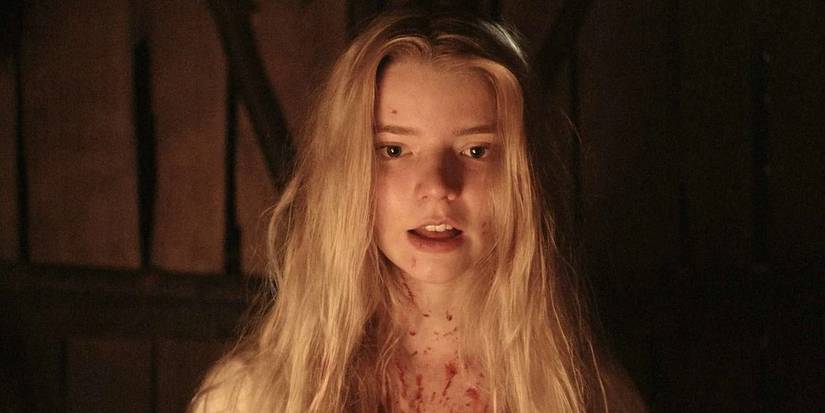
A baby disappears during a game of peekaboo. The film cuts away and shows you, with horrifying clarity, that the family’s worst fears are nowhere near imaginative enough. From there, The Witch settles around an isolated Puritan family already capable of destroying itself without supernatural assistance.
Thomasin (Anya Taylor-Joy) is old enough to become the target whenever crops fail, siblings misbehave, or her parents need somewhere to put their fear. The twins talk to Black Phillip as if the family goat is a perfectly reasonable conversational partner. Caleb (Harvey Scrimshaw)’s encounter in the woods becomes deeply uncomfortable long before his feverish return home turns the household into religious panic. The period language and severe setting never create distance because the family arguments are painfully recognizable. Parents accuse. Children listen through walls. Resentments that have been sitting quietly finally get permission to speak. And yes, Black Phillip eventually has something to say. Few horror payoffs have ever been more worth waiting for.
2 'Hereditary' (2018)
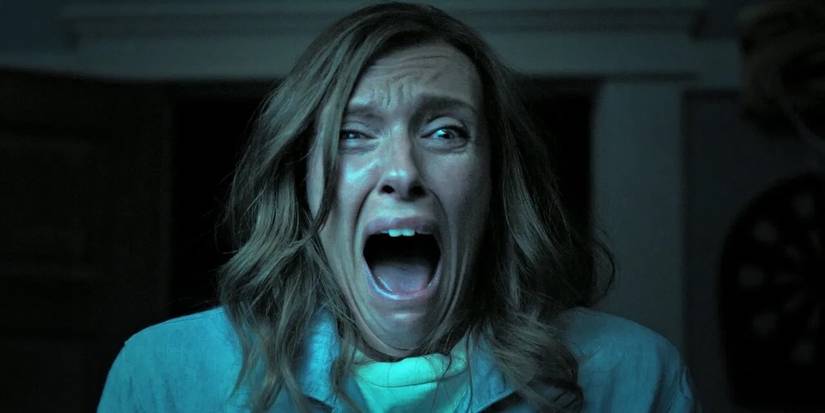
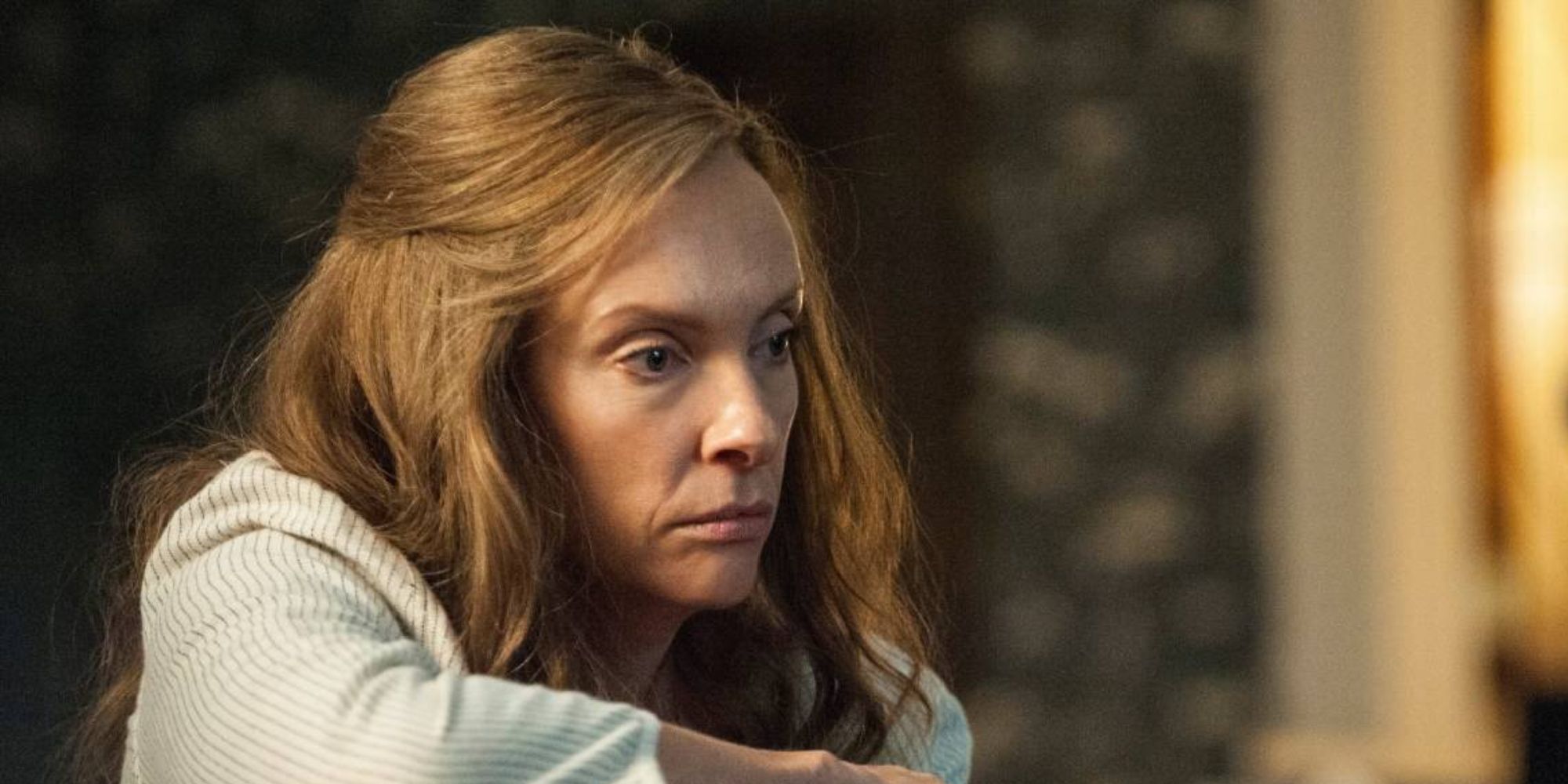
The tiny models are the first warning. Annie (Toni Collette) recreates rooms from her own life as miniature scenes, including moments most people would rather leave unexamined, and Hereditary gradually makes the entire Graham household feel like another carefully arranged space where somebody else may already know where everyone belongs. Then comes the telephone pole.
Anyone who has seen the movie knows the horrible silence afterward almost as well as the impact itself. Peter (Alex Wolff) drives home, goes upstairs, and leaves reality waiting outside until Annie discovers it the next morning. From there, grief poisons every interaction. The dinner-table explosion is painful because the supernatural story can briefly disappear and the family is still completely doomed as a family. Later details become worse on a second viewing. Strange faces at the funeral. Symbols in places you ignored. People standing quietly where they absolutely should not be. And once your eyes learn to check the dark corners of Peter’s bedroom, there is no going back. Hereditary does not just scare you once. It teaches you how to watch it incorrectly the first time.
1 'Get Out' (2017)
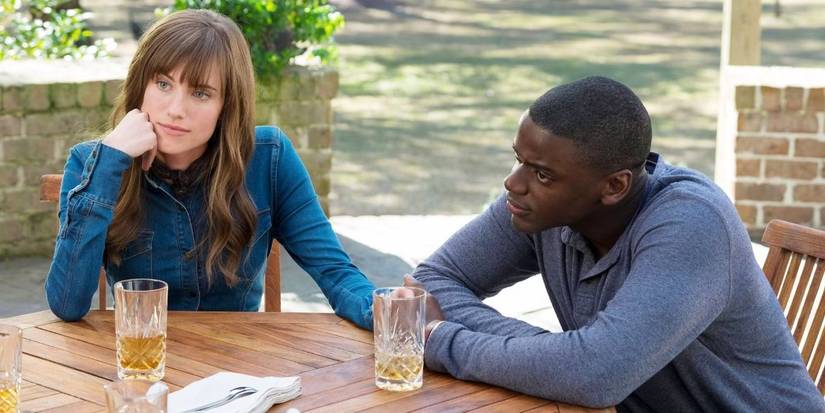
Get Out can make a packed theater scream, laugh, and then realize the joke was sitting beside something genuinely ugly. That balance is ridiculously hard. The movie makes it look easy. The teacup is almost insultingly ordinary. A spoon circles inside it, porcelain clicks softly, and Chris (Daniel Kaluuya) suddenly loses control of his own body while Missy (Catherine Keener) keeps speaking to him like this is a calm therapeutic exercise. That is why the movie is so much fun to revisit. Dean (Bradley Whitford) saying he would have voted for Obama a third time tells you plenty before anything openly sinister happens.
The garden party is full of conversations where Chris is being appraised while everyone pretends they are complimenting him. Walter (Marcus Henderson)’s nighttime sprint is terrifying partly because no normal social response exists for a man suddenly charging directly toward you. Then the Sunken Place gives the entire story an image for being conscious, visible, and completely stripped of control. Even Rod (Lil Rel Howery)’s TSA confidence pays off without turning him into disposable comic relief. Get Out takes everyday social discomfort and keeps turning the volume up until the politeness itself becomes threatening.
KioskNews shows a cleaned-up reading view extracted from the publisher’s page — the original always lives on their site, not ours.