Election Commissioners knocked on Cabinet Secretary’s door over voter software integrity
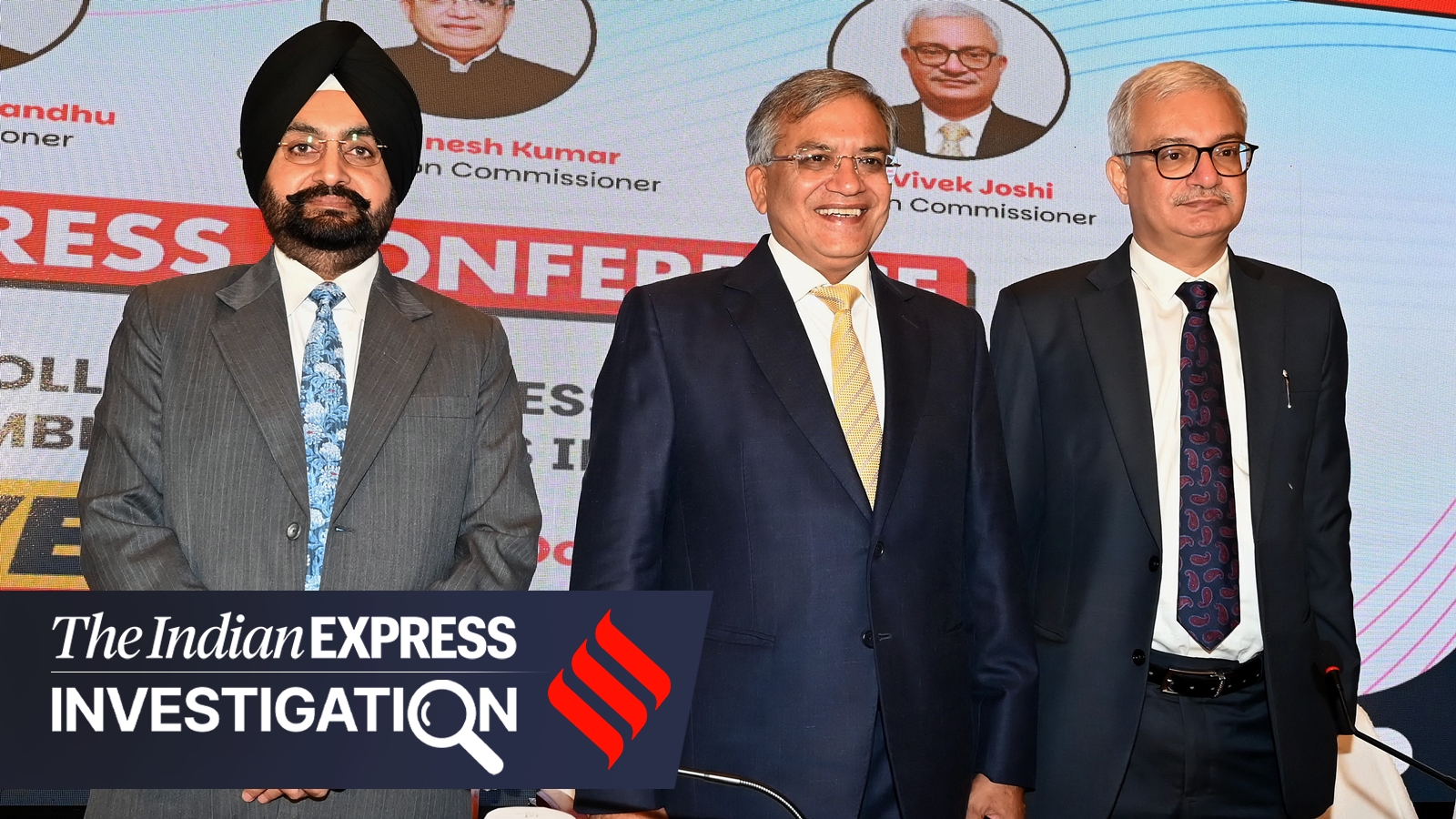
The promise was sweeping. On January 22, the Election Commission of India (ECI) launched ECINet, the tech backbone for almost a billion voters, bringing more than 40 of its apps and portals under one roof. It was built in strict accordance with the law, Chief Election Commissioner Gyanesh Kumar said. It would “enhance transparency, credibility and public trust”, said Seema Khanna, the Director General of IT in the Commission.
Within months, this very platform the CEC and his DG(IT) had called lawful and trustworthy was unravelling — state officers, prescribed by law to add or delete names and update records, were finding themselves shut out of the system, their access restricted by Khanna’s team in New Delhi.
This was a potential blow to the integrity of the elections itself. It prompted the two Election Commissioners Sukhbir Singh Sandhu and Vivek Joshi to raise red flags about the “gradual centralisation of the electoral roll database” and warn that ECINet was restricting the powers of officers on the ground who were responsible for preparing and finalising the roll.
On three occasions, they copied their notes to Chief Election Commissioner Gyanesh Kumar.
When a new officer was put in charge of the EC’s administration division in Delhi and issued a work allocation order that threatened to further concentrate these powers, the two ECs separately wrote to the country’s top bureaucrat, Cabinet Secretary T V Somanathan.
In effect, the two ECs were flagging a violation of the law.
The Representation of the People Act, 1950, and the Registration of Electors Rules, 1960, assign responsibility for the electoral roll to the Electoral Registration Officer (ERO), one for each Assembly seat. An ERO is usually the sub-divisional magistrate or an officer of equivalent rank in the district administration. The ERO prepares the voters’ list, hears claims and objections and decides which names will stay — and which get deleted.
Story continues below this ad
This is a deliberately decentralised system. For decades, the ECI has leaned on that design to answer political allegations of mass manipulation of electoral rolls. No single person is supposed to control the voters’ list.
On paper, the ERO still decides every name on the list. In practice, for at least the past 10 months, this has been tested in state after state. There are many cases where the ERO has not been able to do what the software allows: add a name, delete one, reverse a decision or process an appeal. What the software allows is controlled centrally by Khanna’s division in New Delhi.
Over ten months, from November to August, the two Commissioners said so repeatedly and in writing:
November 4, 2025: The concerns did not begin with ECINet. Its predecessor, ERONet, the roll-management system that ECINet has since subsumed, was already being used to manage the electoral roll, while new modules were being rolled out for the Special Intensive Revision. By November 2025, months before ECINet was launched, there were already warnings inside the Commission that the IT system (ERONet then) must not restrict the statutory powers of EROs.
Story continues below this ad
On November 4, 2025, acting on Sandhu’s directions, Deputy Election Commissioner Sanjay Kumar wrote to Khanna and senior Commission officers that “statutory functions of ERO, DEO and CEO (were) to be strictly exercised by them and no one else” and that “IT systems must be in strict compliance with the law, without any exception.”
January 2, 2026: With the SIR underway in 12 states and UTs, and the IT division putting EROs onto a new module for issuing notices and holding hearings, Sanjay Kumar wrote to Khanna, asking her to “ensure that IT system is made in a manner that ERO’s discretion to act in any manner is not restricted”. Twenty days later, the Commission launched ECINet.
April 16: Sandhu recorded that the IT division “has developed many new modules and portals in the last few months” without any being brought to his knowledge or presented to the Commission. “I have come to know about new developments from media only,” he wrote. He asked that Khanna be directed to keep all members of the Commission briefed and obtain “all necessary approvals” before undertaking any activity.
May 29: Joshi wrote to the CEC, Sandhu and Sanjay Kumar of “the gradual centralisation of the electoral roll database” and proposed an audit, with an outside expert from the IITs, to certify that “no one, except the concerned statutory authorities, has credentials to make any change in the (voter) database”.
Story continues below this ad
Joshi proposed two checks. One committee would periodically review the systems and certify that only the statutory authorities had the credentials to change the voter database. A second committee would check whether ECINet complied with the law and ensure that any policy or procedural changes to ERONet and ECINet were brought before the Commission. The aim, Joshi wrote, was to create an “internal auditing mechanism” that could also help the Commission answer the allegations against it that centralisation had invited.
July 13: Sandhu endorsed the proposal, writing that it would “improve the system” and should be put before the Commission. A month later, on August 14, Sandhu recorded the outcome. “Any action taken on these two notes of two Election Commissioners is not known to the undersigned.”
July 28: The tensions within ECI over the functioning of the IT division came to a head in late July, when an established layer of oversight over the IT division was removed.
Until then, senior IAS officer Sanjay Kumar, who was serving as Deputy Election Commissioner in New Delhi, was responsible for overseeing the IT division’s work and routing its files to the three-member Commission.
Story continues below this ad
On July 28, Maneesh Garg, Senior Deputy Election Commissioner in the ECI, was given additional charge of administration while the regular officer was on leave. Within hours, Garg changed the work allocation without consulting the Commission, removing Sanjay Kumar from the oversight of DG IT.
For Sandhu and Joshi, that chain was the oversight they had been asking for. It was through it that they had sought briefings on the IT division’s work and proposed an audit of the system. Garg’s order removed it.
July 29: In a move without precedent, the two Commissioners each wrote separately to the Cabinet Secretary reporting the above order and calling it a “clear violation” of the law that governs the Commission and asking for “appropriate action” against Garg.
July 30: A day after writing to the Cabinet Secretary, Sandhu and Joshi jointly set Garg’s order aside. They said the changes he made were “without any reason and justification”. They directed the previous work allocation to continue until the Commission reached a consensus on any change. The note went to Garg and was also copied to the CEC.
Story continues below this ad
August 14: Sandhu then put on record his most detailed concern about the IT system and the electoral roll. CEOs, DEOs and EROs are the statutory authorities responsible for the electoral roll, he wrote. But many had told him they did not have “proper and complete access” to ERONet and were therefore unable to perform their statutory duties properly. Their powers, he said, had been “curtailed by centralised control of ERONet at DG(IT) level”.
“It is strange,” Sandhu wrote, that responsibility for the electoral roll lay with these statutory authorities while “access control has been centralised by DG(IT)”. The DG(IT), he wrote, “doesn’t have any legal authority to restrict proper and complete access and freedom to operate, as given by law”.
Sandhu directed full access “be given immediately”. He also asked the DG (IT) to certify, based on confirmations from all CEOs, that statutory authorities across states and Union Territories had full access to ERONet and could perform their duties without restrictions.
-
01
ECINet, launched as a tech backbone for voters, is facing allegations of centralising electoral roll control.
-
02
Election Commissioners Sukhbir Singh Sandhu and Vivek Joshi warn that ECINet undermines statutory officer powers.
-
03
Representation of the People Act requires decentralised electoral roll management, which ECINet reportedly violates.
-
04
The ECs allege the DG(IT) division is restricting access for EROs, effectively centralising control in New Delhi.
-
05
Commissioners repeatedly flagged concerns about software modules developed without approval since November 2025.
-
06
Proposals for an independent audit by IIT experts to ensure legal compliance were ignored by the CEC.
-
07
In an unprecedented move, the ECs reported an internal administrative order violation to the Cabinet Secretary.
-
08
Sandhu and Joshi overruled a July 28 order that reduced oversight of the IT division, calling it unjustified.
The Election Commission and the two ECs, Sandhu and Joshi, did not respond to calls and questionnaires emailed by The Indian Express seeking comment.
KioskNews shows a cleaned-up reading view extracted from the publisher’s page — the original always lives on their site, not ours.