Faith leaders challenged to drive climate action, demand accountability
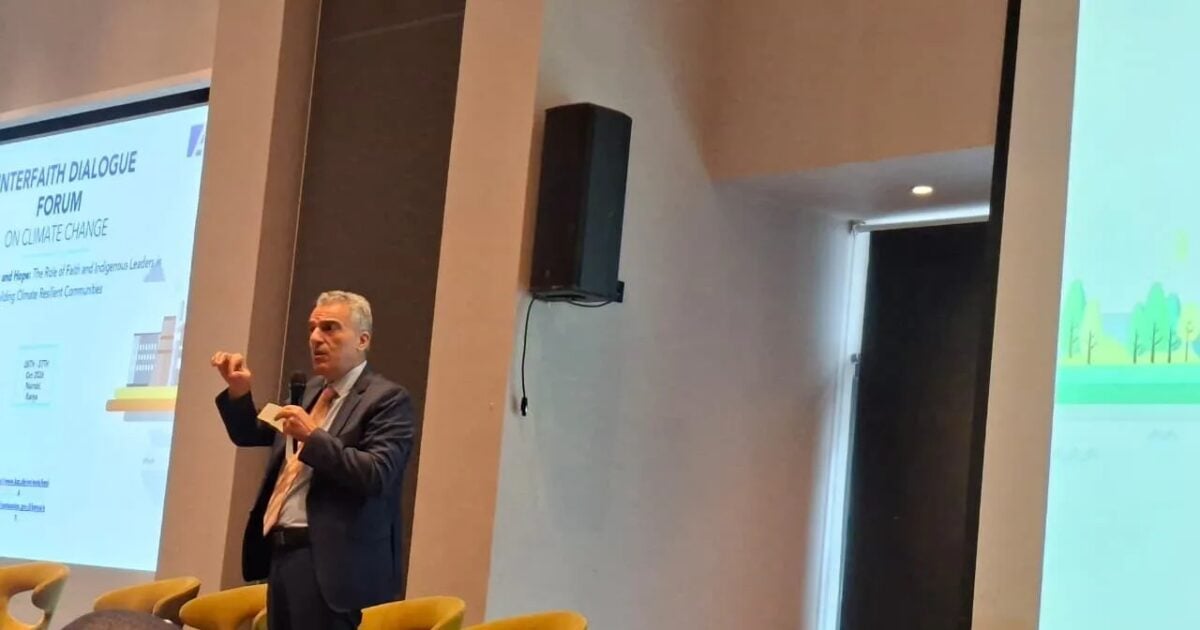
NAIROBI, Kenya, Oct 26 — Faith and indigenous leaders have been challenged to translate climate change commitments into practical community action and hold governments accountable for ensuring climate financing reaches vulnerable populations.
Israeli Ambassador to Kenya Gideon Behar said religious leaders had a critical role in mobilizing communities against climate change, warning that the crisis could not be left to policymakers and scientists alone.
“We must translate words, thoughts, prayers, decisions into real actions on the ground,” Behar said during an interfaith climate dialogue in Nairobi organised by the Embassy of Israel in Kenya and the Konrad-Adenauer-Stiftung (KAS).
He urged religious and indigenous leaders to form partnerships across faiths and identify immediate interventions, including tree planting, neighbourhood clean-ups and protection of local water resources.
“Every time you do something for the environment, you do something for the people and you do something for the creation,” he said, expressing hope that the forum would grow into an annual platform that delivers measurable results.
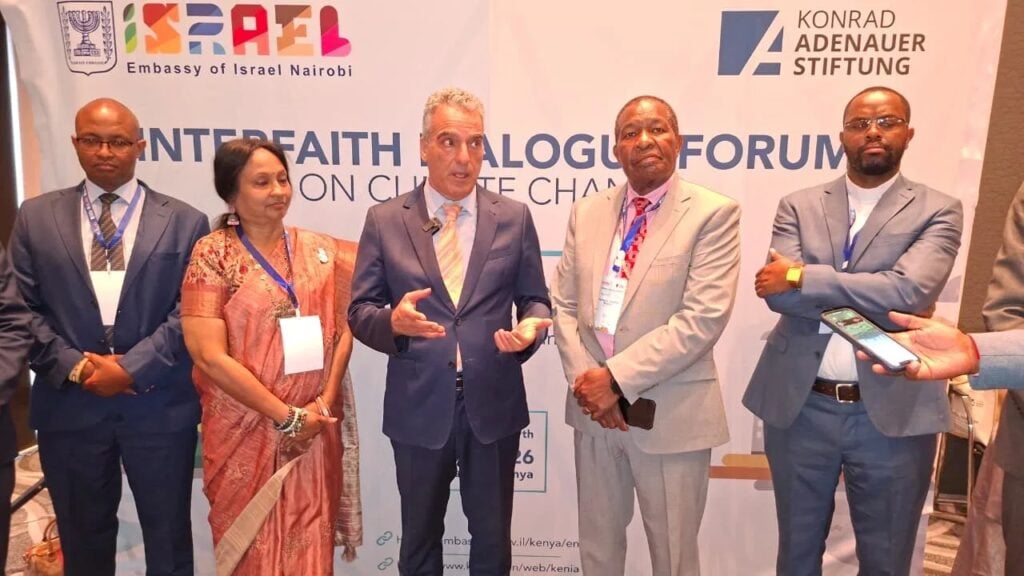
The two-day dialogue brings together faith and indigenous leaders, government representatives, civil society organisations and environmental practitioners to explore how religious values and traditional ecological knowledge can support climate resilience.
Geoffrey Njuguna, a board member of the Indigenous Council of Kenya and a leader in the Deliverance Church, said religious institutions should use their influence to promote environmental stewardship while demanding accountability from those responsible for climate policy and financing.
Njuguna outlined four commitments by the council: integrating environmental stewardship into religious teachings, adopting sustainable practices within religious institutions, mobilising congregations to protect forests and water sources, and holding authorities accountable for climate action.
“Faith leaders must hold every level of government and every partner to account so that climate finance reaches the communities who need it,” he said.
He said churches, mosques, temples and other religious institutions could support tree planting, rainwater harvesting, green energy adoption, waste management and climate-smart farming.
Njuguna added that faith networks could help communicate early warnings, mobilise young people and women, and strengthen community-level responses to droughts and floods.
Thomas Lerenten Lelekoiten, Deputy Director at the Ministry of Environment, Climate Change and Forestry’s Climate Change Directorate, said Kenya had established a policy framework for climate action, but implementation and resource mobilisation remained critical challenges.
He cited Kenya’s Climate Change Act of 2016 and the National Climate Change Action Plan as instruments guiding the country’s response, while stressing that government institutions could not address the crisis alone.
“Policies by themselves cannot help. You can have very peaceful policy instruments, but without translating them to actions, those policies will not be useful to us,” Lelekoiten said.
He called for stronger partnerships between government, faith-based organisations, indigenous communities, development partners and civil society to turn policy commitments into interventions that benefit communities.
Lelekoiten also highlighted the importance of indigenous knowledge in climate adaptation, citing pastoralism as a sustainable way of using arid and semi-arid lands when managed in ways that allow ecosystems to recover.
He said financing remained a major obstacle, citing the UN Adaptation Gap Report’s estimate that developing countries would require up to US$365 billion annually for adaptation by 2035, against approximately US$26 billion currently available.
Mathias Kamp, KAS Country Director in Kenya, said faith and indigenous communities were important partners in building resilience because of their close ties to local populations and their role in supporting communities during disasters.
He said the dialogue was intended to connect religious values and indigenous wisdom with modern climate action, strengthen cooperation across faith traditions and identify practical approaches to protecting land, water and livelihoods.
Kamp described climate change as an ethical and moral challenge as well as an environmental and political one, saying religious traditions shared values of stewardship, compassion and care for creation.
Catholic priest Rev. Fr. Patrick Ndungu of the Archdiocese of Nairobi similarly urged religious institutions to embed environmental protection in their teachings and everyday practices, including water conservation, sustainable transport and responsible waste disposal.
He said environmental stewardship required changes in individual behaviour as well as institutional commitment, warning against allowing climate discussions to remain confined to conferences and policy documents.
The dialogue comes amid growing concerns over rising temperatures, prolonged droughts, flooding and the resulting pressure on livelihoods and ecosystems.
KioskNews shows a cleaned-up reading view extracted from the publisher’s page — the original always lives on their site, not ours.