Florence Pugh on Netflix’s Crucial Change to ‘East of Eden’s Most Notorious Character

Greer Riddell is a London-based culture journalist and critic writing on film, television, audience behaviour, and the wider media industry. She is a Writer and Social Media Coordinator at Collider and TV Editor at FILMHOUNDS.
Her recent collaborations include Netflix, Warner Bros., DC Studios, Hulu, and Disney+, producing features on titles including Saturday Night Live UK, Severance, Sitcoms, Buffy the Vampire Slayer, and Stranger Things. Her recent reviews include Peaky Blinders: The Immortal Man, Stranger Things: Tales From ‘85’, Scrubs Season 10, and The Boroughs. Her work has also included coverage of UK film festivals and features published in Film Stories Magazine.
Editor's Note: The following contains plot spoilers for East of Eden.
Summary
- In an interview with Collider, Florence Pugh said Netflix’s East of Eden gives Cathy Ames’ trauma the weight it deserves, helping audiences understand her actions without excusing them.
- Mike Faist said the story’s central question is whether people are bound by their past or can choose who they become each day.
- Christopher Abbott said the novel gave him valuable backstory for Adam Trask, including scenes that never made it into the series.
From Little House on the Prairie to Pride and Prejudice, Netflix has been leaning into classic book adaptations, and it’s only just getting started. It’s not a surprising move when you consider literature-themed titles brought in 9 billion global views, accounting for nearly 20% of all hours watched on the streamer in 2025. Netflix’s latest adaptation is tackling one of America’s most famous novels, East of Eden, written by John Steinbeck in 1952. It’s a story about family, generational trauma, and whether children are naturally doomed to repeat their parents' mistakes.
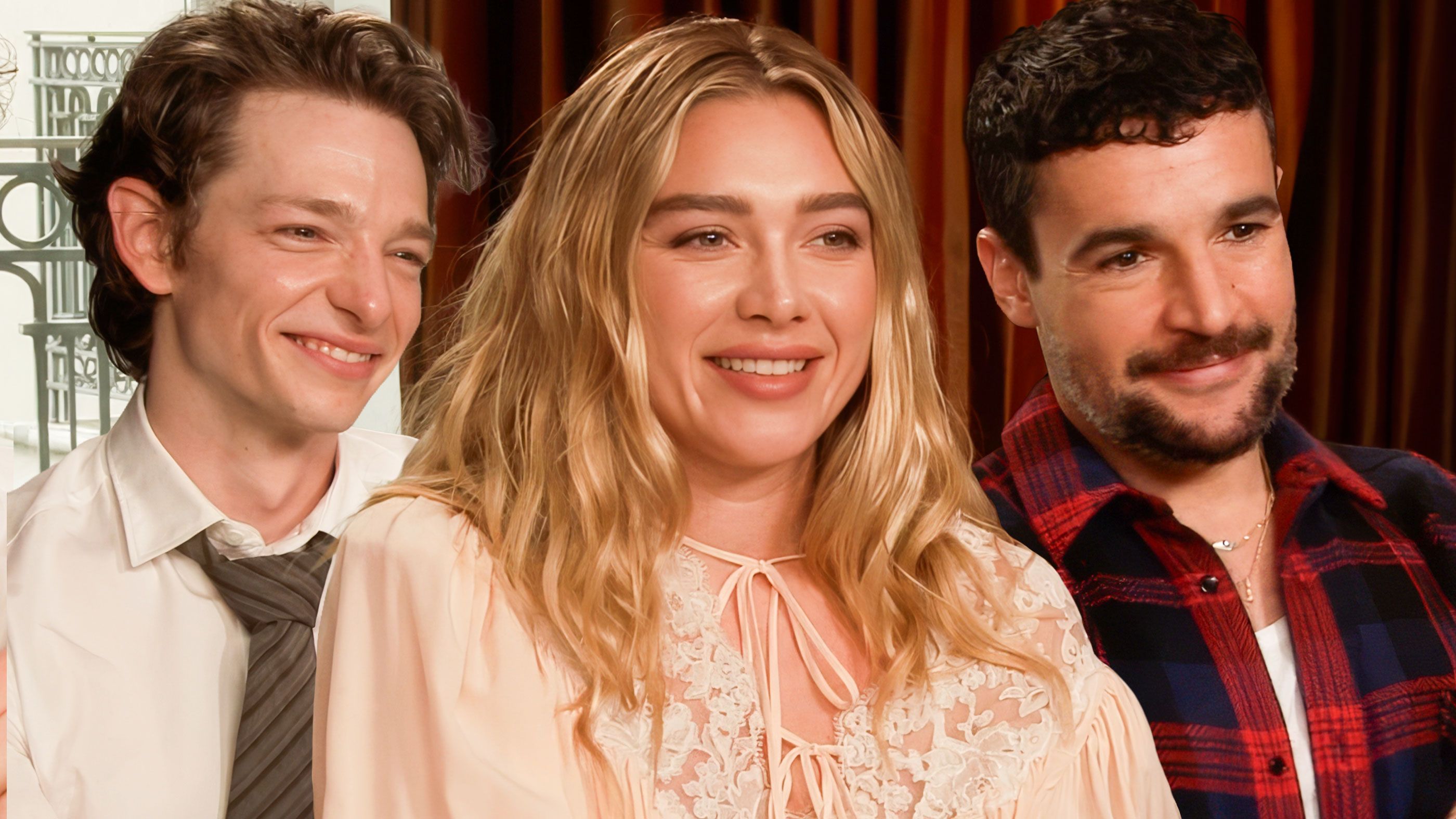
For a novel set more than a century ago, the themes are very contemporary, and this new retelling brings the story’s famous antihero Cathy Ames to the forefront. It’s not surprising then that this adaptation, written by Zoe Kazan, has attracted some of Hollywood’s biggest names. Florence Pugh (Little Women) takes on the lead role of Cathy, who marries Adam Trask, played by Christopher Abbott — soon-to-be Marvel’s Professor X. Adam’s brother and Cathy’s kindred spirit, Charles, is played by Challengers' Mike Faist. East of Eden’s leading trio joined Collider to talk about how they approached the adaptation, why it was so important to bring Cathy Ames’ story to audiences today, and whether good vs. evil can be so clearly defined.
Content warning: This conversation contains mentions of sexual assault and child abuse.
Florence Pugh Takes Playing ‘East of Eden’s Cathy as a “Huge Responsibility”
“To a monster, the norm must seem monstrous.”

Florence Pugh is having a busy 2026. She stars in three of the year’s biggest blockbusters, beginning with Spider-Man: Brand New Day, and is set for another Barbenheimer moment with Avengers: Doomsday and Dune: Part Three, both releasing on the same day this December. Yet her role as Cathy Ames in Netflix’s 7-part adaptation of East of Eden is perhaps the most personal and poignant for the star. Working alongside showrunner Zoe Kazan, Pugh serves as an executive producer on the miniseries and has been in discussions about the project since 2020. Kazan is an actor and screenwriter in her own right but is intriguingly connected, via her director grandfather, Elia Kazan, to the 1955 East of Eden film starring James Dean. This new adaptation promises to be a “modern interpretation” focusing new attention on “its indelible antihero,” Cathy, so Pugh's involvement is also in its DNA.
So what is it about Cathy’s story that deserves this new attention, and why is it so relevant to tell now? For Pugh, it is key for context. Steinbeck characterizes Cathy as innately evil — a satanic figure in the allegory of Cain and Abel. He makes her feminine traits the most monstrous, including portraying her body as a destructive force that she uses to manipulate men and makes her unable to produce the milk needed to nurture her children. Both Kazan and Pugh wanted to share their own personal readings of the story as women in the miniseries. “Every generation is going to have their version of what's important in every book,” says Pugh, “[But] what Zoe has done for Cathy is allowed for there to be some understanding of why she is the way that she is.”
Steinbeck’s novel uses a sexual assault as an example of how Cathy destroys men’s lives and positions it as a tactic she uses to frame them. This modern interpretation realigns rape as the truly horrifying act that it is. Pugh shares how important this distinction was for her: “Once we allow for that to be true, we're actually already empathizing with the character from the beginning of her journey.”
The themes of generational trauma and formative scars in East of Eden feel contemporary. “We can't let for there to be a child rape happen and to not expect that person is altered for the rest of their life,” says Pugh. While providing a chilling backstory that may explain Cathy’s own actions, Pugh is quick to say that the series does not excuse her evils: “We’re not saying she isn't these things,” but instead she and Kazan have purposely allowed her trauma to be true. It’s up to you to define what that does to your own reading of the story.
Mike Faist Finds ‘East of Eden’s Central Question About Good vs. Evil “Incredibly Human”
“Will you bring me back an orange?”

Steinbeck takes the biblical inspiration quite literally in East of Eden. Not only do we get two generations of brothers whose names begin with C and A, echoing Cain and Abel, but they are also both categorized as being the good or evil ones from birth. In the Book of Genesis, the firstborn sons of Adam and Eve give offerings to God, who accepts Abel’s but rejects Cain’s. So the spurned brother commits fratricide and is sentenced to a life of unrest. Faist’s Charles is East of Eden’s Cain, and his father, Cyrus Trask (Tracy Letts), favors his brother Adam, going as far as saying in one scene, “I love [him] better.” Adam is allowed to follow in Cyrus’ dignified footsteps as a soldier while Charles must stay and toil on the family farm. This separation cements a lifelong rift between the brothers even before Cathy turns up on their doorstep.
The theme of good vs. evil is perhaps the fundamental crux of all stories, but Steinbeck makes it something we must continually judge. “It's the thing that ultimately made me very interested,” says Faist when asked how we should settle on which characters are good or evil in the end. He challenges us to consider not only the three main characters in this context, but the extended players and the next generation: “Everybody is wrestling with that idea of the good and bad that exists within them which I do think is… incredibly human.”
East of Eden leans on the same timeless themes and questions about humanity as the original Cain and Abel story does. How much of your life is decided before you are even born? Are you doomed to repeat the sins of your parents? In a conversation with Abbott’s Adam Trask, the philosophical housekeeper Lee (Hoon Lee) shares that his relatives, a group of Chinese scholars, had discovered a passage in Genesis that had been mistranslated. He claims that the debated Hebrew word “timshel” means “thou mayest” rather than “thou shalt,” so human beings neither need to pursue a righteous life nor are doomed to sin. They instead have a choice in how to behave, and that choice belongs to the individual, rather than being determined by heredity. Faist was intrigued by this enduring moral dichotomy, saying, “Every single day… any one of us wakes up; it is that question of which version of yourself are you going to lead with.”
So timshel is not a one-time deal; you make your choice with each decision throughout your life. Unlike the 1955 film, Netflix’s East of Eden, by its episodic nature, can take its time and fully explore the lives of the Trasks from 1862 to 1918. We can see how their past mistakes affect their present and whether they’ve chosen to follow the good or the bad at each turn. “You watch them grow older, have reflecting moments of the choices that they made throughout their life,” says Faist. The question of whether any of them transcend their predestined paths continues all the way to the final credits.
Christopher Abbott Brought His Experience on Hulu’s ‘Catch-22’ to ‘East of Eden’
“I want to build a home worthy of my wife”
For Steinbeck, East of Eden was the culmination of his life’s work; he completed the first draft in 1951. He considered it “the book,” his “magnum opus,” and everything else he had written, including The Grapes of Wrath (1939) and Of Mice and Men (1937), was in “practice for this.” East of Eden is also semi-autobiographical, with the Hamilton family based on Steinbeck’s maternal grandfather. He also saw it as a way to preserve the sights and sounds of his youth in the Salinas Valley for his young sons, Thom and John, to whom he originally addressed the novel.
The story even includes a young Steinbeck in a brief cameo. Abbott’s previous work also informed his turn in East of Eden, as the series is his second miniseries adaptation of a classic novel. In 2019, he starred in the George Clooney-produced Catch-22 for Hulu as the antihero Captain John Yossarian. This six-episode adaptation of Joseph Heller’s novel earned Abbott a nomination for Best Performance by an Actor in a Limited Series or Motion Picture Made for Television at the 77th Golden Globe Awards.
Just as Steinbeck’s previous work prepared him for East of Eden, Abbott shared with Collider that his time on Catch-22 had helped him portray Adam Trask in the series. Having the source material as “a bit of research” that can be referred back to during production is beneficial, as “it sort of does the work for you,” says Abbott. Even if “there's a scene in the book that isn't in the show... you can still sort of just have that in the back of your mind as... purely backstory.”
As you watch East of Eden this October and decide for yourself who is ultimately good and evil, consider whether the characters should be excused for their actions because of the circumstances in their past. It’s a question that has been passed down through the generations, so perhaps we’re not doomed to repeat the sins of our ancestors, but doomed to keep asking the same eternally puzzling questions. Netflix’s East of Eden is the latest in a long line of attempts to find the answers.
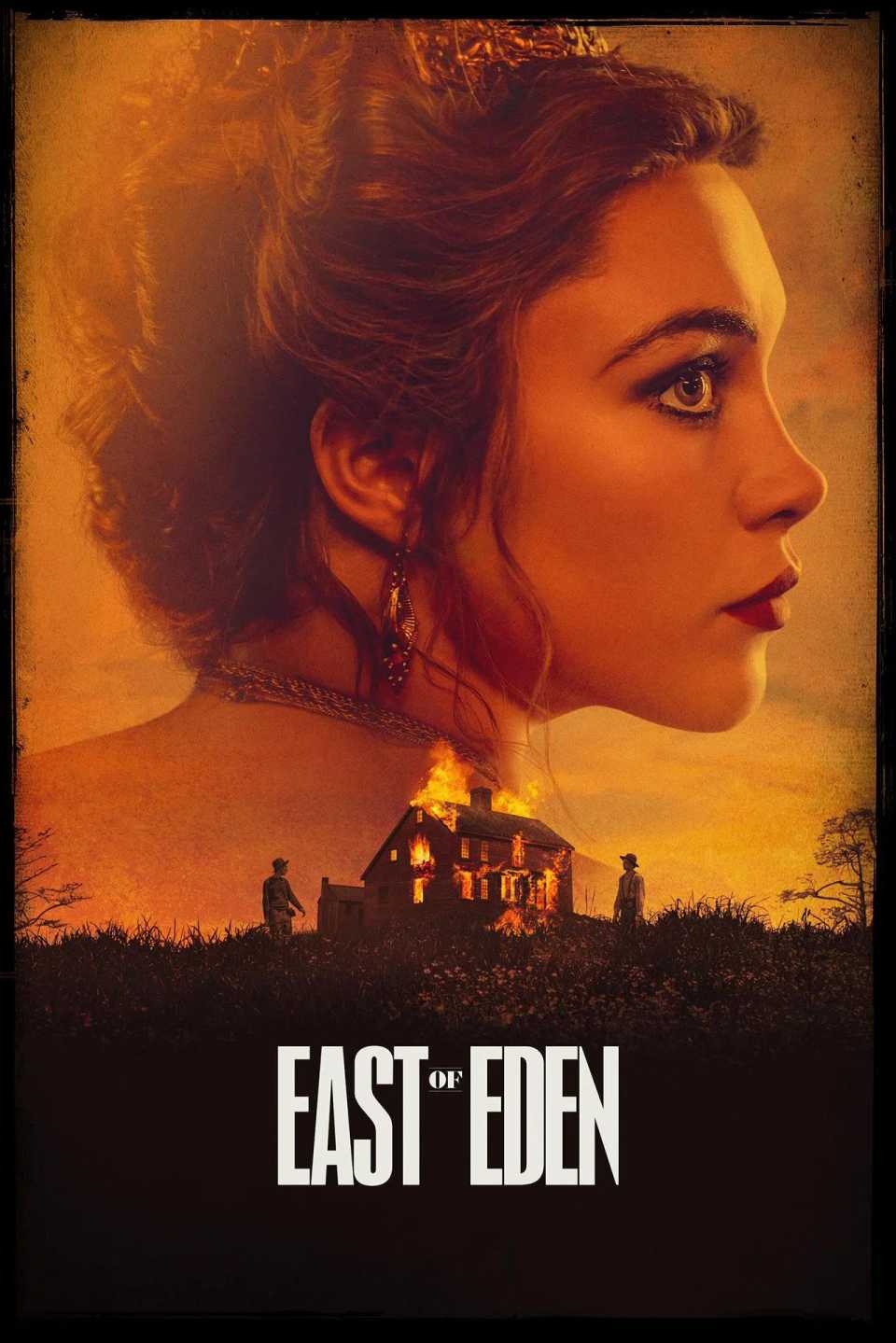
East of Eden premieres on Netflix on October 1.
- Release Date
- 2026 - 2026-00-00
- Network
- Netflix
- Directors
- Garth Davis
KioskNews shows a cleaned-up reading view extracted from the publisher’s page — the original always lives on their site, not ours.