For migrant children, access to school is not enough
3 min readOct 23, 2026 06:21 AM IST First published on: Oct 23, 2026 at 06:21 AM IST
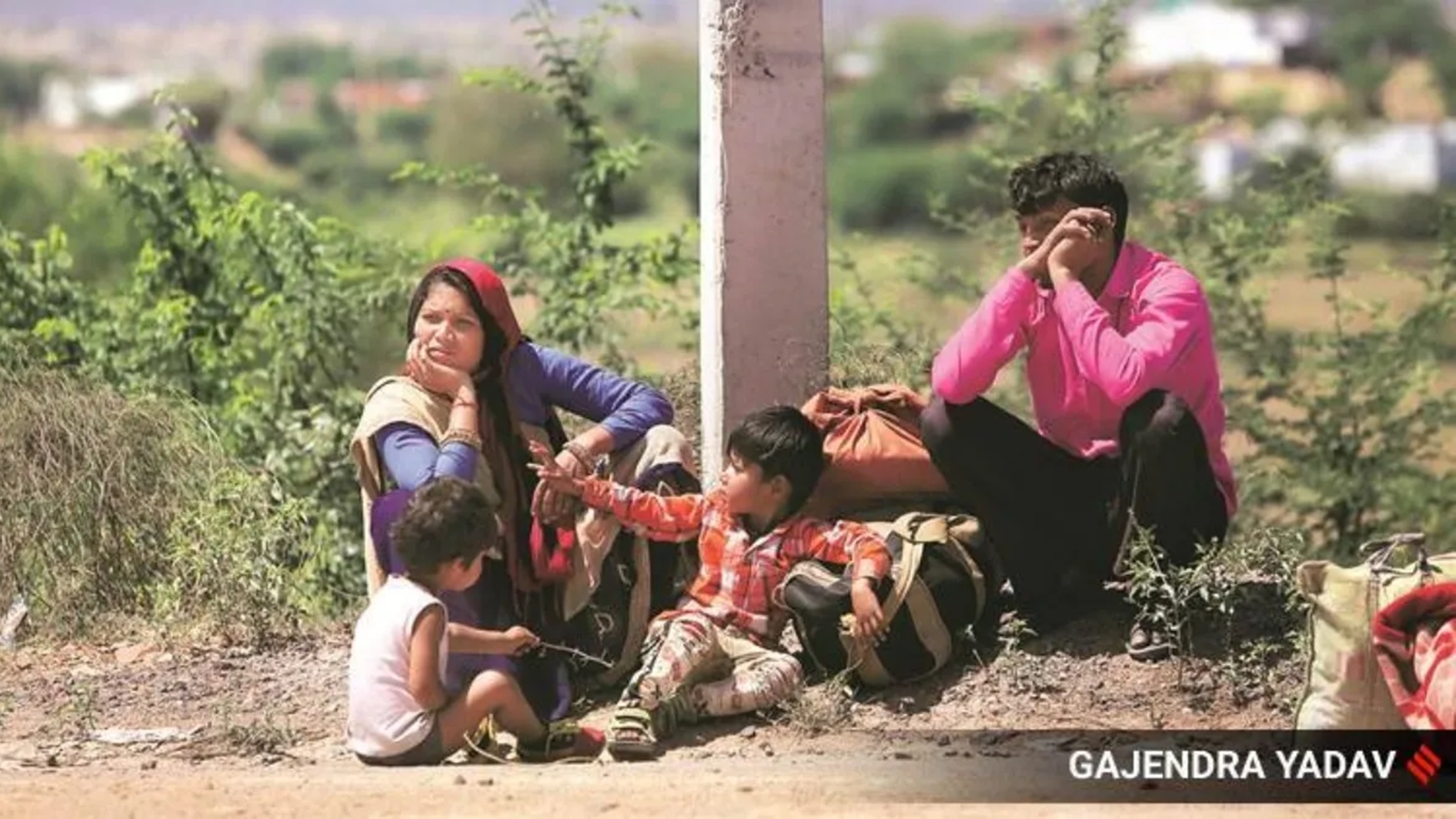
As the Kharif harvest comes to an end, seasonal migration begins across many parts of India. But this year, drought is adding a new dimension, with seasonal migrants increasingly becoming “climate migrants”. Intense drought, drying fields and shrinking livelihood opportunities are likely to push more families towards sugarcane fields, brick kilns, construction sites and other worksites in search of livelihoods. The most overlooked victims of such migration are often children. Forced to migrate with their parents, they face interrupted schooling, learning loss, and the risk of prolonged educational exclusion. According to the last Census, India had 9.29 crore migrant children. At present, there is no reliable estimate of how many are out of school. The recent NITI Aayog report, ‘School Education System in India: Temporal Analysis and Policy Roadmap for Quality Enhancement’, highlights the educational exclusion of migrant children. Schooling disruptions, often lasting five to six months, widen learning gaps, weaken social ties, and undermine school belonging. These increase the risk of irregular attendance and dropout. Many children begin assisting their parents at work and slip into child labour.
The Sarva Shiksha Abhiyan, launched in 2001, marked a systematic effort to address barriers to school access among migrant children. Alongside expanding educational infrastructure in remote and underserved areas, it promoted context-specific alternative education models to ensure continuity, including seasonal hostels, residential schools, basti shalas, sakhar shalas (sugarcane schools), tent schools (construction-site schools), and transit education centres. Both the Right to Education Act (2009) and the National Education Policy (2020) have recognised the educational exclusion of migrant children and underscored the importance of inclusive education. Recently, NITI Aayog has recommended measures such as migration-responsive schooling, bridge learning centres, portable school records, inter-state transfer mechanisms, and tracking systems. Despite this, in practice, the primary focus has remained on access and enrolment.
Access and enrolment are only the first steps. The challenge lies in ensuring meaningful learning, remedial teaching, academic and mental-health support, emotional well-being, care, and equitable educational strategies. While providing education at worksites is a significant intervention, there is an equally urgent need to implement equitable and context-responsive alternative education models that address the distinct learning needs of migrant children. This is precisely what the NEP 2020 advocates.
The question is whether teachers have the pedagogical competencies and sociological perspectives to critically interrogate the sociocultural and structural inequalities reproduced in classrooms.Most teacher-education programmes are structured around the assumptions of sedentary formal schooling; migration-responsive education must be urgently integrated.
The true measure of an inclusive education system lies not merely in whether migrant children enter classrooms, but in whether they can learn, participate, and progress without their mobility determining their educational futures.
The writer leads Rubal Foundation, a non-profit working with migrants and informal workers
KioskNews shows a cleaned-up reading view extracted from the publisher’s page — the original always lives on their site, not ours.