10 Comedy Movies From the 1970s All Gen Zers Should See at Least Once

Haley Petersen is a freelance writer who is currently working with Collider. She has one published short story and continues to write as she works for her English and Film degrees. She is a horror fanatic, a Star Wars nerd, and a Lord of the Rings geek. When she isn't watching Netflix or judging the work of other artists much more talented than herself, she is most likely asleep.
Sign in to your Collider account
As different as millennials and Gen Z are, that isn't to say that we can't enjoy some cinema of the past. The '70s were a unique time when it came to filmmaking. Low-budget films were being pumped out one by one, and art house cinema came to a head as more and more movie theaters popped up around the country.
Not all the films on this list are low-budget indie films, but they are all comedies from the '70s. Be it for their social commentary or their absurdist humor, they are all valuable to the generations of today.
10 'The Three Musketeers' (1973)

The film adaptation of Alexandre Dumas' cherished comedic novel does not disappoint when it comes to delivering laughs. The Three Musketeers is a comedic masterpiece, but it also tells a good story. Both The Three Musketeers and its sequel, The Four Musketeers: Milady's Revenge, explore themes of spiritual opportunism and religious exploitation, as the musketeers fight to protect France from the corrupt Cardinal Richelieu (Charlton Heston).
The film is about friendship and camaraderie (all for one and one for all!), as well as becoming the person you want to be without taking it too seriously. From the beginning to the end, The Three Musketeers is satirizing itself in the most hilarious way possible.
9 'Annie Hall' (1977)

Woody Allen's comedic masterpiece was one of the very first so-called "rom-coms," and it inspired many future films in the genre such as When Harry Met Sally. The film revolves around Alvy Singer (Woody Allen), a cynical comedian, as he reflects on his relationship with a woman named Annie Hall (Diane Keaton). The film is hopelessly awkward, embarrassingly honest, and shamelessly hilarious.
The movie captures the highs and lows of romantic relationships, as well as the tragic reality that few of them last. While the film is a comedy, it has a healthy dose of cynicism that is just perfect for a generation that's grown up through multiple recessions, a climate crisis, and the new and improved Black Plague.
8 'Female Trouble' (1974)

John Waters' daring and obscene style isn't for everyone, but those that get it, get it. A veteran of art house cinema, this was one of Waters' earlier works, and it adequately represents his dark sense of humor and cynical views on life. That being said, the film is above all else a comedy. Waters utilizes extremely crass sexual humor in order to tell his story in the most shocking way possible, the absurdity of everything lending itself to his twisted vision.
Famous '70s drag queen Divine stars as Dawn Davenport, a teenage runaway who finds herself on the darker side of the beauty industry in her quest to be the ultimate fashion model. The film is made to shock and horrify, but its true value lies in the open rejection of all things deemed "nice" and "appropriate." In essence, the film is a protest against the "wholesome" values of the previous generations, perfect for millennials and/or Gen Z.
7 'Breaking Away' (1979)

This coming-of-age masterpiece is a must-see for anyone who finds themselves lagging in the game of life. The film revolves around four high-school graduates as they navigate the next step in their life trajectories without the help of any form of motivation or ambition. Themes of class and poverty are explored as the teens attempt to coexist with rich, upper-class college students who attend the university in their college town.
Breaking Away has an all-star cast with Dennis Christopher, Daniel Stern, Jackie Earle Haley, and Dennis Quaid all before they found fame in the industry. Of all the films on this list, this might be the most heartwarming, and its exploration of the plight of working-class young people is still extremely relevant in modern-day America.
6 'Young Frankenstein' (1974)

There are multiple Mel Brooks comedies that could have made it onto this list, but Young Frankenstein pokes fun at a classic literary masterpiece that is often assigned in high school, so the younger generation will definitely appreciate it. Gene Wilder stars as Frederick Frankenstein, a grandson of the famous mad scientist. The film follows his story as he attempts to prove that the Frankenstein legacy does not have to be associated with insanity.
As can be expected from a Mel Brooks film, Young Frankenstein is absolutely hilarious, a must-see for anyone who appreciates classic comedy. Alongside Gene Wilder, it stars Madeline Kahn, Marty Feldman, Cloris Leachman, Teri Garr, and Peter Boyle as The Monster.
Collider Exclusive · Oscar Best Picture Quiz
Which Oscar Best Picture
Is Your Perfect Movie?
Parasite · Everything Everywhere · Oppenheimer · Birdman · No Country
Five Oscar Best Picture winners. Five completely different visions of what cinema can be — and what it can do to you. One of them is the film that was made for the way your mind works. Ten questions will figure out which one.
🪜Parasite
🌀Everything Everywhere
☢️Oppenheimer
🐦Birdman
🪙No Country for Old Men
01
What kind of film experience do you actually want? The best movies don't just entertain — they leave something behind.
02
Which idea grabs you most in a film? Great films are driven by a central obsession. What's yours?
03
How do you like your story told? Form is content. The way a story is shaped changes what it means.
04
What makes a truly great antagonist? The opposition defines the protagonist. What kind of opposition fascinates you?
05
What do you want from a film's ending? The final note is the one that lingers. What do you want it to sound like?
06
Which setting pulls you in most? Where a film takes place shapes everything — mood, stakes, what's even possible.
07
What cinematic craft impresses you most? Every great film has a signature — a technical or artistic element that makes it unmistakable.
08
What kind of main character do you root for? The protagonist is the lens. Who you choose to follow says something about you.
09
How do you feel about a film that takes its time? Pace is a choice. Some films sprint; others let tension accumulate slowly, deliberately.
10
What do you want to feel walking out of the cinema? The best films leave a mark. What kind of mark do you want?
The Academy Has Decided Your Perfect Film Is…
Your answers have pointed to one Oscar Best Picture winner above all others. This is the film that was made for the way your mind works.
Parasite
You are drawn to films that operate on multiple levels simultaneously — that begin in one genre and quietly, brilliantly migrate into another. Bong Joon-ho's Parasite is a film about class, desire, and the architecture of inequality that manages to be darkly funny, deeply suspenseful, and genuinely shocking across a single extraordinary running time. Your instinct is for cinema that hides its true intentions until the moment it's ready to reveal them. Parasite is exactly that — a film that rewards close attention and punishes assumptions, right up to its devastating final image.
Everything Everywhere All at Once
You want it all — and this film gives you all of it. The Daniels' Everything Everywhere All at Once is one of the most maximalist films ever made: action comedy, multiverse sci-fi, family drama, existential crisis, and a genuinely earned emotional core that sneaks up on you amid the chaos. You are someone who responds to ambition, who doesn't want cinema to choose between being entertaining and being meaningful. This film refuses that choice entirely. It is overwhelming by design, and its overwhelming nature is precisely the point — because the feeling of being crushed by infinite possibility is exactly what it's about.
Oppenheimer
You are drawn to cinema on a grand scale — films that understand history not as a backdrop but as a force, and that place their characters inside that force and watch what happens. Christopher Nolan's Oppenheimer is a film about the terrifying gap between what we can do and what we should do, told with the full weight of one of the most consequential moments in human history behind it. You want your films to feel important without feeling self-important — to earn their ambition through sheer craft and the gravity of their subject. Oppenheimer does exactly that. It is enormous, complicated, and refuses easy comfort.
Birdman
You are drawn to films that foreground their own construction — that make the how of the filmmaking part of the what it's about. Alejandro González Iñárritu's Birdman, shot to appear as a single continuous take, is cinema examining itself through the cracked mirror of a fading actor's ego. You respond to formal daring, to the feeling that a film is doing something that probably shouldn't be possible. Michael Keaton's performance and Emmanuel Lubezki's restless camera create something genuinely unlike anything else — a film that is simultaneously about creativity, relevance, self-destruction, and the impossibility of ever truly knowing if your work means anything at all.
No Country for Old Men
You are drawn to cinema that trusts silence, that refuses to explain itself, and that treats dread as a form of meaning. The Coen Brothers' No Country for Old Men is a film about the arrival of a new kind of evil — implacable, arbitrary, and utterly indifferent to the moral frameworks we use to make sense of the world. It is one of the most formally controlled films ever made, and its controlled restraint is what makes it so terrifying. You want your films to haunt you, not comfort you. You are not interested in resolution if resolution would be dishonest. No Country for Old Men is honest in a way that most cinema never dares to be.
5 'Paper Moon' (1973)

Tatum O'Neal was the youngest actress ever to win an Oscar for her stint as Addie Loggins in Paper Moon. Alongside her father Ryan O'Neal, the duo plays two Midwestern con artists lying their way to financial success during the Great Depression. The film is witty, cynical, unabashedly charming, and above all, hopeful.
Filmed in black and white to capture the essence of the era, the movie looks like a 1940s crime caper, but in this film the criminals are the protagonists. Whether you're one of those people who loves rooting for the "bad guys," Tatum O'Neal is so charming in her role that by the end you will be wishing nothing but happiness for her and her on-screen partner in crime.
4 'Harold and Maude' (1971)

Hal Ashby's dark comedy revolves around a death-obsessed teen who feels disconnected from the world around him. Harold (Bud Cort) spends his free time restoring old hearses and attending funerals for people he's never met. When he meets Maude (Ruth Gordon), an elderly woman with a zest for life, he falls head over heels and is forever changed.
Harold and Maude is funny, cynical, and relatable. Harold's depressive and deadpan personality, offset by Maude's wisdom and free-spirited nature, makes for a hilariously offbeat movie, and it is one of the era's absolute best. For those who see themselves in both the main characters, the film is an excellent exploration of the question of balancing out two conflicting parts of oneself, and deciding which one to feed.
3 'Up in Smoke' (1978)

Before Harold and Kumar, there was Cheech (Cheech Marin) and Chong (Tommy Chong), the trailblazers (pun not intended) of the stoner comedy genre. The film revolves around two stoners who find themselves in possession of a van that is, unbeknownst to them, made entirely of marijuana.
Cheech Marin and Tommy Chong are a hilarious duo, and their shenanigans inspired some of our favorite modern-day stoner comedies such as Pineapple Express and Tenacious D: The Pick of Destiny. If you're a fan of buddy comedies that put much appreciation on the sweet leaf, it's only right to look back at the kings of the genre.
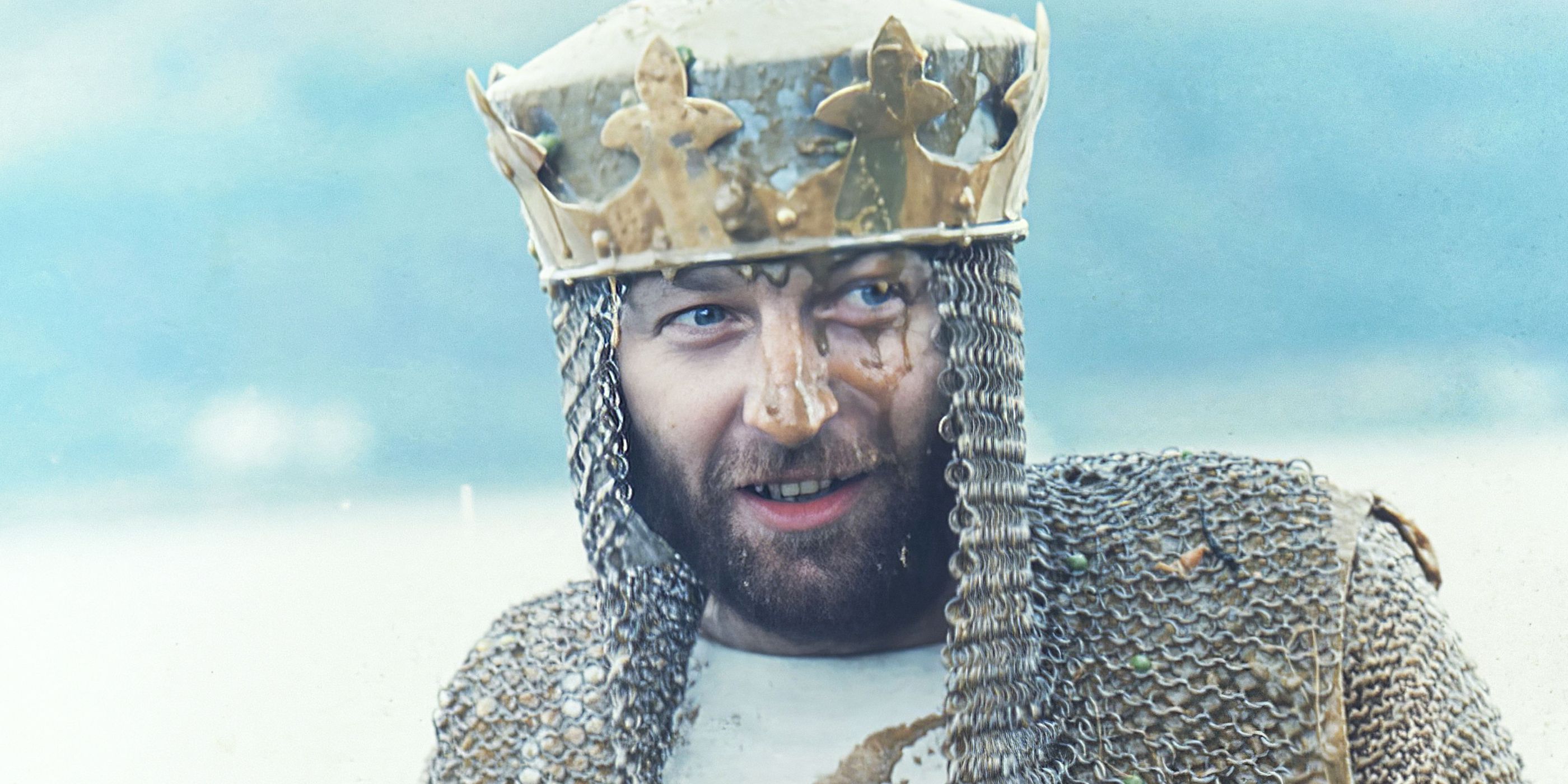
2 'Monty Python and the Holy Grail' (1975)

Okay, so this is an obvious one. Most people of all generations have seen it and loved it, but if it's one that you haven't caught, you're going to want to rectify that or else be forever shamed. Terry Gilliam's fantastical comedy is one that will live on for years.
The film follows King Arthur and his Knights of the Round Table as they search for the magical holy grail, and what ensues is comedy gold. From coconuts being used in place of horses to armless knights to killer bunnies, this wondrously weird and totally random satire has something for everyone.
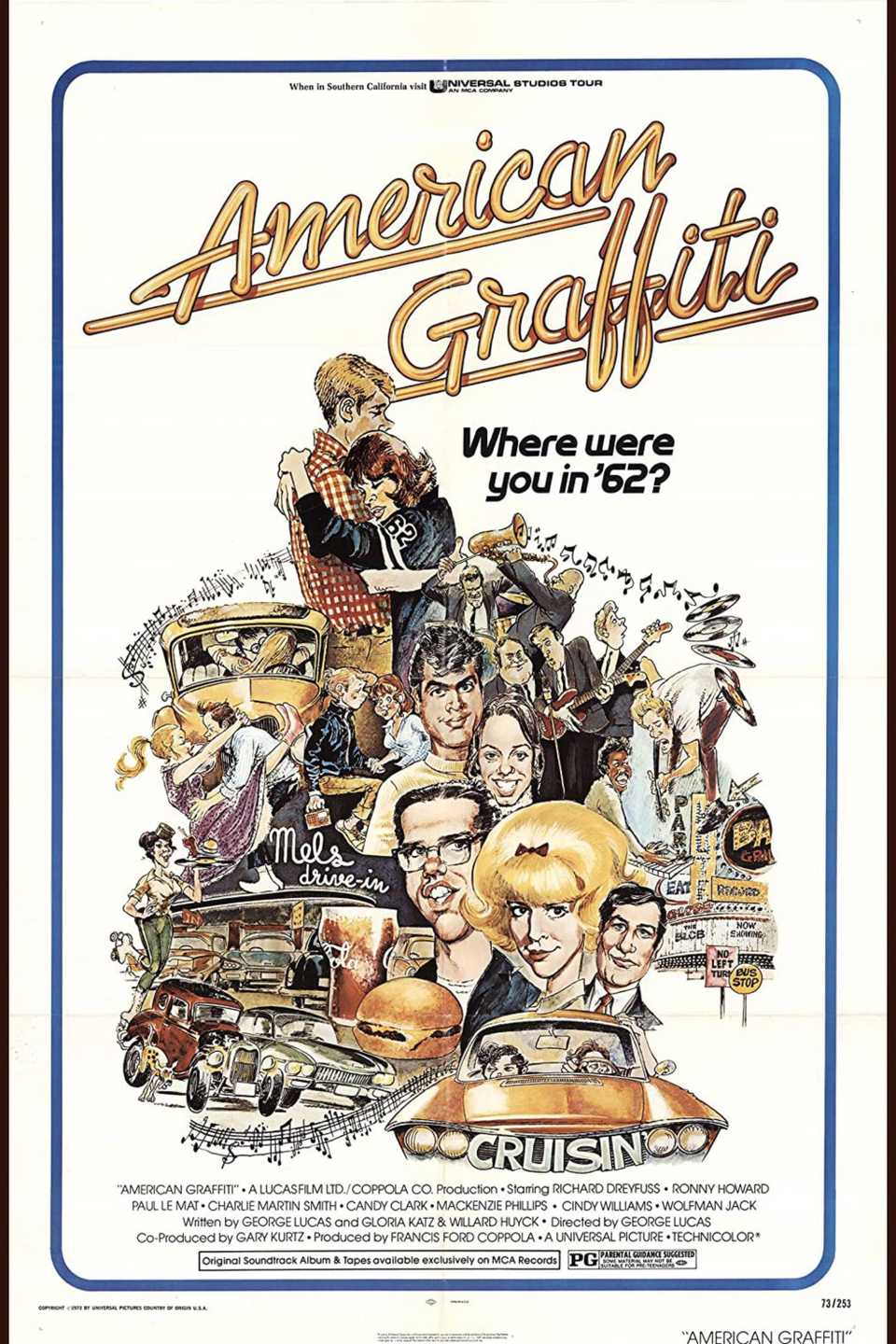
1 'American Graffiti' (1973)

Before he did Star Wars, George Lucas was directing and co-writing this coming-of-age dramedy that revolves around a group of high-school kids the night of their graduation in 1962. The film holds some household names, such as Richard Dreyfuss and Ron Howard, and it inspired Richard Linklater's semi-modern masterpiece, Dazed and Confused.
The film revolves around Curt Henderson (Dreyfuss) and Steve Bolander (Howard) as they struggle under the weight of the heavy life decisions set before them. The movie looks at such things as academia and societal roles, romantic relationships, and finding meaning in life. Beyond that, it is a blast of nostalgia. If you're a person who loves '50s and '60s nostalgia, then American Graffiti is a great pick.
American Graffiti
- Release Date
- August 1, 1973
- Runtime
- 110minutes
- Director
- George Lucas
- Writers
- George Lucas, Gloria Katz, Willard Huyck
KioskNews shows a cleaned-up reading view extracted from the publisher’s page — the original always lives on their site, not ours.