IDF, Defense Ministry drafting resolution to protect reservists and families' benefits through 2027

The IDF and Defense Ministry are drafting a government resolution to protect the benefits and entitlements of reservists and their families whose service spans 2026 and 2027, following a Walla investigation that exposed gaps in eligibility, Walla learned on Thursday.
Alongside the government resolution, the IDF and Defense Ministry are advancing legislation in the Knesset, which they hope to expedite after the elections, during the Knesset's first session.
The move follows Walla's revelation that reservists could lose benefits and entitlements despite serving for extended periods. Because their reserve duty is divided between two calendar years, some soldiers fail to meet the minimum number of service days required to qualify for grants and benefits in either year.
As a result, a reservist serving nearly 100 consecutive days could fail to meet the eligibility requirements, despite having completed a substantial period of service.
The IDF and Defense Ministry are pursuing two parallel approaches: drafting a government resolution to regulate the calculation of reserve duty days and eligibility for benefits, while also advancing legislation in the Knesset.

While the legislative process is expected to take longer, the government resolution is intended to allow eligibility issues to be resolved sooner, subject to government approval.
Despite these efforts, the wives of reservists have criticized the proposed timetable. They argue that there is no justification for forcing families to wait until the legislative process is completed while soldiers continue accumulating reserve duty days and their families contend with the financial and personal consequences of prolonged service.
They are demanding that the IDF and Defense Ministry bridge the eligibility gaps during the interim period, providing assistance similar to that available to families of reservists who accumulate a large number of service days within a single calendar year.
Tank battalion reservists face loss of benefits
At the center of the controversy are soldiers from Battalion 363 of an armored brigade, some of whom have been called up for their fifth or sixth round of reserve duty since the start of the war.
As Walla previously reported, the soldiers received orders for 99 days of reserve duty beginning November 22, 2026, with 40 days falling in 2026 and another 59 days in 2027.
The division between the two years could affect their eligibility for various benefits, including reimbursements for mental health treatment, grants related to extending maternity leave, student grants, and vacation vouchers.
Some benefits require 45 to 50 days of reserve duty per year, while others require 60 days or more.
In response, the soldiers' wives sent a letter to IDF Personnel Directorate head Maj.-Gen. Dado Bar Kalifa and Chief Reserve Officer Brig.-Gen. Benny Ben Ari, demanding a solution to prevent their families from losing their entitlements.
"It is unacceptable that families who continue to shoulder the burden time and again should be harmed because of bureaucracy and dates over which they have no control," the women wrote.
They also emphasized that the benefits were not luxuries but assistance intended to help families cope with the price they pay for prolonged reserve duty.
IDF promises eligibility will not be affected
In response to an inquiry from Walla, the IDF Spokesperson's Unit said the issue was known and being addressed, and that reservists' eligibility for benefits would not be harmed because their service was divided between calendar years.
The IDF said the military and Defense Ministry were finalizing a draft government resolution concerning benefits for reservists.
Once the process is completed, the resolution will be submitted for government approval, after which the IDF will work to implement the entitlements in accordance with the approved framework.
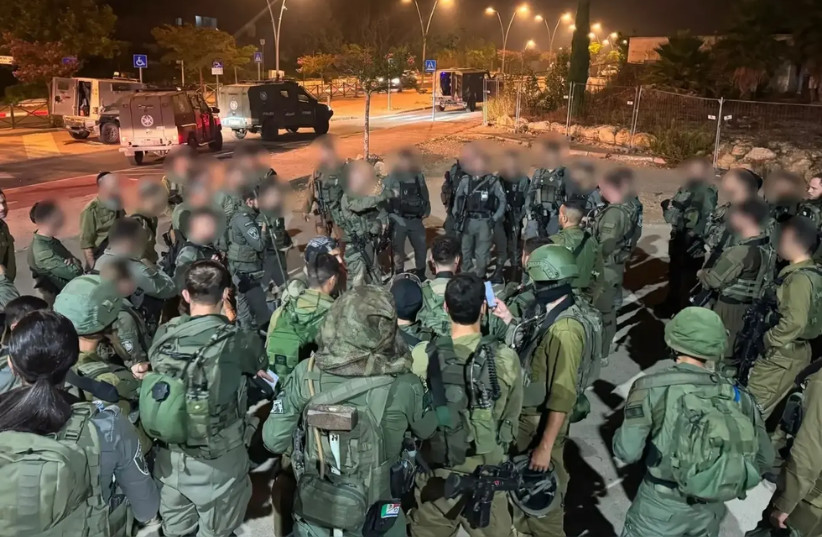
Regarding battalions whose reserve duty spans two calendar years, particularly Battalion 363, the IDF clarified that service days completed in 2026 and those scheduled for 2027 would be taken into account under the framework to be established.
For a battalion that accumulated 40 days of reserve duty in 2026 and continues serving in 2027, service days will be calculated across both years, allowing eligibility for benefits in 2027 to be assessed based on the total number of service days and the provisions ultimately approved.
The IDF also clarified that reservists who have already exercised their eligibility for benefits based on service in 2026 and perform additional reserve duty in 2027 will remain eligible for benefits under the conditions to be established.
The proposed framework also addresses eligibility for emotional support and treatment when reserve duty is calculated across calendar years.
The IDF is preparing to advance the government resolution to allow reservists to receive their benefits as soon as possible.
At the same time, a dedicated briefing will be held for commanders and relevant personnel. The briefing will outline the assistance currently available, clarify the eligibility mechanism, and provide answers to reservists' questions.
Despite the IDF's commitment that reservists' rights will not be affected, the government resolution has yet to be approved, and the legislative process remains ahead.
Reservists' wives are demanding an interim solution to ensure that their families are not left without the benefits and assistance to which they are entitled.
Wives say no solution has been provided for 2026
The wives of reservists serving in Battalion 363 responded to the IDF Spokesperson's Unit's statement, arguing that despite the impression that a solution had been found, they had yet to receive an answer concerning their entitlements for 2026.
According to the women, the battalion is preparing for its sixth round of reserve duty after hundreds of days of service, during which their husbands are expected to be away from home for 99 consecutive days.
The women described the difficulties of raising children, working, and managing their households alone.
"We are not looking for special treatment, but are asking to receive support and assistance from the IDF and the state in dealing with our situation," they said.
According to the women, they even requested that the call-up be brought forward by five days to preserve their entitlements.
They are demanding a clear commitment that no benefits or rights belonging to reservists and their families will be affected in either 2026 or 2027.
KioskNews shows a cleaned-up reading view extracted from the publisher’s page — the original always lives on their site, not ours.