Family Business Summit day 2 tackles US-China ties, Asean and geopolitical shifts
The Family Business Summit wrapped up on Friday with delegates weighing China-US relations, Southeast Asia’s growth trajectory and the Russian economy, against a backdrop of geopolitical flux shaped by Washington’s post-midterm political landscape and expected high-level diplomacy at this month’s Apec forum.
The South China Morning Post and Blue Pool Capital co-hosted the fourth edition of the summit, with UBS as the presenting partner.
The two-day closed-door event in Hong Kong served as a vital bridge between international capital and policy insight as it brought together around 100 business leaders, company executives and academics from across the United States, mainland China, Taiwan, Hong Kong, Southeast Asia and the Middle East.
Friday’s opening panel centred on the shifting dynamics between the world’s two largest economies, with sessions examining how political developments in Washington and Beijing could affect ties going forward. Panellists scrutinised the fallout of the US midterms – which handed Democrats control of Congress – alongside policy signals from China’s recently concluded fifth plenum.
The discussions came as global attention turns to the November 18-19 Asia-Pacific Economic Cooperation leaders’ meetings in southern China’s Shenzhen, with US President Donald Trump and Russian leader Vladimir Putin expected to attend.
According to the Kremlin, preparations are also under way for a three-way summit with Chinese President Xi Jinping.
Moderated by SCMP editor-in-chief Chow Chung-yan, the panel on China-US relations tackled several high-stakes issues shaping ties between the rival powers, while examining their broad trajectory and evolving framework.
The speakers included Susan Shirk, emeritus chair of the 21st Century China Centre at the University of California San Diego’s school of global policy and strategy, and a former US government official.
While policy hurdles imposed by Washington had reduced the number of Chinese students in the US, an acute imbalance remained between the cohorts studying in each other’s countries, he told the panel, describing the trend as “very dangerous”.
“I can see noticeable deterioration of knowledge on China,” Chow said. “The US is now in the situation where you are suffering from information asymmetry towards China. This doesn’t just apply to the masses, or even to the big business sector, but all the way up.”
02:53
US midterm elections: What the results mean for mainland China, Taiwan and foreign policy
The summit also addressed Southeast Asia’s pivotal role as major powers compete for influence in the region. The session, moderated by Zuraidah Ibrahim, executive editor at SCMP, examined Asean’s position and trajectory of economic growth.
SCMP Plus is a new premium news platform that gives you an
all-inclusive edge to stay ahead on China news.
To access our exclusive content you’ll need to subscribe.
Already a subscriber?
LOG IN
The discussions highlighted both opportunities and challenges for members of the Association of Southeast Asian Nations, as supply chains undergo restructuring, investment relating to artificial intelligence flows into the region and Chinese manufacturing capacity expands overseas.
SCMP publisher Tammy Tam later moderated a panel focused on exploring the prospects for economic cooperation between Russia and Hong Kong, and developments in the city’s wealth management sector.
The event opened on Thursday with a panel discussion on domestic demand in mainland China, with other sessions including a discussion on security and policy in the Taiwan Strait, also moderated by Chow, and another on hedging economic and geopolitical risks.
Shifting focus from heavyweight geopolitics, the evening brought Taiwanese actor Eddie Peng to the stage to discuss the Asian entertainment industry and his work on the Chinese-language adaptation of espionage thriller The Night Manager.
Other areas covered during the two-day conference included the rise of biotechnology and embodied intelligence in China, alongside discussions on culture and the business of sport.
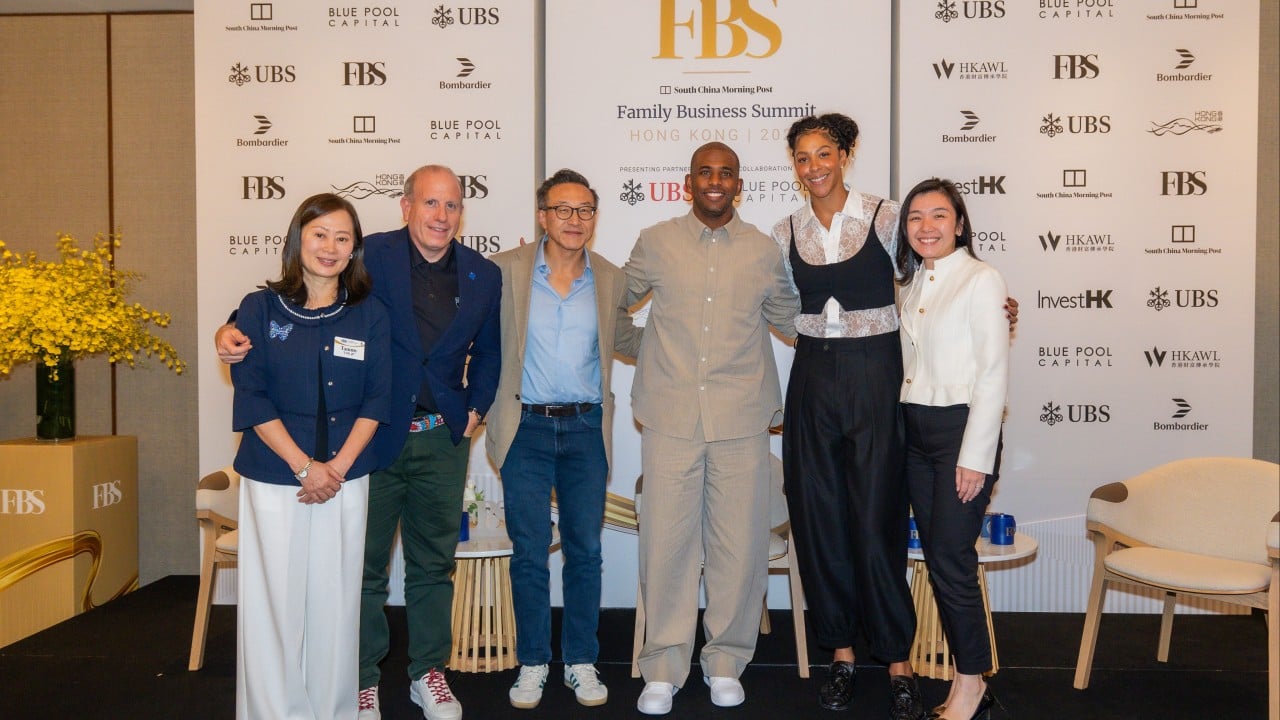
The summit closed on Friday with a lunch session spotlighting sport, joined by NBA star Chris Paul and Hall of Famer Candace Parker.
KioskNews shows a cleaned-up reading view extracted from the publisher’s page — the original always lives on their site, not ours.