Displacement on the rise in Yemen as fighting continues
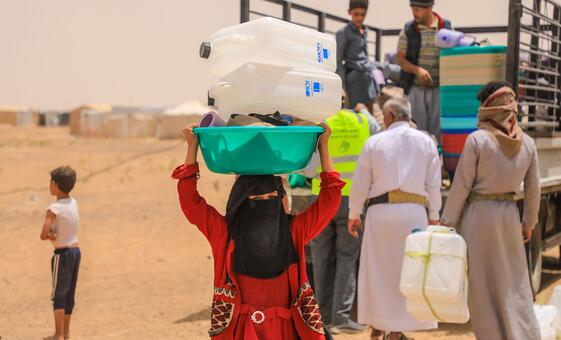
As hostilities worsen in Yemen, more people have been fleeing their homes, further intensifying the humanitarian crisis within the region, the UN Refugee Agency (UNHCR) warned on Tuesday.
“Fighting in Yemen is expanding across multiple front lines, triggering a rapidly growing displacement crisis and driving more than 130,000 people to flee their homes since the beginning of September,” UNHCR spokesperson Babar Baloch told reporters in Geneva.
The mass displacement follows the Iran-backed Houthi fighters’ rapid advance down Yemen’s western coast to the Bab el-Mandeb Strait in recent weeks and clashes with Saudi-backed Yemeni Government forces.
The city of Taiz in south-western Yemen remains the epicentre of the crisis, Mr. Baloch said, accounting for more than 60 per cent of overall displacement.
No safe place
“Many families remaining within the governorate itself [are] unable to move to safer locations due to fighting, blocked roads or lack of transportation fuel,” he said.
Displacement is also being reported from Al Jawf, Marib and Hudaydah governorates. According to UNHCR, the vast majority of those displaced are women and children, and many have already been forced to flee several times.
Before the recent escalation, more than 5.2 million people were already internally displaced inside Yemen, which has seen more than a decade of conflict and economic collapse. The UNHCR spokesperson said at least 22 million people – over half of the country’s population – are estimated to require humanitarian assistance. Yemen has also been hosting some 65,000 refugees and asylum seekers, mainly from Somalia and Ethiopia.
Mr. Baloch stressed that more Yemenis are now becoming refugees, as civilians fleeing clashes across the Gulf of Aden continue toarrive in Djibouti. More than 3,000 have arrived so far, while hundreds more have landed in neighbouring Somaliland and Puntland. The number of new refugee arrivals in Djibouti has already surpassed the total number of Yemenis arriving in recent years.
More than 10,000 arrivals are expected in Djibouti, Mr. Baloch explained, as sea conditions are forecasted to improve by mid-October, which could enable further crossings.
UNHCR’s Djibouti operation is only 15 per cent funded, while in Yemen in 2026, the agency has received only $34 million of the $194 million required even before the latest escalation.
♦ Receive daily updates directly in your inbox - Subscribe here to a topic.
KioskNews shows a cleaned-up reading view extracted from the publisher’s page — the original always lives on their site, not ours.