‘I can’t sleep at night’: international students forced to navigate the impact of Labor’s sudden visa changes
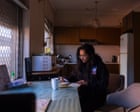
Fatima Bonna has pored over her student visa conditions. When shebegan studying in Adelaide last year, she memorised the maximum number of hours she could work – and checked again, just to be sure.
She knew exactly when her visa would expire, what it expected of her studies and the rules surrounding partners and dependants.
But then came this month’s changes to student visas. Suddenly, she feels overwhelmed by uncertainty.
Having changed degrees and institutions after her first semester, the end date of her visa no longer aligns with the conclusion of her course.
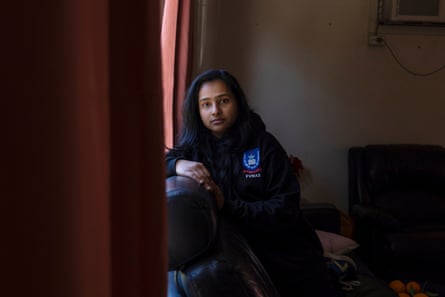
How can she manage to finish a master’s in early childhood education after her current visa expires?
“I can’t sleep at night,” she says.
Bonna’s visa expires next September – four months before her course at the Ikon Institute is due to finish.
Under the new student visa rules – designed to slash the country’s net migration – she will be required to travel offshore to apply for a new student visa.
“If I had any idea of it, I wouldn’t have changed,” the 27-year-old student from Bangladesh says.
“I don’t want to be humiliated, I don’t want to be told that ‘you are the reason for our housing crisis’, because I am paying for it … and I am happy to go back to my country after getting the experience.”
International students around Australia are facing uncertainty amid a flurry of announcements targeting the cohort and the Albanese government’s changes to student visa rules – in an attempt to curb “permanently temporary” migrations – which came into effect this month.
The crackdown targets “visa hopping” and onshore student transfers and requires most temporary visa holders to leave Australia to apply for a new visa, with some exemptions.
Labor’s changes also restrict secondary applicants – partners and dependent children – on most student visas, although applicants from Pacific and Asean member countries and those studying a PhD are exempt.
But the assistant minister for international education, Julian Hill, said other exceptions could apply, as the government was “not in the business of separating families already onshore in Australia”.
“Sympathetic consideration would be given to visitor visas where required to keep families together while a student completes their stay in Australia,” he said.
‘It’s hard if we can’t have our family with us’
A Melbourne-based migration agent, Gurpreet Dhawan, says requiring students to travel offshore to apply for a new visa can leave them in limbo.
“It’s a huge risk,” she says. “We will send them offshore to lodge the visa but how long will they have to sit there?”
According the Department of Home Affairs website, about 50% of applications for a student visa (subclass 500) in higher education are now estimated to be processed within 16 days, and 90% within four months.
While the federal government has made exemptions for PhD students bringing dependants, all student visa holders can no longer add a relative after their visa has been granted.
“They have done everything correctly as per the law until 1 October,” Dhawan says. “They woke up on 2 October and their life is upside down.”
Wina Satria, a PhD candidate from Indonesia, travelled to Australia with her then two-year-old son last year. Satria planned to add her husband to her student visa next year so he could help raise their son.
The family’s plans to reunite have been thrown into disarray by the new restriction on adding relatives to a previously granted visa.
after newsletter promotion
“I was shocked,” Satria says. “It’s hard if we can’t have our family with us.”
Satira, who is studying at the University of Sydney, says she hopes the federal government will create a further exemption for further PhD students.
“The hardest part is seeing my son when he misses his dad a lot,” she says.
The right balance?
Labor’s changes are designed to help bring net overseas migration down from its annual level of almost 300,000 to 225,000 by mid-2028.
University leaders have warned their institutions are struggling to fill international student places due to visa uncertainty, high visa refusal rates and a heated political debate on immigration as contributing factors.
The Coalition and One Nation’s immigration policies have also targeted international students, compounding uncertainty ahead of the 2028 election.
Daniel Martin arrived from Colombia in 2024 to study a master’s in education, and completed his course in July. He now holds a temporary graduate visa – which the Coalition has proposed abolishing – allowing him to stay in Australia for at least another two years.

Martin is applying for teaching and educational adviser jobs, and hopes to undertake a PhD in the coming years. But he says he is reconsidering his plans, due to the uncertainty around the visa system.
“It’s quite tricky right now … the instability, the uncertainty, it’s extremely difficult to navigate,” he says.
A spokesperson for the Department of Home Affairs said the reforms strike the right balance and would “welcome genuine students” and strengthen “the integrity of the Student visa program”.
There could also be some “sympathetic consideration” given to the families of PhD students now in Australia, the government says.
“Australia’s high-quality education system, post-study opportunities and quality of life continue to make it an attractive destination for international students,” the spokesperson said.
“Demand for Student visas has remained strong following increases to Student visa application charges and the introduction of a range of integrity measures since 2023.”
The spokesperson said the changes would not affect the ability of genuine students to study in Australia.
“Requiring affected Student visa applicants to be outside Australia at the time of visa application and grant reinforces the intent of the program, which is to facilitate temporary stay in Australia for study purposes and encourages temporary visa holders to maintain strong ties to their home country.”
KioskNews shows a cleaned-up reading view extracted from the publisher’s page — the original always lives on their site, not ours.