DISEASE DISASTER: Angry neighbours, game sales in jeopardy as Addo’s foot-and-mouth disease crisis deepens
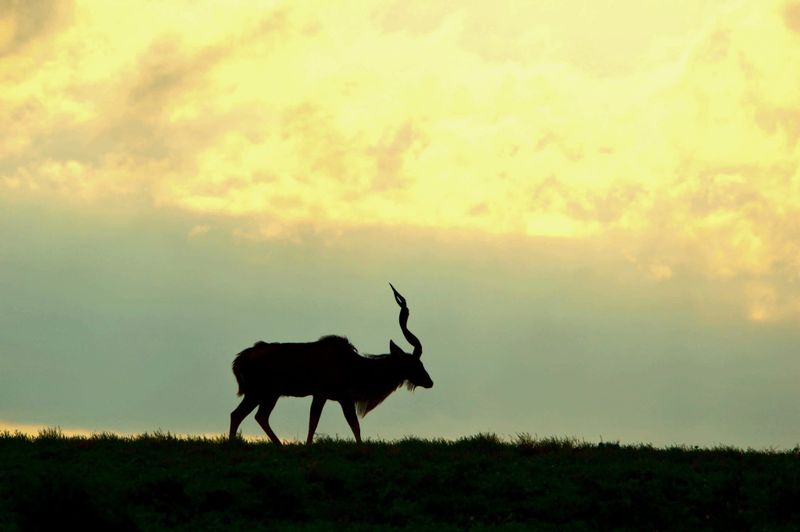
As South African National Parks (SANParks) confirmed that foot and mouth disease (FMD) has probably spread beyond the Addo Elephant National Park’s kudu herds, neighbouring landowners are fuming at the park’s lack of communication about the disease and have questioned the measures officials have put in place.
At the same time, the park is at risk of losing its spot at a major fundraising event – the annual game auction at the Kirkwood Wildsfees – due to the recent outbreak and the lengthy quarantine periods usually enforced on FMD cases.
The animal disease has become a growing concern in the Eastern Cape in recent months, particularly after outbreaks were reported in several locations across Nelson Mandela Bay.
Suspicions that FMD was present among the antelope in the Eastern Cape national park, which borders the metro, first surfaced early in August when guests noticed kudus exhibiting symptoms, particularly lameness in their hind legs.
At the time, park officials confirmed that they were aware of cases of lameness among the kudu herds at Addo, but said test results came back negative for FMD. They said they would continue to monitor the animals and investigate the cause.
At the same time, due to the spread of FMD outside the park, officials decided to implement biosecurity measures, including spraying vehicles entering the park, in an effort to “safeguard its wildlife and ecological integrity”.
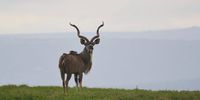
However, in a statement last week, SANParks head of communication JP Louw said a second set of samples collected from kudus in the park confirmed the presence of FMD.
“The Department of Agriculture was notified after SANParks’ wildlife health surveillance detected an increase in lameness among kudu. Although the initial tests were negative, follow-up investigation and testing confirmed FMD in kudu within the park.
“SANParks is working closely with the Department of Agriculture and other relevant stakeholders to assess the extent of the occurrences, monitor animal health and implement appropriate disease-management measures. Any future animal movement of susceptible animals will be subject to veterinary risk assessment, statutory requirements and formal approval.”
Louw added that normal park and tourism operations would not be affected.
More species infected
Earlier this week, SANParks veterinarian Dr David Zimmerman confirmed that between 5% and 10% of Addo’s kudu population was probably infected, the majority of them being older bulls and cows.
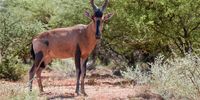
He added that additional species, such as red hartebeest and eland, had also shown clinical signs.
“Park authorities are continuing to monitor susceptible species for clinical signs, particularly lameness associated with lesions. As FMD generally has a low mortality rate in wildlife, management efforts focus on surveillance and understanding the disease’s progression within free-ranging populations.
“However, affected animals may face an increased risk of predation due to reduced mobility,” Zimmerman said.
FMD is a highly contagious disease that affects cloven-hoofed animals, but holds no danger for humans.
Symptoms include hypersalivation, loss of appetite, lameness and ulcers and lesions on the tongue and around the hooves.
Fatalities are rare, and in domestic livestock, such as cattle, younger animals are more susceptible with most fatalities occurring among newborns.
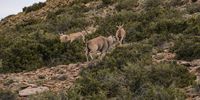
Among wildlife such as kudu and other antelope, older animals become easier targets for predators. And while these animals cannot contract the disease, they can spread it by carrying the saliva of infected animals on their fur.
Similarly, humans and vehicles can spread the disease, which necessitates the implementation of biosecurity checkpoints where wheels and shoes are decontaminated.
Lack of communication
Despite Louw’s statement that SANParks was maintaining communication with neighbouring landowners, several neighbours have said this is in fact not the case, and that they had heard about the FMD outbreak from media reports.
Peter Bean, owner of Schotia Safaris that shares its entire western boundary fence with Addo, said they had heard unofficial reports of animals showing symptoms for some time, but it was only confirmed when someone sent him the SANParks media statement.
“The statement claims that the Addo Park is working with neighbours and the surrounding communities. Schotia’s entire western boundary is against the Addo Park. We have not received any notification whatsoever with regards to the FMD.”
He said that while they had heard kudu had been limping and dying in Addo for more than three months, there had been no communication from park officials.
“I’m not blaming the park management for the outbreak or negligence in any way, but it’s extremely unethical to not even notify your neighbours and then make false statements publicly.
“Thankfully the disease has not affected Schotia in any way, yet,” Bean said.
He added that ground crews did daily inspections and repairs to fences in and around their farm, and while this was an intensive process costing them about R3-million annually, it was their best chance to curb the spread of the disease.
In addition, Bean said they had also implemented strict biosecurity protocols at their gate to decontaminate any vehicles entering and leaving the property.
“While we acknowledge that certain natural factors, such as bird movement or occasional fence breaches by stray wildlife, cannot be entirely controlled, we are minimising risks wherever possible. We believe that proactive action is vital during times like these,” he said.
Nearby, the co-owner of the Essendene Game Farm, Ayesha Cantor, questioned whether the measures the park had put in place were adequate to prevent the spread of the disease.
“Sure, Addo’s main gates are covered. But there are several other smaller access points. Are vehicles using those gates also being cleaned?
“I respect their approach to keep the park as natural as possible and to limit human intervention and interference under normal circumstances. But these are no longer natural or normal circumstances. Maybe they need to consider more direct treatments and vaccinations, or perhaps culling the diseased animals before they spread it further.”
Cantor said game species were hardy and could easily weather the storm, but consideration should be given to cattle farmers and dairy producers in the area, particularly large herds of cattle in the Nanaga area.
SANParks’ potential losses
The affected species are not rare or endangered, and are actually quite prevalent within the park. While mortalities are scarce, any losses would likely be negligible for the park.
However, the disease could prevent Addo from participating in a significant income generator on SANParks’ annual calendar – a specialised game auction that coincides with the Kirkwood Wildsfees.
The auction, usually held around June, offers prospective buyers the opportunity to bid on wildlife from private sellers as well as various national parks under the SANParks banner.
In 2026, animals from Addo Elephant National Park, Karoo National Park, Mokala National Park and Mountain Zebra National Park were up for auction. Addo brought in R1.28-million from the sale of 10 buffalo bulls, each fetching between R105,000 and R155,000.
But if Addo is subject to the same regulations and protocols normally implemented on dairy and cattle farms, officials will have to submit samples for testing on a regular basis, and animals will only be available for transport after one year of clean results.
Auction organiser Garth Saville said the auction would still go ahead, with or without Addo’s participation.
“All animals are subject to a quarantine period of up to 45 days after the auction is concluded. At this stage, the auction will continue as planned with SANParks participation until we hear otherwise,” Saville said.
Regions SANParks spokesperson Fayroush Ludick said the FMD outbreak would probably exclude Addo from the auction.
“It will certainly have an impact on the auction. No animals sales or commercial culling can happen under the current circumstances,” Ludick said. DM
KioskNews shows a cleaned-up reading view extracted from the publisher’s page — the original always lives on their site, not ours.