Elizabeth Struhs was deemed ‘safe’ by those meant to protect her. An inquest into her death is asking what went wrong

The first time a Queensland government employee declared Elizabeth Struhs safe was two days after the six-year-old nearly died.
In July 2019, her father, Jason Struhs, had taken her to Toowoomba hospital in a coma. She was diagnosed with diabetic ketoacidosis, as a result of her previously undetected type 1 diabetes. She was intubated and ventilated; some doctors believed she was already dead. Both her parents were later convicted of child neglect for waiting until she was so sick to seek medical help.
But an officer from the department of child safety assessed Elizabeth as “safe”.
In December 2021, her mother, Kerrie, released after five months’ jail, told her parole officer she would do everything the same again.
A contemporaneous note presented to a court last week records Kerrie saying she “would keep that trust in God that he would heal”.
That officer assessed Kerrie as posing “no” risk to herself or others.
About a month later, on 6 or 7 January 2022, her daughter was dead.
Coroner Ainslie Kirkegaard has heard nine days of evidence over the last fortnight about the adequacy and appropriateness of the actions of child safety, Children’s Health Queensland, Darling Downs hospital and health service, the Queensland Police Service, the department of education, and Queensland corrective services, and their management of risk to Elizabeth.
One child safety officer told the court she may have been “overly influenced” by the presentation of Elizabeth’s “upper class home” and lack of obvious signs of neglect or abuse.
But another missed opportunity, Kirkegaard told the court this week, was simply a lack of curiosity by public servants about the extreme religious beliefs of her mother.
All 14 adult members of her mother’s church were convicted of Elizabeth’s manslaughter last year.
Doctor ‘stonewalled’
Not everyone thought Elizabeth was safe, though.
Her specialist treating doctors, based at the Queensland children’s hospital in Brisbane, warned that Kerrie’s extreme religious beliefs could “sabotage” Elizabeth’s treatment.
Kerrie, like all members of the small sect known as the Saints, didn’t believe in medicine, and wouldn’t seek the assistance of doctors or paramedics. She repeatedly told police, healthcare workers, teachers, parole officers and child safety workers about her views.
During their criminal trial for murder and manslaughter, the court heard the group described as a “cult”. They believed the end times were near, that Elizabeth would be raised from the dead, and sang and prayed over her dead body. They spoke in tongues, didn’t celebrate Christmas, and didn’t believe in education. Kerrie had followed the Saints’ leader, Brendan Stevens, for 17 years, but Jason didn’t believe in God at all.
Multiple witnesses told the court they had little to no interest in the group and asked few questions about it. A key teacher in Elizabeth’s life thought the Struhs were Jehovah’s Witnesses. Child safety assessed Kerrie’s church as a form of support for her.
But Elizabeth’s Brisbane doctors saw it as a threat.
One doctor who spoke with Elizabeth’s mother, the inquest heard, described Kerrie’s attitude as “chilling” and recommended an involuntary mental health assessment.
That doctor barraged child safety officers tasked with assessing the case with emails, calls and other requests, emphasising that type 1 diabetes requires daily injections of insulin for life. But the doctor was “stonewalled”.
A 2019 email between doctors and child safety says Elizabeth would be at “extremely high risk of ongoing harm including death living in a household where her mother resides”.
Two days later, Elizabeth was discharged from hospital and sent home.
Child safety officers informed the Brisbane doctor of their decision in another email.
“That should send them in a panic on a Friday afternoon,” one child safety officer said in an email to another, about the decision to send Elizabeth home.
The doctor had asked to be included in future discussions about the case at a formal process known as a suspected child abuse and neglect (Scan) team meeting. They were not. Child safety officers emailed each other saying that the doctor didn’t “need” to be invited.
The inquest heard the second and last meeting to consider Elizabeth’s case went ahead without medical representation from the Queensland children’s hospital, in August 2019.
“I feel that removing her would be more detrimental and we currently have the father stepping up,” one child safety officer told the meeting, according to its minutes.
The Scan team determined that Elizabeth was a child in need of protection. Jason was deemed “able and willing” to provide it.
Elizabeth was discharged from Toowoomba into his sole care on 14 August 2019, subject to a voluntary child protection arrangement, known as an intervention with parental agreement (IPA), a less legalistic option than a formal order.
after newsletter promotion
Child safety ‘prioritised other cases’
An IPA is supposed to be an intensive, short-term intervention. It should mean at least weekly visits to the Struhs’ home for about 12 weeks.
But the single child safety case worker dedicated to Elizabeth said she didn’t treat it that way.
She had a “big caseload” at the time, she said – approximately 25 to 28 children in 15 families on the same intervention – and didn’t attend weekly. Toowoomba is one off the busiest child safety districts in the state, the court heard.
Many of those other children appeared to be worse off.
“There wasn’t domestic violence,” Elizabeth’s child safety case worker told the court.
“There wasn’t drug use. To our knowledge, there was no sexual abuse.
“I believe that we may have prioritised other cases at the time for children who were presenting at more immediate risk.”
She also told the court that she may have had a bias because her own child had nearly died of type 1 diabetes at six years old. She had asked not to be assigned to the case, she said.
The court heard there was also “organisational pressure to get a matter like this finalised quickly”.
After 17 weeks, a more senior child safety officer assessed Elizabeth as “safe” and the intervention ended.
“I did not examine the family dynamics closely enough,” that officer told the court. “I had faith that Mr Struhs would continue to care for Elizabeth and should Mrs Struhs stand in the way of that, he would leave the relationship.”
For two years, Jason did treat Elizabeth’s illness. But that changed when Kerrie went to prison in 2021.
What child safety officers, and other government agencies, did not know was that Jason had converted to his wife’s religion in August 2021. In December, he started withdrawing her insulin, as a result of his new beliefs. Elizabeth was dead days later.
‘A shy, clever, kind, funny girl’
During the nine-day hearing, most of the 92 seats at Brisbane’s magistrates court were empty, aside from the 19 lawyers representing nine parties, counsel assisting Simon Hamlyn-Harris and the coroner.
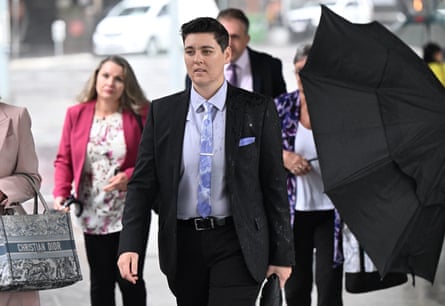
A smattering of media also attended, and often department figures. The mood was sombre. Several witnesses broke down on the stand; one child safety officer started sobbing once she was discharged by the coroner. Others had little to offer, saying they had forgotten about the case altogether despite being intimately involved in it, something coroner Kirkegaard said she struggled to understand given the case was “unique”.
None of the witnesses can be identified for legal reasons.
As is routine for coroner’s court matters, part of the room is set aside for family. But Elizabeth’s sister Jayde Struhs never sat there. Most of the rest of Elizabeth’s immediate family are behind bars.
On the last day of the hearing on Thursday, fighting back tears, Jayde read out statements on behalf of Elizabeth’s uncle and aunt, another member of her family, and herself.
She said the family had never stopped grieving for a shy little girl who would now never grow into a woman.
“If Elizabeth’s life can do that for one other child, she will have done more in eight years than most of us do in 80,” Jayde said.
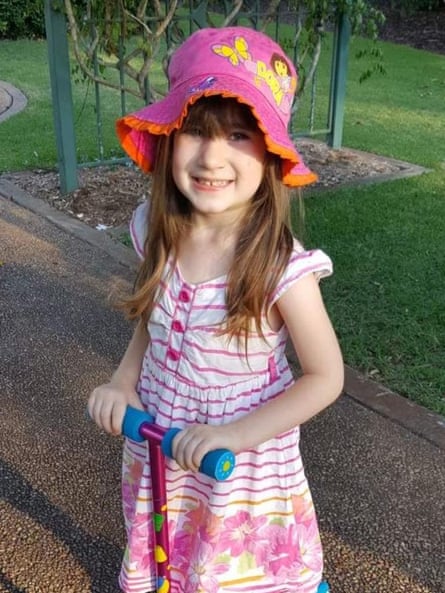
“I want the court to know Elizabeth as we knew her – a shy, clever, kind, funny girl with a beautiful smile, who was loved completely by us.”
KioskNews shows a cleaned-up reading view extracted from the publisher’s page — the original always lives on their site, not ours.