‘Notices going almost mechanically’: CJI-led bench asks EC to address SIR concerns among voters
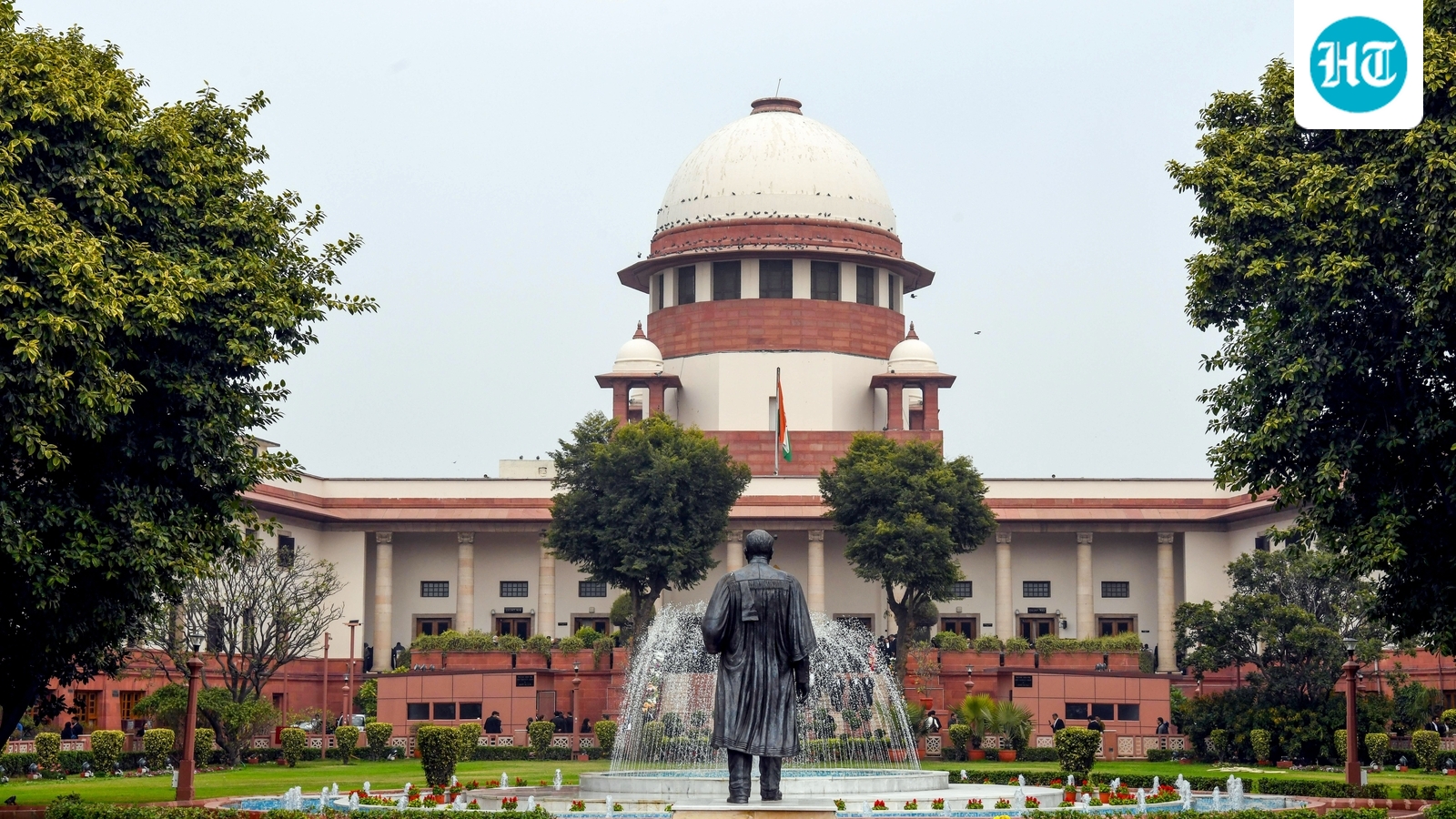
The Supreme Court on Tuesday asked the Election Commission to take steps to “inspire confidence” among voters in Delhi’s ongoing special intensive revision (SIR) of electoral rolls, questioning whether notices issued to 3.3 million electors were being sent “mechanically” or were even “computer generated”.
The court asked the EC to clarify the category of “logical discrepancy” and also asked the poll panel to examine whether the notices clearly told voters what information or documents would suffice to answer the discrepancies flagged against them. It directed the Election Commission to file a status report on the steps taken to address the concerns.
‘Almost mechanically notices are going’
The bench, comprising Chief Justice of India Surya Kant and justices Joymalya Bagchi and V Mohana, said that EC needed to ensure that the process did not merely generate notices but enabled voters to respond effectively.
“Please look into it. Almost mechanically notices are going…as if they are computer-generated,” observed the bench during a hearing on a petition, filed by activists Anjali Bhardwaj and Amrita Johri, challenging the alleged failure of the EC and Delhi chief electoral officer to disclose the names of voters who had been issued notices and the specific reasons for doing so.
Also read: Ecostani: SIR, voter deletion and 2029 Census challenge
4.76 million names excluded from draft roll
The court’s intervention came against the backdrop of 4.76 million names having been excluded from Delhi’s draft electoral roll published on August 31, while another 3.31 million voters whose names remain in the draft roll have been flagged for possible discrepancies.
The bench specifically asked EC to clarify the category of “logical discrepancy”, observing that the expression needed greater clarity. The poll panel, represented through senior advocate DS Naidu, told the court that every notice contained the reason and that the 12 documents prescribed for the exercise were not exhaustive.
The bench said EC should make the process easier for voters by identifying the kind of information that would suffice to answer common queries. It suggested that where there were 15-20 recurring types of discrepancies or objections, the EC could prepare standard responses and circulate them to officials and voters.
“Maybe little bit orientation is required…to inspire confidence,” said the bench, suggesting that where mobile numbers of voters were available, they could be told what information would be sufficient to answer the particular query.
The petitioners, represented by advocate Prashant Bhushan, questioned the practical burden being placed on voters who received notices. Bhushan referred to examples where discrepancies allegedly related to the age gap between an elector and his or her parents, or the gap between siblings, but the documents listed by EC did not necessarily contain information to explain such anomalies.
BLOs can help voters respond to notices
The bench said the 14,000 booth level officers (BLOs) deployed in Delhi could assist voters in responding to such notices. EC said 1,200 electoral registration officers (EROs) were also working on the exercise and that it had increased manpower to deal with the pendency.
The poll panel further told the bench that the deadline for completion of the process was October 29, though it was open to extending it if necessary. It assured the court that “not even a single voter could be deleted” without following the prescribed process.
The bench also asked EC to consider making its existing assistance mechanisms more accessible. When senior advocate Kapil Sibal pointed out that notices did not always specify where voters could meet the concerned officer, the bench suggested that Booth Level Officers could be made available at ward offices so that people could approach them there.
Migrants may face additional verification hurdles
The hearing also brought into focus the particular demographic character of Delhi, where migration and movement between cities are common. The bench noted that unlike a person continuously residing in one place, a migrant voter may have to explain that he or she was earlier registered or residing in another city before moving to Delhi.
The bench observed that such verification could serve the legitimate purpose of ensuring that a person did not have duplicate electoral entries, but said the process had to be made comprehensible to the voter.
The petitioners also questioned the manner in which voters categorised as “shifted” were being required to establish their eligibility, and raised concerns about people who may possess little documentation apart from Aadhaar.
Also read: What you need to do after getting an SIR notice
Court refers to safeguards from Bihar, Bengal SIR cases
The bench referred the parties to safeguards and interim measures it had adopted while dealing with the SIR in Bihar and West Bengal, asking EC to follow those orders where applicable and file a report on the steps taken in Delhi.
In the Bihar SIR proceedings, the court had directed the EC to publish the list of excluded electors along with reasons for exclusion and required recognised political parties to deploy their BLOs to assist voters in submitting claims and objections. It also directed that Aadhaar be accepted as the 12th document for establishing identity, while making clear that it was not proof of citizenship.
The court subsequently upheld the constitutional validity of the Bihar SIR in May this year, holding that the exercise was within EC’s powers and that the statutory safeguards required notice, an opportunity to respond and a reasoned determination before exclusion attained finality.
Also read: Delhi SIR: Only 0.7 per cent of 3.16 million voters clear discrepancy hearings so far
West Bengal case focused on accessible claims process
The West Bengal proceedings similarly saw the court issue directions to make the claims-and-objections process more accessible. Among other measures, the court provided additional time for persons who had not submitted their claims, documents or objections, directed adequate manpower at Panchayat Bhawans and block offices, and provided for affected persons to be heard in person or through authorised representatives while submitting their documents.
The court’s directions in the two states thus became an important reference point during Tuesday’s hearing, with the bench asking EC to apply the same principle of providing practical assistance and procedural clarity to voters in Delhi.
The immediate dispute before the court concerns 33,12,919 voters whose names remain in the draft roll but have been flagged under the categories of “no mapping” and “logical discrepancies”. Of these, 1,379,785 have been categorised as having no mapping with the 2002 electoral roll, while 1,933,134 have been placed under “logical discrepancies”.
The petitioners have sought publication of a consolidated and searchable list of all electors issued notices, along with the precise reason or category for each notice. They have also questioned the absence of publicly disclosed criteria, definitions and operational parameters governing the “logical discrepancies” category.
The Delhi draft roll contains 9,753,577 electors, compared with 14,510,299 names on the rolls before the revision. The 4,756,722 exclusions from the draft roll were made under the categories of absent, shifted, dead and duplicate. EC has maintained that issuance of a notice does not mean that a voter has been declared ineligible and that those facing scrutiny will have an opportunity to respond before the final electoral roll is prepared.
The claims and objections process in Delhi is scheduled to continue until September 30, with disposal of notices expected by October 29 and publication of the final electoral roll on November 4. Naidu, however, on Tuesday submitted that the timeline could be extended if required.
KioskNews shows a cleaned-up reading view extracted from the publisher’s page — the original always lives on their site, not ours.