Ghana calls for stronger regional cooperation to combat drug trafficking
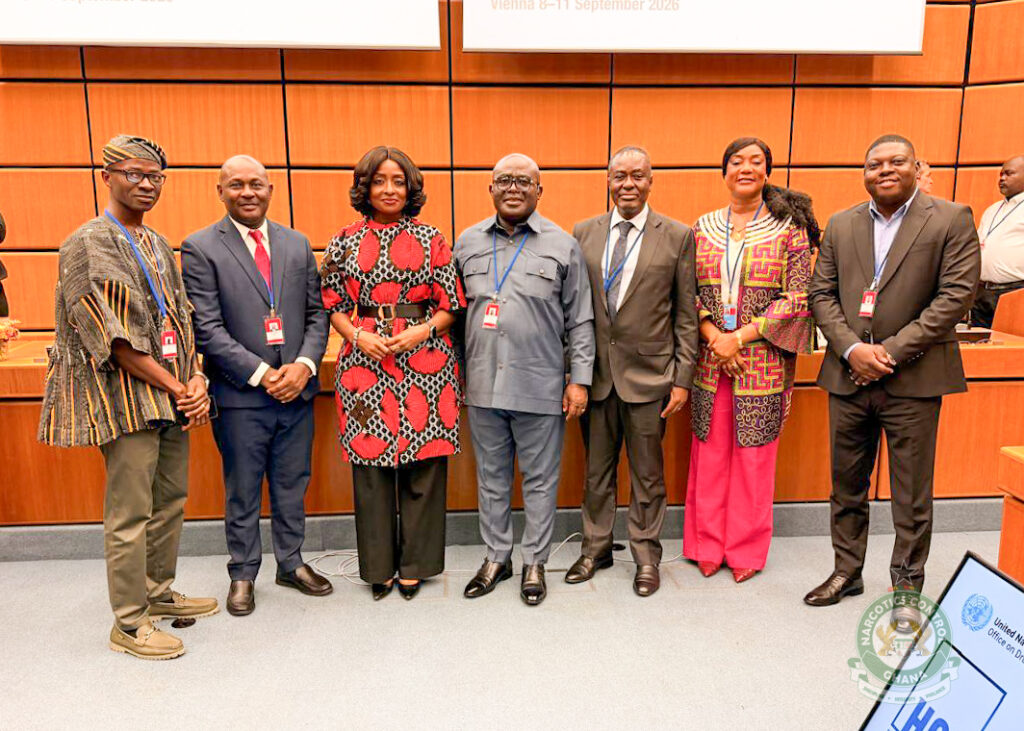
Ghana has called for stronger regional and international cooperation to tackle the growing threat of drug trafficking and transnational organised crime.
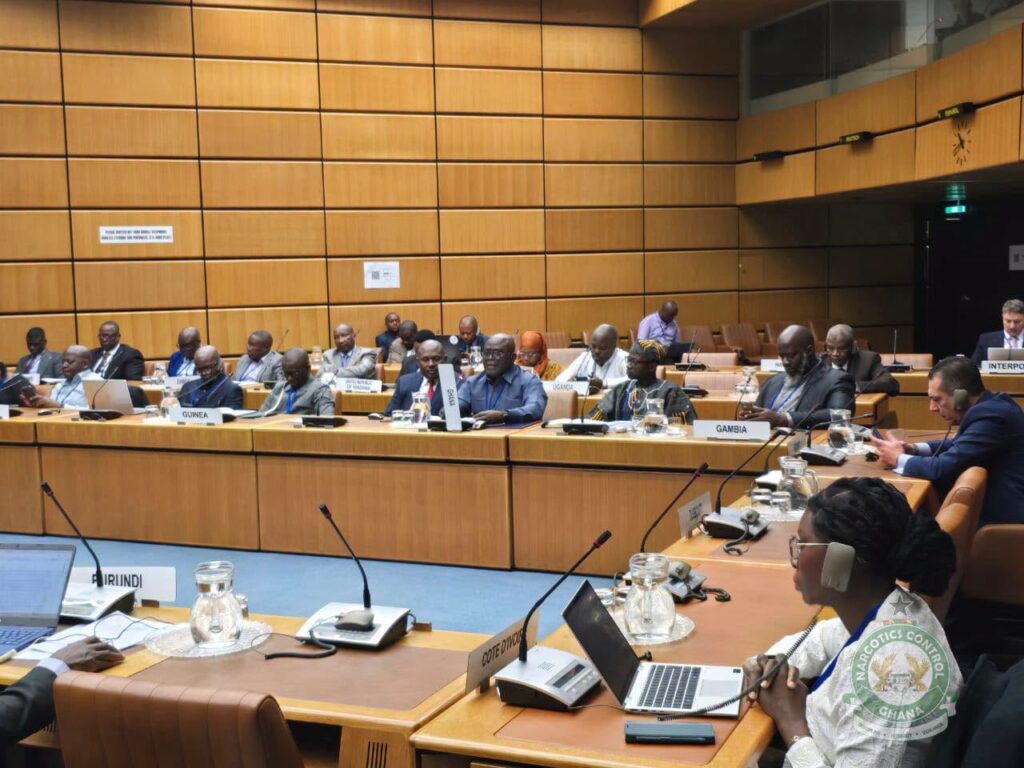
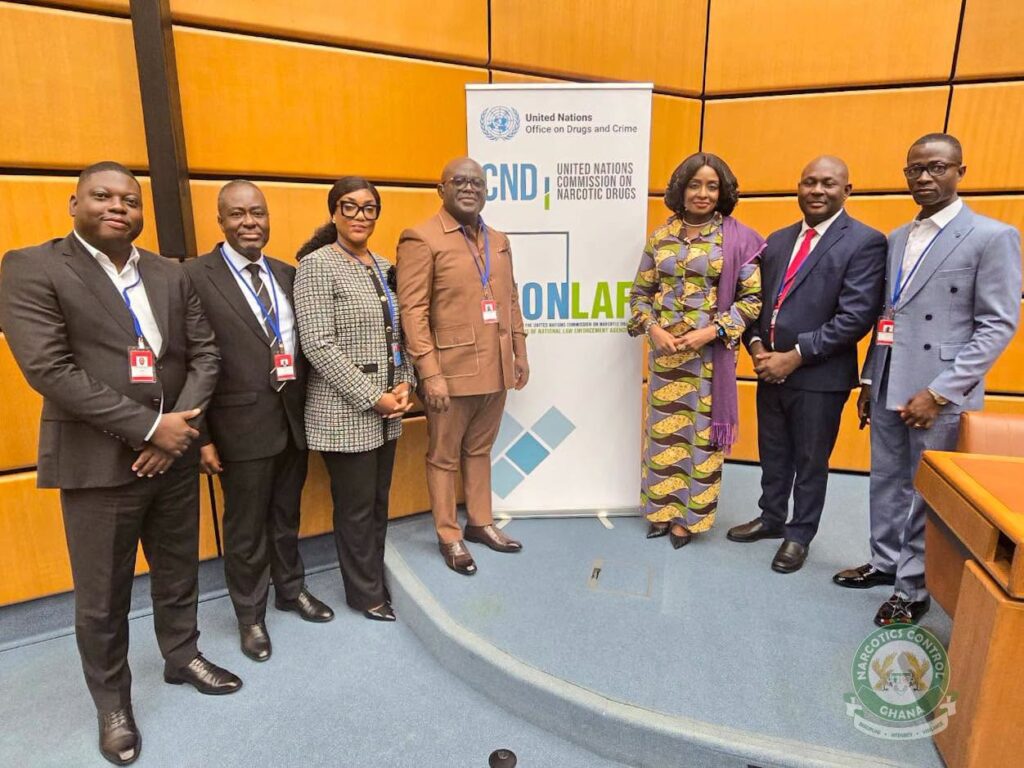
The call was made by a Ghanaian delegation led by the Director-General of the Narcotics Control Commission (NACOC), Major General Maxwell Obuba Mantey, at the 33rd Meeting of Heads of National Drug Law Enforcement Agencies, Africa (HONLAF) in Vienna, Austria.
The meeting, held from September 8 to 11, 2026, was chaired by Ghana’s Ambassador and Permanent Representative to Vienna, Her Excellency Matilda Alomatu Osei-Agyeman.
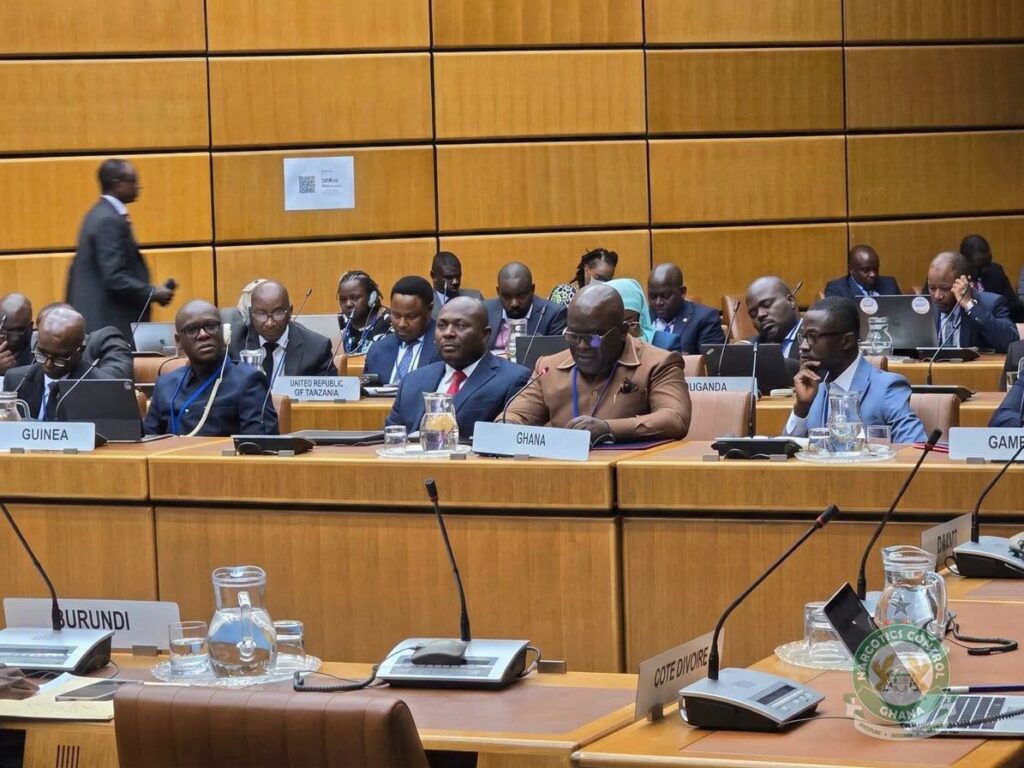
The Ghanaian delegation stressed that no country could effectively tackle the evolving drug problem on its own, particularly as criminal networks continue to exploit national borders and adapt their trafficking methods.
Ghana reported that intelligence-led operations conducted by NACOC and partner security agencies during the period under review resulted in 217 arrests and 165 prosecutions.
The operations also led to the interception of more than 8.5 tonnes of assorted narcotic drugs and 45.4 million tramadol tablets.
According to the delegation, criminal networks are increasingly diversifying their operations, including the trafficking and diversion of pharmaceutical and synthetic substances such as tramadol and tapentadol, alongside traditional narcotics including cocaine, heroin and cannabis.
Ghana said it was therefore strengthening its use of digital intelligence, forensic investigations and financial investigations to identify trafficking networks and trace proceeds from the illicit drug trade.
The delegation disclosed that construction had commenced on a dedicated forensic laboratory to improve the timely identification and analysis of suspected narcotic drugs and other exhibits.
Ghana also highlighted measures being implemented to reduce drug demand and support people affected by substance use disorders.
Prevention and public education programmes have reached approximately 495,000 people, while 30 treatment centres have provided support to 1,179 persons affected by substance use disorders.
In addition, 800 Senior High School Guidance and Counselling Coordinators have been trained to support prevention, early identification and referral.
Ghana further highlighted its growing counter-narcotics cooperation with neighbouring countries and other regional partners.
NACOC has signed a counter-narcotics cooperation agreement with Nigeria’s National Drug Law Enforcement Agency (NDLEA), as well as Memoranda of Understanding with the Drug Enforcement Commission of Zambia and the Government of Burkina Faso.
Beyond formal agreements, NACOC continues to cooperate with neighbouring countries, particularly Togo, through intelligence sharing and efforts to facilitate the arrest of persons under investigation.
Ghana also reaffirmed its participation in international cooperation platforms, including AIRCOP, SEACOP, the UNODC Global Container Control Programme, the INCB-GRIDS Programme and Project Cohesion.
The delegation stressed that regional cooperation must go beyond intercepting drug consignments.
It called for countries to connect investigations, identify trafficking networks, trace criminal proceeds, locate wanted persons and dismantle organised crime groups operating across borders.
Ghana therefore advocated stronger intelligence sharing, coordinated investigations and financial investigations to ensure that information gathered in one jurisdiction can support enforcement action in another.
The Ghanaian delegation reaffirmed the country’s commitment to working with ECOWAS, the African Union, the United Nations Office on Drugs and Crime (UNODC) and other international partners to strengthen the collective response to the evolving drug threat.
It said stronger cooperation was essential to prevent criminal networks from exploiting national borders and institutions to expand their operations.
DISCLAIMER: The Views, Comments, Opinions, Contributions and Statements made by Readers and Contributors on this platform do not necessarily represent the views or policy of Multimedia Group Limited.
Tags:
DISCLAIMER: The Views, Comments, Opinions, Contributions and Statements made by Readers and Contributors on this platform do not necessarily represent the views or policy of Multimedia Group Limited.
KioskNews shows a cleaned-up reading view extracted from the publisher’s page — the original always lives on their site, not ours.