China's 'potato capital' cultivates new crop of data centres as AI boom takes root
ULANQAB, Inner Mongolia: For more than four decades, Zhang Zhiyong has made a living growing potatoes on the dry, windswept plains of northern China, as his family has long done.
"It's all we've known," he told CNA, standing beside a pickup loaded with his latest harvest.
But these days, the 64-year-old farmer has considerably less land to tend to - and more money in his pocket.
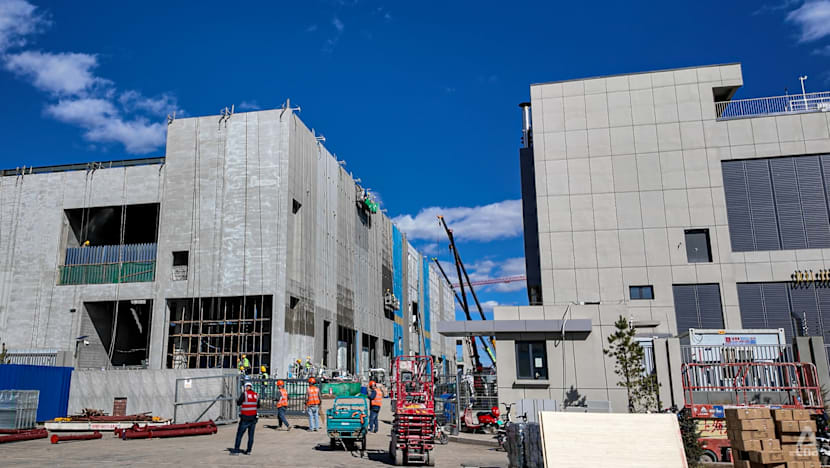
His farmland is making way for data centres, part of a construction boom sweeping Ulanqab, a city in the country’s Inner Mongolia region.
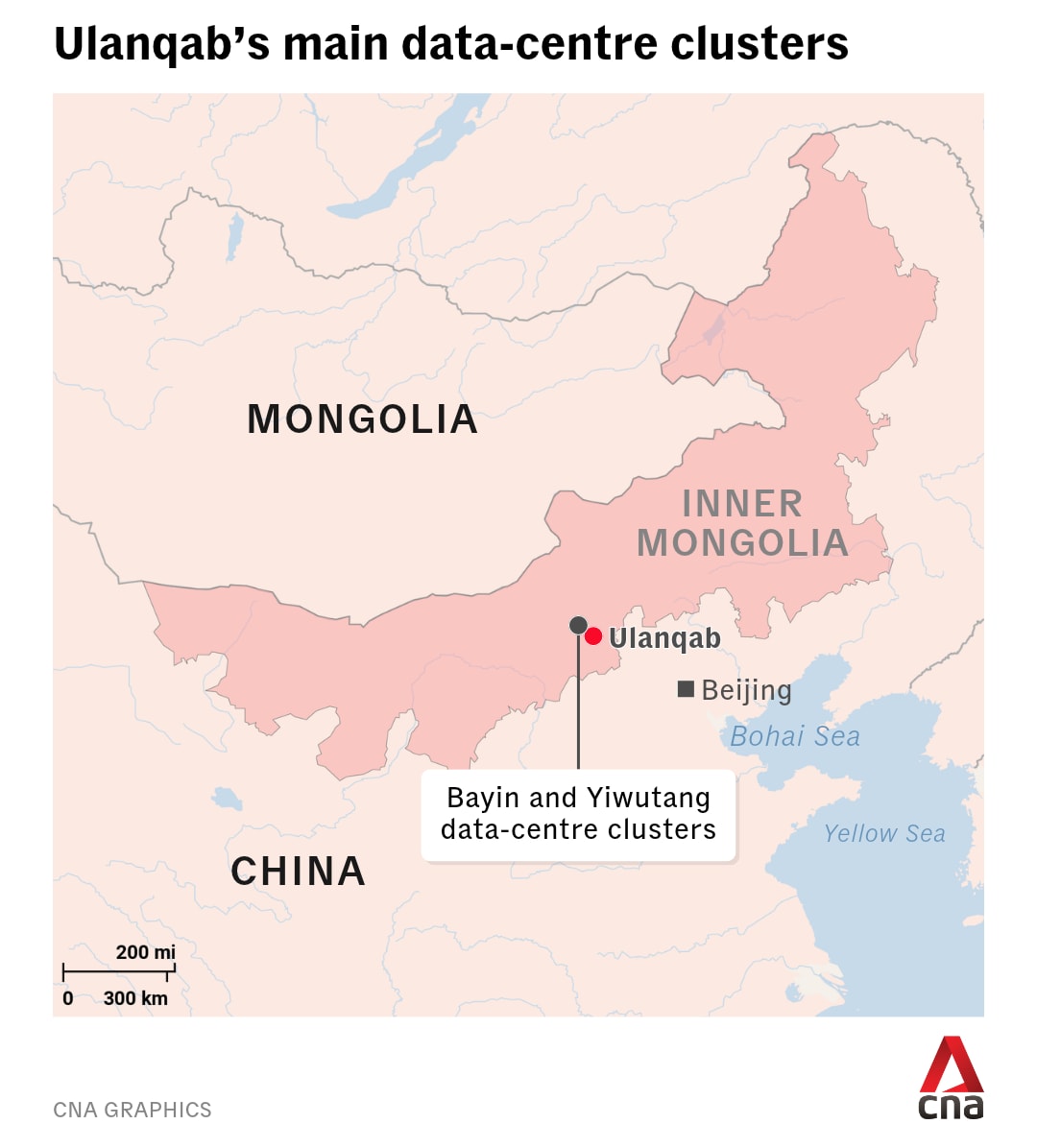
Dubbed China’s “potato capital”, Ulanqab is now emerging as a major hub for the computing power driving the country’s artificial intelligence (AI) ambitions.
For Zhang, the transformation began about two years ago, when developers began approaching residents of his village, Shengjiaying, for land to build data centres.
The farming village, on the outskirts of Ulanqab's main urban district of Jining, sits close to a growing cluster of data-centre construction projects.
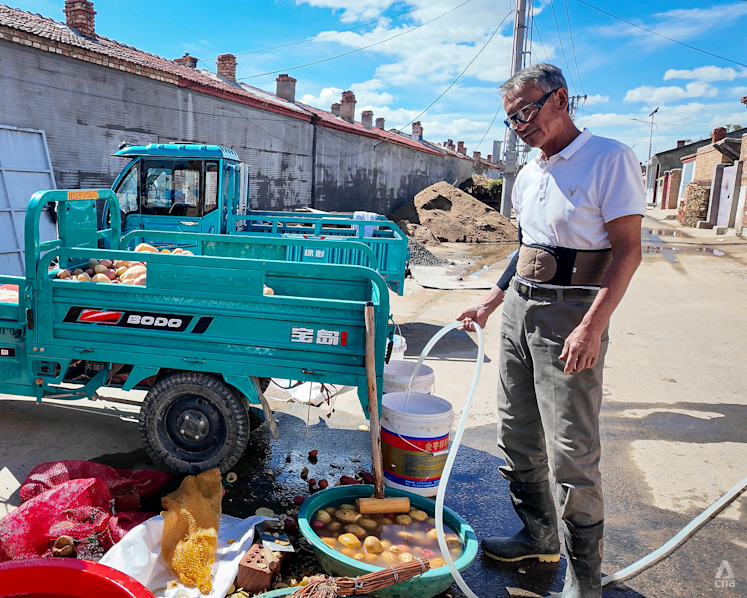
Zhang said he received more than 200,000 yuan (US$30,000) in compensation for giving up about 0.7ha of his more than 1.3ha of farmland for development.
Today, he grows potatoes on just one mu of land - a Chinese unit of area equivalent to about 670 sq m - renting out most of his remaining farmland to other farmers.
Gesturing towards the modest harvest in his pickup, Zhang said the workload was a far cry from his earlier farming days.
Although the compensation he received for his land means he could afford to stop working, Zhang has no intention of calling it quits.
"As long as I can continue to work, I will do so," he said as he washed his potatoes. Just metres away, his house was undergoing an expansion.
Ulanqab has long been a major agricultural producer, with annual potato output approaching 4 million tonnes and accounting for nearly 5 per cent of China’s total, state news outlet People’s Daily reported in 2023.
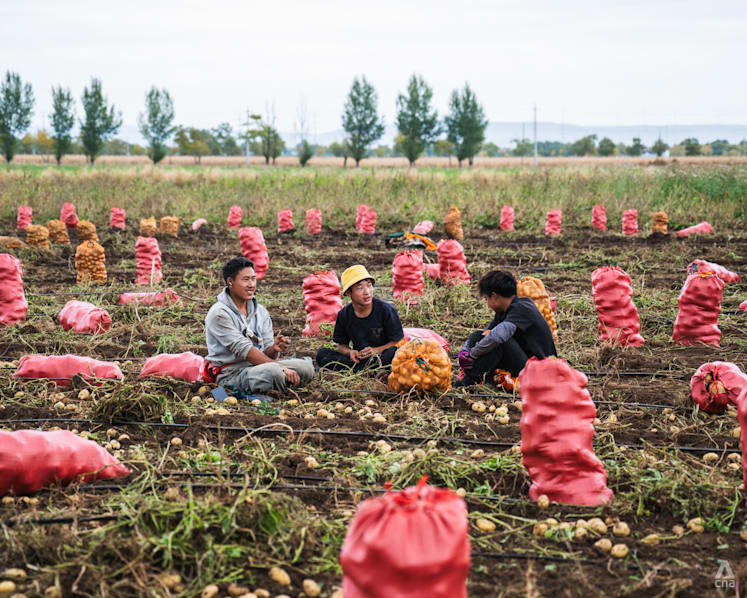
Now, a very different industry is taking root.
State news agency Xinhua reported in October that Ulanqab has signed 109 computing-centre projects. As of August, AI-focused computing accounted for more than 90 per cent of the city's total computing capacity.
The city is part of China's national network of computing hubs, designed to support growing demand for processing power.
China’s top leadership is also paying close attention.
On Oct 16, President Xi Jinping visited the city's Chahar High-Tech Development Zone, a major data-centre hub housing facilities operated by tech giants including Huawei, Alibaba and Apple.
Xi was briefed on the development of green computing infrastructure and called for closer coordination between computing, electricity and water resources, according to state media.
SERVING UP BUSINESS AT THE SERVER FARMS
At the sprawling Bayin data-centre cluster in Chahar, the building boom has brought brisk business for food hawker Gao Lina.
"Business has been very good here. I sell about 100 portions a day, and by noon, there's usually nothing left," said the 46-year-old, who serves up pork rib rice.
Her stall was one of about 30 makeshift roadside eateries CNA saw - operating out of vans, under tents or even just from simple tables to serve workers streaming out of construction sites for their lunch break.
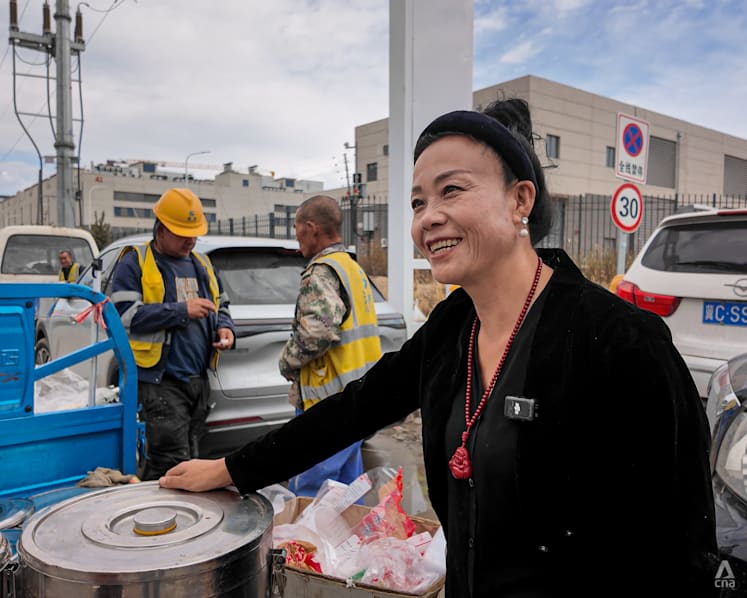
Gao, who previously ran a shop in a nearby town, moved her business here about a year ago.
Having heard that more data centres are in the pipeline, Gao hopes to continue operating in the area for another two to three years.
"As long as they keep building, there will be workers coming here to eat. I hope to stay for another few years and follow the construction wherever it goes," she said.
But the nature of these opportunities changes as facilities near completion.
At Yiwutang, another of Ulanqab's main data-centre clusters, a cigarette and snack vendor said his customer base had shifted as construction work gave way to the installation of equipment.
"Business was better when there were more construction workers. Now, most of my customers are engineers working inside the data centres," said the vendor, who requested to be identified only as Guo.
Ulanqab’s rise as a computing hub is driven by a combination of national policy, geography and climate.
The city is part of China's "East Data, West Computing" strategy, or “dong shu xi suan” in Mandarin. It seeks to shift computing workload from the more developed eastern regions to western areas with greater land and energy resources.
Situated about 350km northwest of Beijing, Ulanqab is relatively close to a major technology market, while Inner Mongolia's abundant wind and solar resources offer opportunities to power data centres with renewable electricity.
Its relatively cool climate also allows operators to harness outside air to keep servers from overheating, reducing the need for energy-intensive cooling.
THE LONG SHADOW OF DROUGHT
But Ulanqab's rapid expansion as a computing hub raises a question: Can a region long prone to drought accommodate the water needs of a growing data-centre industry?
For residents who have lived through decades of water scarcity, the challenges are familiar.
Gao, 57, who asked to be identified only by his surname, grows potatoes and sweet potatoes on a plot outside his home in a village east of Ulanqab's city centre.
Having lived there all his life, he recalled droughts that sometimes stretched for months, leaving farmland parched and crops unable to grow.
"There were times when we couldn't grow anything because there was just no water," he told CNA.
"We had to be very careful with water, even for drinking. Life was hard back then."
For Shengjiaying resident Shi Shuzhang, 60, unreliable household wells were once part of everyday life.
"In the past, every family dug its own well, but some were deeper than others. Sometimes you would draw water, and there would be none," he recalled.
In June 2011, drought affected more than 23,000 sq km of Ulanqab, according to weather authorities. In Chahar Right Middle Banner, an administrative division equivalent to a county, about 15,000 residents faced difficulties accessing drinking water.
Both Gao and Shi said access to household water had improved considerably over the years due to infrastructure upgrades, including storage tanks and piped supplies
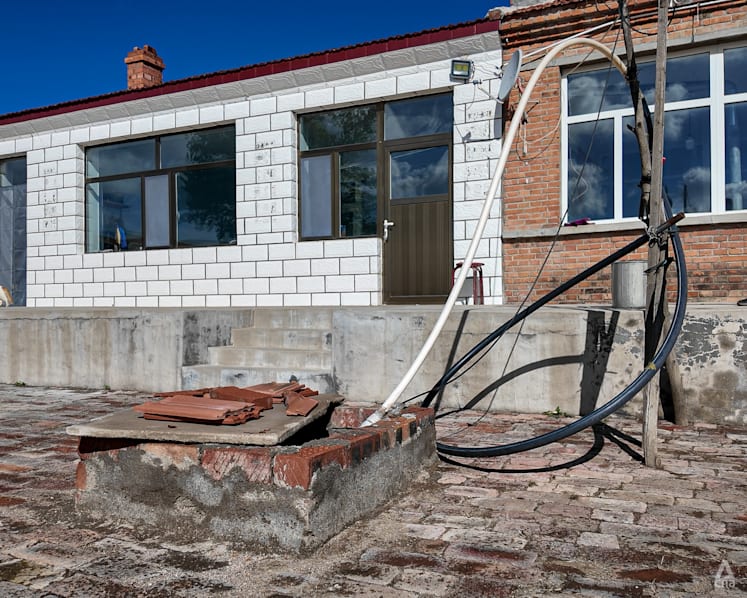
A 163 million yuan project, completed by early 2023, added six wells, a water-treatment plant and 45km of pipelines, providing additional water supplies to Ulanqab’s central urban area, according to China Water Resources News, a newspaper overseen by the Ministry of Water Resources.
In 2024, authorities also announced plans to invest 170 million yuan in rural water-supply projects, including emergency water sources and upgrades to smaller communal systems, according to local news outlet Inner Mongolia Daily.
Gao said he had not experienced significant water shortages in recent years, even as data centres expanded across the surrounding area.
Still, drought remains a recurring challenge. Municipal agricultural monitoring in May found that around 491,000ha of farmland were experiencing varying degrees of drought, even as overall soil moisture conditions were assessed as suitable.
KEEPING COOL WITHOUT THE THIRST
For now, Ulanqab’s burgeoning computing industry accounts for only a fraction of the city’s water consumption.
Big-data enterprises used 1.54 million cubic metres of water in 2025, equivalent to just 0.33 per cent of the city’s total, according to the municipal water bureau.
Part of the explanation lies in the cooling technologies used by operators seeking to minimise their water needs.
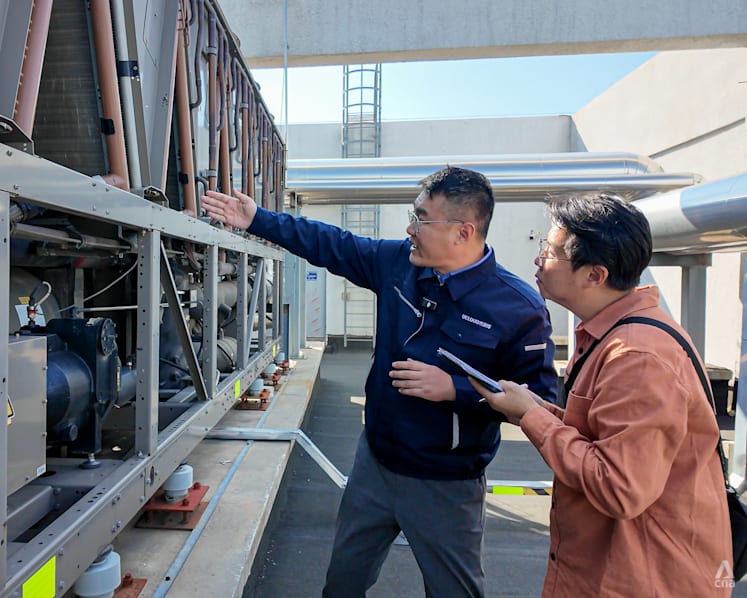
At UCloud's data centre in Ulanqab, rows of servers generate heat that must be removed around the clock. The Shanghai-listed cloud computing company operates a self-built campus in the city, with five data-centre buildings planned across the site.
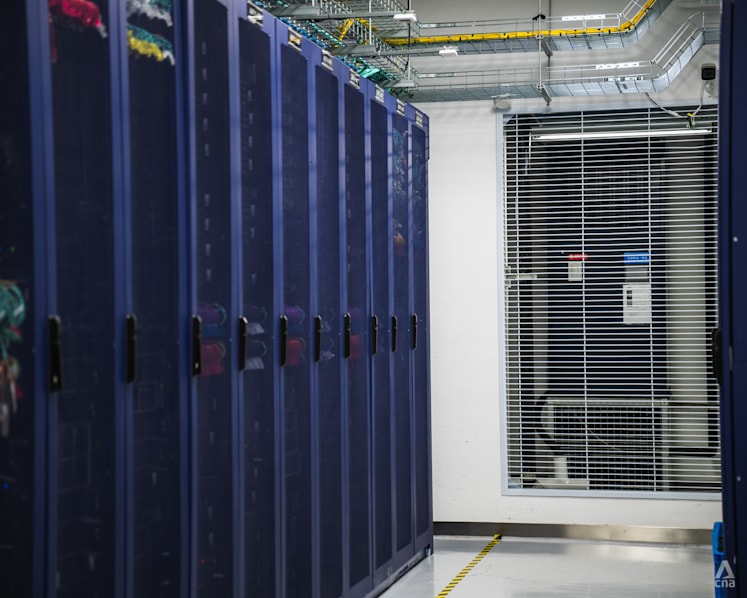
Campus manager Feng Yongcheng said the climate allows the facility to rely largely on natural cooling.
"For around eight to 10 months a year, outdoor temperatures are low enough for us to switch off mechanical refrigeration and use outdoor air to dissipate heat," he told CNA.
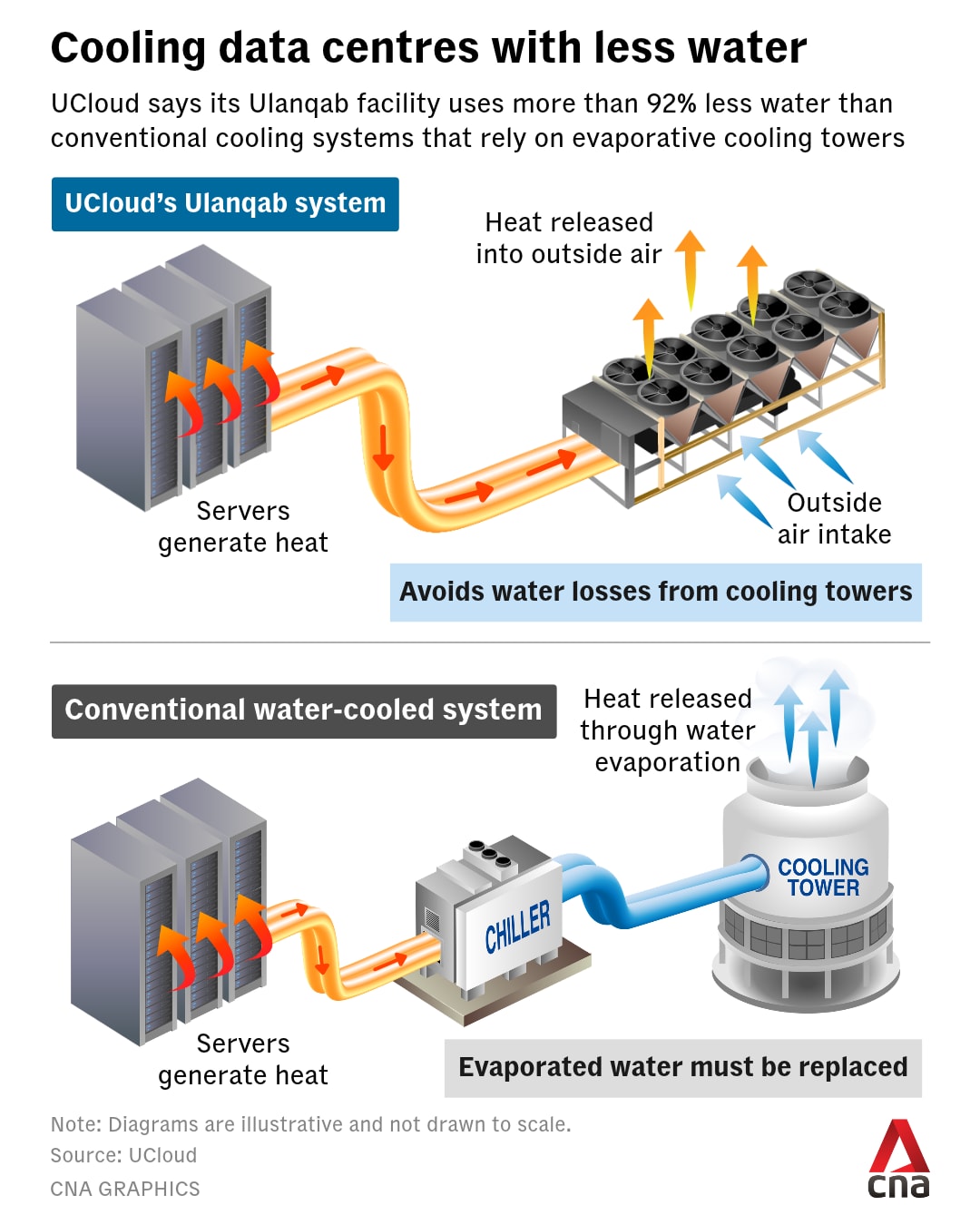
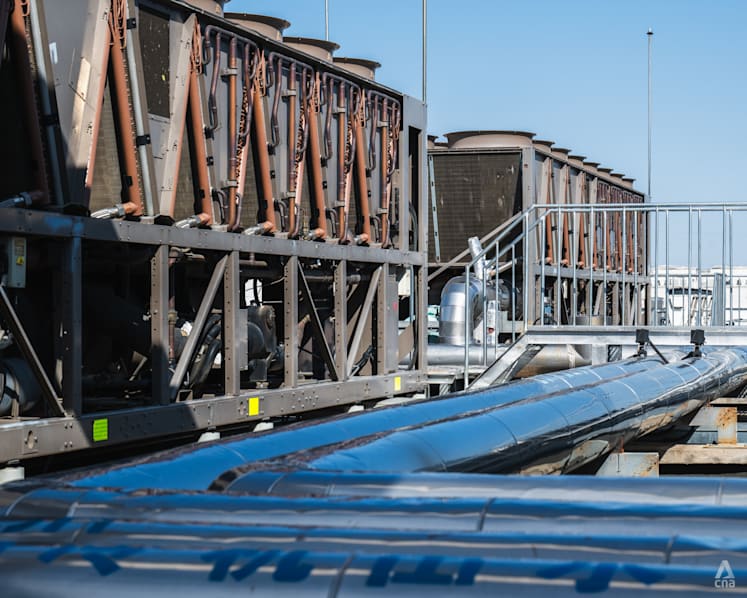
Rather than using conventional water-cooled systems that rely on cooling towers to release heat through evaporation, UCloud uses air-cooled chillers and chilled water circuits to regulate temperatures inside its server rooms.
UCloud said this approach reduces water consumption by some 92 per cent compared with conventional methods.
The advantages of operating in cooler regions are also reflected in research.
A simulation-based study published in October found that data-centre cooling systems in northern and western China generally had lower water-use intensity than those in the country's hotter, more humid southern regions.
"Simply put, when the climate is cooler and the air is drier, cooling systems have more opportunities to dissipate heat through the air, rather than constantly relying on water evaporation," the study’s author Wang Yongzhen, an associate professor at Beijing Institute of Technology's School of Mechanical Engineering, told CNA.
But cooling requirements are changing as AI servers become more powerful.
Feng said UCloud has already deployed liquid-cooled server racks and plans to expand the technology to accommodate higher-density computing equipment.
"Air cooling has its limits in terms of heat dissipation, so the proportion of liquid cooling will continue to increase," he said.
THE LIMITS OF EFFICIENCY
For Ulanqab, the larger question is whether improvements in water efficiency can keep pace with the rapid buildup of data centres.
"If the scale of data centres and their electricity consumption increase faster than efficiency improves, total water consumption may still rise," said Wang of Beijing Institute of Technology.
Local authorities are mindful of the potential strain on water resources.
"While 0.33 per cent may seem small and data centres' absolute water consumption may not be substantial, the pressure on water resources relative to the region's carrying capacity cannot be overlooked," municipal water bureau director Yang Yong told Chinese media in comments published in late October.
The city is working to expand its water-supply options, including through treated wastewater. According to the municipal water bureau, Ulanqab produces about 72 million cubic metres of reclaimed water annually, of which roughly 30 million cubic metres remains available for allocation.
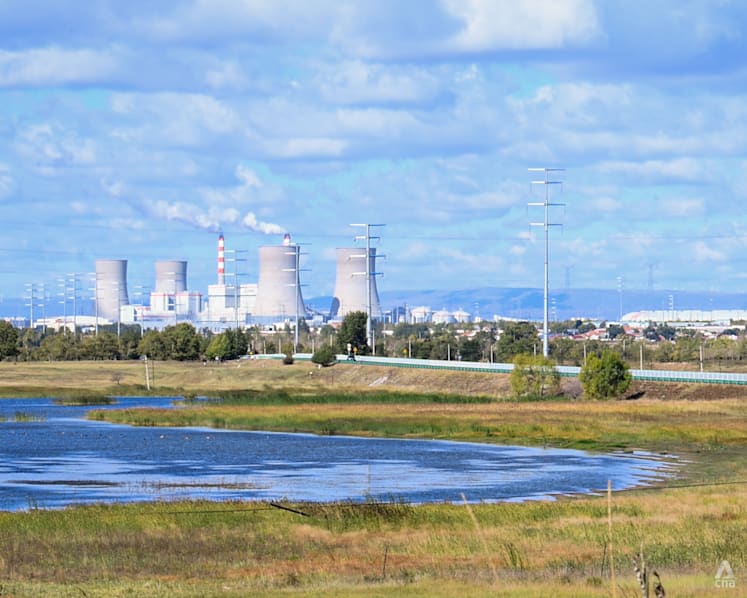
For Zhong Shifa, an associate professor at Tongji University's College of Environmental Science and Engineering, a key test will be during periods when high temperatures, low water availability and heavy computing demand coincide.
Assessing whether the industry's growth is sustainable, he said, requires actual operating data, including water consumption during peak periods, the sources of that water and the combined demands of existing and planned facilities.
"Cooler climates and low-water-consumption technologies offer advantages, but these advantages need to be verified using the operating data of specific projects and regional water-resource conditions," Zhong told CNA.
While the longer-term implications remain uncertain, the transformation is already reshaping residents’ livelihoods near Ulanqab's computing clusters.
Sheep farmer Hu, 50, tends to his flock of about 40 sheep beside a sprawling data-centre construction site, on land that he recalled was once open grazing ground.
As construction has encroached on the surrounding land, the space available for his herd has shrunk.
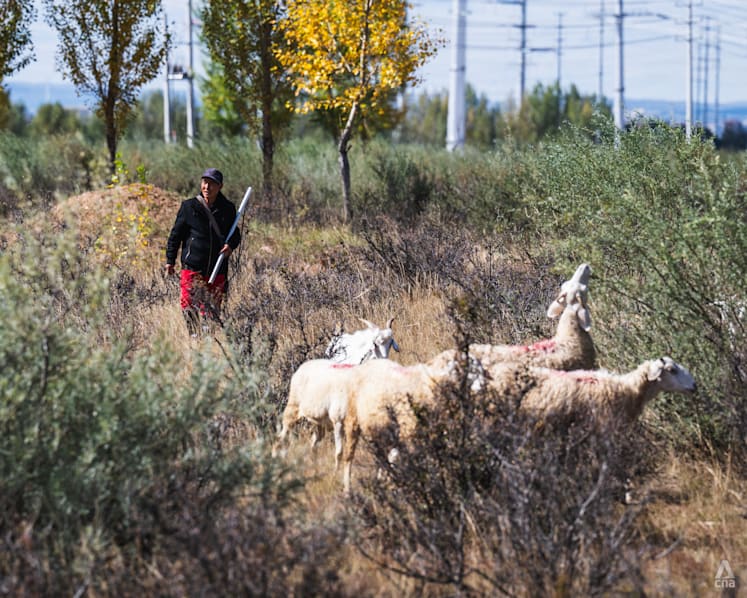
"These used to be open grasslands where we could let our sheep graze. Now there are fewer places for them," Hu, who declined to provide his full name, told CNA.
But Hu said he had not experienced significant water shortages, while some of his relatives had found work amid the construction boom.
"Things are changing, and that's part of development. Life has become better in other ways.”
KioskNews shows a cleaned-up reading view extracted from the publisher’s page — the original always lives on their site, not ours.