Bruce Willis Hated One Thing About John McClane, and It Almost Changed ‘Die Hard 2’
- Collider's Steve Weintraub talks with Renny Harlin for The Beast.
- He discusses designing the car, filming with LED Volume, practical stunts, and Samuel L. Jackson's on-set improv.
- Harlin also revisits Die Hard 2, A Nightmare on Elm Street 4, and reveals why he turned down Bond.
After 40 years in the business, Die Hard 2 director Renny Harlin knows a thing or two about making blockbuster action movies. In fact, he’s overseen classic films from across genres, including “the second best shark movie after Jaws,” Deep Blue Sea, and was the man responsible for making Freddy Krueger the “James Bond of horror.” Now, his new action thriller, The Beast, starring Samuel L. Jackson, is careening into theaters, and Collider has the behind-the-scenes scoop on how they pulled it all off in only eight weeks.
In the movie, the president (Jackson) flees the White House with his injured Secret Service agent, Taft (Joel Kinnaman), when a hostile militia stages a military coup. The two are forced to escape in the presidential limousine, equipped only with the vehicle’s highly classified offensive weapons.
During a post-screening Q&A with Collider’s Steve Weintraub, Harlin reveals all the secrets from set, breaking down how their team used Volume technology to put audiences inside the car with Jackson and Kinnaman. He discusses orchestrating practical explosions and car sequences, designing the car, reveals the scenes and songs cut from the movie, and how Jackson’s iconic line made the cut through improv. For all this, plus why Harlin refused to make a James Bond movie, how he transformed Krueger into the dreamy horror king we love today, and the major changes Bruce Willis wanted to make in Die Hard 2, don't miss the full conversation in the video above, with a transcript provided below.
Renny Harlin Explains Why He Passed on James Bond
"He's not my Bond."

COLLIDER: Have you ever considered going back and doing a new cut of one of your films?
RENNY HARLIN: I get a lot of questions from people about movies that they know were changed, like Deep Blue Sea. The whole ending was changed. The Long Kiss Goodnight, the ending was changed. So people often ask, “Is there going to be another version one day that we can see? What was the original ending?” and so on.
So I'd love to do that, but it's tough because finding all those materials and getting the studios and the producers and financiers to agree to spend more money and do stuff, it's not so easy. In terms of going back and re-editing a movie, yes, I would say there are a couple of movies that I'm just not so happy with the end result, so I would love to do that, but it's not so easy.
What movie did you almost direct that would surprise people?
HARLIN: I just recently talked about this somewhere, so I hope you're not all going, “Yeah, I've heard that story. Whatever.” But I was offered a James Bond movie in the early ‘90s, mid-90s. It was Daylights. I had the meeting with Barbara Broccoli and the whole team and everything.
Of course I wanted to be part of the James Bond legacy, but I'll be frankly, completely honest and say the reason I didn't do it was I told them, and totally, honestly, this is with no disrespect to this actor, but Timothy Dalton was at that point Bond, and I said, “He's not my Bond. I love this series, and I think my Bond is a different guy.” And I said, “If you cast a new Bond,” which happens every few years, “then I'm totally in. But I'm not going to do a Timothy Dalton Bond movie.”
So we parted ways, and then maybe two years went by, and then they made the next Bond movie, and they replaced Timothy Dalton. Timothy, I'm sorry. I didn't mean to get you fired or anything, but it's like, why couldn't they do it when I was there anyhow?
What did filmmakers get to do in the ‘90s that a studio, producers, or whoever would never let you do today?
HARLIN: Blow up a lot of shit. Oh my God, it was such a different time. It was just awesome. The whole studio system was not relying on these huge IP movies. If you think of the late ‘80s or early ‘90s, there were these action stars, and I'm talking from the perspective of an action film director. Every year, you would know that there's going to be an Arnold [Schwarzenegger] movie, there's going to be a Sly [Stallone] movie, there's going to be a Bruce [Willis] movie, and so on, and you looked forward to those movies. And they were not cookie-cutter. They were not IPs. They were just like, it’s whatever it is; it could be The Last Boy Scout, or it could be Demolition Man, or it could be whatever. And so there was this kind of a freedom of creativity and taking chances — as long as you have the right guy.
That leads me to, actually, I have to say this. Many of you might not remember this or have not read this, but this was also in the ‘90s. I remember when Mark Canton was head of whatever Sony was called at that point. Maybe it was called Sony already, or maybe it was TriStar Columbia or something. After he had been at Warner Bros., he was running the studio, and they did Last Action Hero with Arnold, and some journalists were asking, “What is that movie about?” His response was, “I don't care. We have Arnold.”
That movie didn't work out so well, as you know. Maybe in the later years people have appreciated it, but it didn't work out so well. So, it was interesting. We lived in times where it was all about the action heroes, and then sometimes it wasn't.
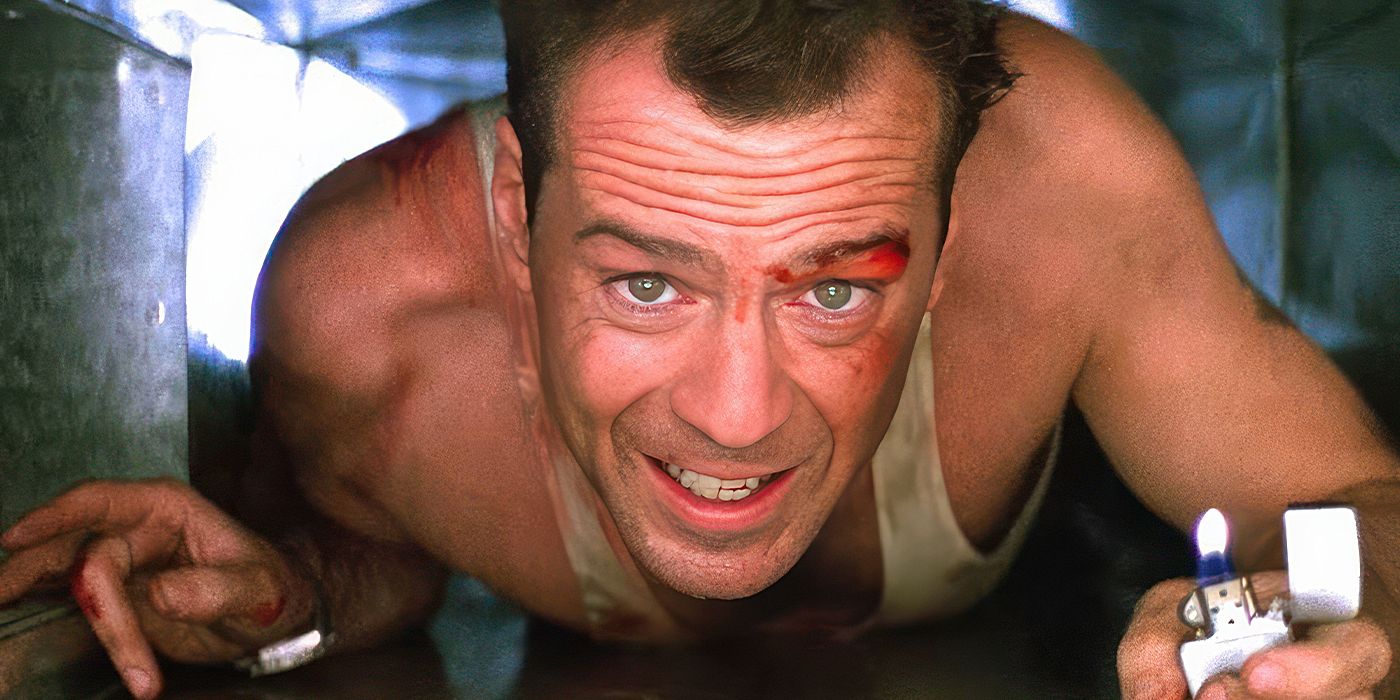
Bruce Willis Hated One Thing About John McClane in 'Die Hard 2'
"Let's do the Renny Harlin bullshit take now."

Speaking of Arnold, you've worked with [Sylvester] Stallone, Samuel L. Jackson, Geena Davis, Bruce Willis, John Cena, and many others. Who pushed you the hardest as a director?
HARLIN: Wow, this guy has the best questions. You want to appear really intelligent and like you really thought of this stuff… Okay, no, it's an easy answer. And not speaking ill of anybody or criticizing, and especially I feel bad when I talk about Bruce because we all know that he is not doing so well, but I would say without a doubt, the hardest person was Bruce, because when we did Die Hard 2, he had emerged in Die Hard as a movie star from Moonlighting and all those TV shows that he had done. Now, all of a sudden, studios are always desperate to find “the new guy,” “the next guy,” and he became the guy, and it was a success. Die Hard was huge. It started a big franchise, and now he was a bona fide movie star.
Then he told me, one of the first things when we started Die Hard 2, was he's like, “I'm not going to do any of that stupid comedy shit anymore. I'm going to play this for real.” I was like, “Bruce, why do you think Die Hard was so successful? It’s because of your character, your charisma, the dry sense of humor, the sarcasm, the Everyman, blue-collar guy who hates authority and all that, and says all these sarcastic things and is kind of funny, and is self-deprecating.” He was like, “Yeah, I hate that shit. I'm not going to do any of that funny stuff.” So it led to a big thing.
In the end, with the producers helping me, and Joel Silver, bless him — fantastic producer — he had my back. We made a deal with Bruce that we'll do as many takes as he wanted his way of each scene, each situation, and we’ll do one take my way, the bullshit Renny Harlin way. And it's tough to be a 29-year-old Finnish director in Hollywood telling Bruce Willis that you are wrong, but we did it. We shot the movie, and I got him to say all the jokes and all the smirks and do all the things, and then I got the movie together. Even if the camera was accidentally rolling because the camera assistant was leaning against it, and he happened to be talking to his wife and smiling, I would put that in the movie.
Then Barry Diller, in those days, he was the chairman of Fox, and then we’d have a screening in the Zanuck Theater, a 1,000-seat theater. It's like a Hollywood situation. It's like him and me and Joel Silver. We’re all sitting in the theater, watching the movie, showing it to them for the first time, to Barry Diller, and the lights come up, and he walks up to us. We’re like, “What happened?” And he's like, “I like it. It's really good. Do you have any more of that funny shit?” I was like, “Trust me, every outtake of Bruce even having a slight smile on his face is in the movie.” He’s like, “Okay, let's lock it. Let's release it.”
So, Bruce was tough. He was tough. He let me know every day when we did those takes, he would be like, “Oh okay, and let's do the Renny Harlin bullshit take now.” Sorry. It's in the movie.
What did Bruce actually say? What was his reaction when he went to the premiere and saw the movie and then saw the audience laughing and having fun?
HARLIN: I don't know. I guess you would really have to go back and analyze Die Hard 3, 4, and 5, and whatever came after that. But I would say that it wasn't just the humor. It was also other things, like his relationship with Bonnie Bedelia’s character. Because it wasn't about John McClane saving the world, it was about saving his marriage. It was about saving his wife. It's about his children.
I feel like in the subsequent movies, the tone of the movies changed. As you know, soon there was no more Bonnie Bedelia. So, I'd love to say, “Yeah, he watched the movie, and he said, ‘You were right. You’re a genius,’” but it didn't happen. So, watch the series and see how the movies developed. That's all I'm going to say.
'A Nightmare on Elm Street 4' Turned Freddy Krueger Into a Pop Culture Icon
"Freddy should be kind of like the James Bond of horror."

When you took over A Nightmare on Elm Street 4: The Dream Master, coming straight from Finland, you leaned heavily into MTV-style aesthetics and kinetic visuals. How did you convince New Line Cinema to let you pivot Freddy Krueger from a shadowy boogeyman to a theatrical pop culture icon?
HARLIN: Oh, that was a crazy challenge. You’ve probably heard this story before, and if I told the story now again, it'll take the whole evening, so I'm gonna try to keep this short. The writers’ strike started just when they were putting the movie together. They had a release date in August, and we were, I think, in February. They have to have the movie ready, and they don't have a script. They have a crazy Finnish director who's done nothing, who's convincing them that I should direct the movie.
Because they don't have a script, I just start drawing storyboards, and I come up with all these crazy nightmare sequences just from my own warped imagination. I keep showing up there with no appointment or anything, just like, “Hey, you want to see these storyboards I made with this sequence?” Like, “I have this great idea. They're going to be in a pizza, like all the kids will be in a pizza.” And they're like, “What?” Like, “Yeah, their faces are like pepperonis.” And they're like, “What?” So, it was insane, but I wore them down.
You know that Mike De Luca is in the news now, chairman of Warner Bros., but not anymore, sadly. Mike was an assistant, like a P.A., at New Line Cinema at that point, and Mike was a huge advocate of me. He was a young guy, and we sort of saw eye to eye, and he became my ally. Somehow we convinced Bob Shaye and everybody that I should do the movie — well, they didn't have anybody else, and they didn't have a script, but they had a storyboard. So then in the end, we decided, “Okay, the storyboards are really cool. So we have the nightmares. So now we just have that annoying little unnecessary, stupid thing called plot and characters. So we have to just weave that in around these nightmares.”
Mike and I, and then our wonderful producer, Rachel Talalay, we were like, “We can handle that. We'll just write that stuff in the morning and tell actors what to do.” And that's what we did. So the movie was prepped like that. We just created these cool nightmare sequences, and then during breakfast and lunch breaks, we'd write the dialogue for the actors and tell them what to do.
My whole approach — of course, now it can seem kind of smart, but at that point it was kind of revolutionary — because I loved the movies, I had seen the three movies, I knew them really well, and I said, “I think we can't pretend with the audience anymore, like, ‘Oh, it's this scary guy, and blah, blah, blah,’ because everybody is in on the joke already. So we have to sort of twist it, and we have to tell the audience, ‘We get it. We're with you.’” And I remember I told Bob Shaye, “I think Freddy should be kind of like the James Bond of horror.” He isn’t the hero of the movie, though; he's the bad guy, and so we twisted it around and acknowledged what he was and brought a lot of humor into it that way, and it was a really risky bet.
Throughout the shoot, every day I thought I was going to get fired because Bob Shaye and the others were in the background, just hovering there and just watching me. I’d look at them, and they would be just shaking their heads. It wasn't until we put the movie together and in Hollywood we had our first test screening, and the audience was clapping and cheering and stomping their feet and going apeshit. We looked at each other, and Bob Shaye was like, “Maybe you were right.”
Your reference is so good, because I did take from pop culture and from old horror legends and MTV and all that stuff. I was young, I was hungry. I had just come from Europe, I was in Hollywood. I was just full of energy and inspiration and love for this movie, so I just took everything and put it in a blender in my head and vomited it on the screen. So I felt like the movie was full of stuff.
Just as an example, there's a scene where one of the characters is kind of losing it and getting sucked into the nightmare in a classroom, and the camera pulls back. It's a crane shot that starts on her, and it just pulls back, and you realize that the classroom floor that normally would be a tiled floor, maybe, or something like that, is a spiral of tiles, so it forms this kind of a vortex. It was just an idea that came to me, because I designed every sequence, like I said. I storyboarded it, and as I was doing it, it came to me. And so the production design followed the storyboards. It was kind of like an organic way of making everything support each other.
That's why, on that Friday, when the movie came out, I went to this little diner to eat a little breakfast, and I took the newspapers, and I started reading it. The first sentence in some major newspaper was like, “This Kafkaesque nightmare that Renny Harlin has created.” I was like, “What the fuck? Me?” So, it worked out.
Deep Blue Sea is one of those movies people still quote and rewatch constantly. Did you have any idea on set that it would have the kind of afterlife that it's had?
HARLIN: No, and I'm kind of still surprised that it does. Because, yeah, it's a studio movie and it has some production value, and we worked hard trying to make it into something interesting, but I'm always surprised when people are so impressed by it, and they're like, “Oh, it's the second best shark movie after Jaws,” or something like that. I thought it was pretty good. I didn't realize it was that good. It was like, yeah, of course we put our hearts and souls in it, but I never thought that this was going to be groundbreaking. I still don't know if it's groundbreaking in any way.
After 40 Years in Hollywood, Renny Harlin Guides a New Generation of Filmmakers
His podcast, Harlin House, is "about Hollywood and how to navigate in that world."

Before I jump into The Beast, I just want to point out that you have a podcast going with your wife called Harlin House.
HARLIN: Where's Johanna? She is my producing partner. In the last five years, she's produced eight movies for me, so she's a powerhouse — and three kids. So, she does it all.
That's the more impressive part. So I'm just curious, for people that have not heard the podcast, what is it about and why did you guys decide to make it?
HARLIN: We started Harlin House just quite recently. The fourth episode came out yesterday. It's a podcast about movies, about Hollywood, about the past and present and future, and my experiences in this business, how I broke into it, and crazy stories. Kind of what I was telling you here, but a lot more of those kinds of stories.
The philosophy behind the whole Harlin House concept is that after 40 years — I can't believe it — but 40 years of making movies in Hollywood, I felt like I really want to start giving back. Because I get so many filmmakers come to me, starting filmmakers from all around the world and film schools and festivals, and they're asking, “How did you do it? What's your advice?” and all that, and I felt like I want to start giving back and I want to start helping these people, and it feels really good to do that.
So next month, we are launching something much, much bigger that is really going to be a major, major thing for helping and encouraging new filmmakers to make their dreams become reality, but we'll talk about it later. But Harlin House podcast is kind of like a door to that. It's kind of like opening the door to what we are planning, and opening the door to Hollywood for those who are coming from all over the world and have no reason, like, “What am I going to do? How am I going to get an agent, or something like that?”
So, it's not like a how-to podcast. It's not like, “This is how you film a scene,” or it's not like a critic’s show where we say, like, “This movie sucked or didn't.” It's just about Hollywood and how to navigate in that world. So, please go check it out. Harlin House and go there and register, and put your email there, and we'll be sending you all kinds of special stuff and keeping you up to date about what we are doing, and all that stuff. So, thank you for plugging. I need all the support and help.
How 'The Beast' Used Volume Technology to Bring Its Action to Life
"It was a super, super challenging, technological puzzle."

Jumping into The Beast, I read, and I could be wrong, that you got attached to this close to when it was going to go, or am I completely wrong on this?
HARLIN: You're not wrong. This is what happened. True story. I was in London with my wife and kids working on a completely different movie, another independent movie. We had been in London for three months. We live in Florida, but we were there.
Then for our wedding anniversary, I said, “Let's go to Paris and have a romantic weekend.” So we went to Paris, and we were in this nice, fancy hotel in Paris, and then the phone rings. It's Saturday night, and it's the producers of The Beast, and they're like, “Renny, would you be interested in getting in on this movie that we are doing, and blah, blah, blah?” And I'm like, “Yeah, sounds pretty cool. Interesting. Send the script. I'll read it next week, and let's look into it. I'm kind of working on this other movie, but nothing is impossible.” And they said, “No, but could you read it a little faster?” I'm like, “Yeah, sure. I'll read it fast.” They were like, “Like now?” I'm like, “How now?” He’s like, “Now now.”
So then I got the idea, and I said to Johanna, “Okay, put the champagne aside. Keep the Jacuzzi warm. We're going to read the script now.” So we read it together. We both read the script, and then two hours later, we were looking at each other like, “Oh my God, this is such a cool script.” I called the producers, and I'm like, “I think I'm in. What should we do?” And they are like, “Can you be in Madrid on Monday morning for a location scout?” I'm like, “Okay, I'm in Paris. It’s Saturday night, and it's our wedding night.” And so we literally packed our things. We fly to London, we pack our stuff there, and Monday morning we are in Madrid. Straight from the airport, I go to scouting, and she goes to the hotel with the kids. It was one of those cases.
I'm going to be honest with you, to this date, I don't know what happened. There was another director before me, and I don't know — let's call it creative differences, or whatever, but it didn't work out between them, and they wanted to go forward with the movie. And I guess part of it was that Sam [Jackson] was already involved at that point, and Sam wanted me to do the movie. So, it just all worked out, and I was super, super excited to get involved. It was just one of those things.
The movie in London, it was just one of those situations. As it happens with independent movies, the financing didn't come together, the casting didn't come together, all the elements didn't come together. Sadly, that movie still today hasn't been made.
You get involved in The Beast. It's obviously full throttle ahead. How much did you know early on that you were going to use the Volume technology? Talk a little bit about the technical challenge, like the way you put this thing together and the visuals and how you wanted it to look and flow.
HARLIN: It all kind of seems simple now, and it all kind of makes sense, but when we started everything, it was a total mess. Nobody had any idea how we were going to do this thing. How can we have these guys in a car and shoot them, and have this action outside the car?
As you know, there's a million ways of doing car sequences. You can tow the thing, or you can do a bluescreen or whatever, but from the get-go, my philosophy was I want to make this real. I want to shoot the action for real, the old-fashioned way and not the visual effects way. And so we started exploring the possibility of doing all the action for real and then projecting it on these LED screens around the car, and shooting the car that way.
It was a super, super challenging, technological puzzle, and nobody really had the knowledge. And then Jacques [Jouffret], who was our DP, he shot movies with Michael Bay and Peter Berg, and he's a super cool guy, but he had no idea how this thing works. So nobody could figure out, like, how do you measure the light and how dark you make things and how bright you make them, what kind of lenses, and what the focus should be, and all that stuff.
Long story short, what we ended up doing is first in Madrid, we shot all the action, and it was the most bizarre thing because as an action director, your job is always to figure out, “How do I shoot the action as cool as possible?” You have a bunch of guys shooting guns and launching missiles and blowing up shit, and cars crashing, and you want to put your cameras in cool, low angles, and drones, and this and that, and be sure that the action is as cool and powerful as possible, but in this case, it's all outside the car. You see what you see. You look out the car window, and there it is.
So, we set up these huge action sequences, as you saw them, and all we do is then we have a camera vehicle that has eight cameras pointing in every direction, even straight up, and then we just drive it through it. It was like the most anti-climactic thing ever. I don't want to go into a crude comparison, but you get my drift. It's like you set up all this stuff, but then nothing happens. There are the explosions, and there's the guys, and there's the shooting, and there's the cars and everything, and when I say action, it's just like this camera just goes like, “Okay, that's it.” It's like, “Did we just shoot the sequence already? Is it done?” But that's what we have to do. Then, of course, the only exception was when Sam comes out of the car. But other than that, that was it.
Then we shot maybe three weeks of just stuff blowing up, and then we went to the Canary Islands where there was a studio with a 270-degree Volume screen, which is this huge, high, like 50-foot-high thing, like 10 times the size of this room, and it went around to 270 degrees. Then for that hole that was left there, there was one extra screen that kind of blocked that hole. So in essence, we had a 360-degree view, and because we had shot everything with eight cameras, we had a view of every direction possible. So, the action might be in front of you, behind you, left side, right side, above you, wherever, and then we just protected it.
We built the set of the car in the middle of it on a hydraulic platform, so it was almost like a motion theater. Then we had 10 guys with computers, programming everything and timing the screens right so that every which way you look, it's always exactly the right view, and that the platform is moving the right way. Then the camera couldn't be anywhere else but inside the car, so then we built the set so that the camera could come in from the roof and go inside the car and move around the car, and do everything. So it was super, super technical.
But what really impressed the actors was once we had this all set up, by the time the actors showed up, then with the actors, we shot the movie in three weeks because all they had to do was be in the car and react to what was going on outside. I'm like, “Now we're doing scene 15, where they attack.” They thought that it was going to be like a green screen thing, and I'm going to say, like, “Look to the left. There's a scary explosion there!” But no, they get in the car, and it's like, “Okay, start driving. Here we go.” And they look out the window, and they see this stuff for real happening there, and they can react to it, and the car is moving, and they feel like it's a real thing.
Then there was a third layer. So, there were three layers. One is the screen where all the background stuff happens, then the third layer is inside the car, the people inside the car, and then the middle layer was between the car set and the screen where we had explosions, flying debris, smoke, and sometimes even people, when they are shooting, and they are knocking on the windows, and climbing on top of the car. So, there were three layers, and it was the middle layer that was kind of most important in a way, because it made it all seem real. Because if you were looking just with a naked eye, just at the screen, the background, it kind of starts looking a little fake because it is a two-dimensional screen.
That's fucking bananas.
HARLIN: It was bananas. Imagine all those days when the computers are not syncing right, and it's like you look out the left, and the car is going backwards; you look out to the right, and it's going that way. Because it's all being projected there, and if the projection is not exactly in sync with how we shot it with a certain lens and the distance of the projection from the set and the camera we are using inside, also, now things are too big, and it's like the guys on the screen are too big or something. It was super complicated, but when it worked, it was fantastic. When it didn't work, it was a joke.
The cool thing about that is there are some cool shots where you are doing 360 in the car. The last time I saw a 360 — maybe I'm wrong about this — was with Children of Men where they do that amazing all-around. Talk a little bit about the freedom it gives you in terms of what you were able to do with the camera.
HARLIN: No, totally. Children of Men is a great example. Those guys, they were actually driving the car with the camera, doing all that stuff, which is insanity. But it was fantastic because I could, because of the screens, shoot any direction I wanted. Then it was just a matter of figuring out, like, how will we get the camera there and we don't hit the people on their heads — and it came close to that many times — but somehow keep it safe?
Because all this stuff is super heavy, and it's on these hydraulic things and it's computer-programmed. Like, we're going to rehearse a shot, and it's going to start from there, it's going to pull back, and then it's going to twist around and do this. And the actors learn what it's going to do, but it's like you can't just change it like that. If the actor makes a mistake, then they're going to get smashed with the camera.
So, it gave a great freedom, but it also had to be controlled and rehearsed. Of course, my goal was that you don't feel the camera in the car. You kind of feel like you're in the car. You're like a fly watching them in the car, and it just feels natural, and it doesn't feel like a gimmick. So, hopefully that worked out.
One of the things you touched on already is the importance of matching lighting, and the lighting of outside and inside. How did you solve that? How long did it take for you guys to figure out the matching of lighting?
HARLIN: That was the toughest challenge. Our DP, he’s French, but he's lived in America a long time, and he has this very French attitude and accent to go with it, so he just thought it was all bullshit, so he just wanted to kind of shoot it like he would be shooting a real movie. When the technicians would tell him, “It has to be two stops down because it has to match the color curve of the thing,” he's like, “This is bullshit.” He wanted to use a lot of smoke and everything, and they would say, “You can't really use that much smoke because then it diffuses the image and then you don't get the thing.”
So, it was a daily fight between everybody of, like, technology versus arts of lighting and the more sort of traditional cinematography. So, it was all good in the end, but it's like you were there. To ask that question, it's so smart because that was the hardest thing, the balance of things, so that the background doesn't look too bright or too dark compared to the middle ground, or compared to the people in the car. So, super technical.
I've seen some Volume stuff that looks amazing. You can't even tell. I’ll use the example in The Batman. Matt Reeves shot that rooftop scene in the Magic Hour, and that was all Volume, and you can't even tell because of the lighting and the way it's shot. Anyway, it's amazing technology.
Designing 'The Beast'
"We tried to walk the balance of not making this into like a Knight Rider or something."

I want to talk specifically about the actual car. How much leeway did you have? Where did you feel like, “We can just have fun with the Beast and the presidential car, and how much needed to be thought of seriously?
HARLIN: Well, we did as much research as we could, but there was not much you could do, because what are you going to do? Call the Secret Service and say, “Can you tell us exactly how this car works?” They wouldn't tell us anything. So we just had some stuff that you can find on the internet, and then we made up our own things. It was just me saying, like, “I'd like to have these kinds of weapons,” and that kind of stuff.
For example, we knew that we wanted to have those machine guns in the back of the car, but then we had no idea what was going to be in the front of the car. I said, We have all these typical explosions, and we have the bullets flying everywhere all the time, so it should be something that is totally different.” And then I did some research on real life, of what kind of weapons they are developing nowadays, and then also looking at some movies. So we came up with this sort of pulse rifle electromagnetic thing that the weapon on the hood shoots because I just don't want to have another series of boom, boom, boom, and explosions. It has to be something different and devastating.
So, it was kind of fun. We tried to walk the balance of not making this into like a Knight Rider or something where it's just like ridiculous, but at the same time, having some fun.
I need to pause. For the young folks in the audience. Knight Rider was a TV show in the ‘80s that starred David Hasselhoff as Michael Knight, and this car had amazing abilities. It was like the Beast's older father from another generation.
HARLIN: Totally. This crowd looks very young. You don't know about Knight Rider.
I love Knight Rider.
HARLIN: I love it.
Why wouldn't you?
HARLIN: What was the car’s name?
KITT 2000.
HARLIN: You're right.
I never thought I was gonna bring up Knight Rider. So, how many bullets can the windshield actually take? How nerdy did you get with that? Because there is that thing where he has the gun, and he's firing right at that one space to try to get in.
HARLIN: Yeah, that gun is supposedly this super powerful gun that if you just fire it off in the same place, it'll eventually go through the window. We did some research about what kind of windows they are and what they can withstand, and there's no glass in the world that will never break. Again, you hit on something very poignant because, in the course of the story, everybody's shooting at them all the time, and of course, even if the bullets don't go through the windows, they are leaving marks.
We had this philosophy: Normal machine guns hardly leave anything, but if it's like a 50-caliber or something like that, it's going to leave a dent. Then we had to make some sort of a chart of what happens in the story. Of course, a lot of the movie was shot in sequence, but then again, there are sequences that you can't shoot in sequence. So, we had, like, eight different window sets for the whole car, so we have to have somebody keep track of that — a script supervisor, and some other smart people — every day, like, where are we in the story, and how many bullet holes are in the windows? And changing the windows was a big deal, but we have to do it because otherwise it's like, “How come there are no holes in the windows?” “I don’t know.” It's like a cheese grater.
So, that was just another one of those little challenges that you don't have to worry about. I don't think there's going to be a critic in the world who's going to say, “Renny Harlin, he's so talented because the coordination of the bullet holes in the windows was just real pro stuff.” Nobody gives a shit, but that's the kind of stuff we deal with every day.
'The Beast' Director Reveals the Hilarious Scene Samuel L. Jackson Improvised on Set
"We know that you know that we know that he knows that you know."

I read that the “motherfucker” exchange evolved through improv on set. What actually happened that day?
HARLIN: Well, I realized that, I don't know why, but somehow Sam [Jackson] was using those words quite a few times, and it was kind of like, now that we talked about Nightmare on Elm Street, maybe it was that kind of a little realization where I went, “Okay, we're doing this.” And everybody in the audience, I just see from your reaction, everybody knows that he's done that in his life, and it's kind of his thing in a way. So what are we going to do, pretend that we're just doing it and that's what happens? Or are we going to address it and say to the audience, “We get it. We know that you know that we know that he knows that you know.”
So I said, “We have to address this, guys. Could you come up with something that puts the cat on the table and admits that we understand?” And then they came up with this dialogue totally on the spot, and it was like one take. We just said “roll,” and I said, “Guys, you’ve got to address the motherfucker in the room,” and they did it, and I was amazed. For me, it was a real learning… I mean, “Motherfucker…” It's so simple, but you never thought of it. You say that, and all of a sudden you sound like Sam Jackson — not me, because I have the accent, but anyway.
Renny Harlin Reveals the Songs and Scenes That Got Cut
We almost had Jackson singing Madonna's "Vogue."

Did you end up having to fight for something in this movie, and what was the thing that you fought for?
HARLIN: I'm going to start with the battles I lost. There were a lot of needle drops, songs that I wanted to use in the movie that I didn't get to use, sadly, which is understandable. It's an independent movie, and we don't have millions of dollars for music rights. But for example, in the sequence where the car starts playing chill vibes, I had a Kenny G saxophone song, the really well-known one, that I wanted to play, because to me it was like everybody would just go, “Oh, really? This is what the car plays?” So, I thought it would be funny, and I think those things are important.
Then later on, when they say, “Play a different kind of music,” I had Joel [Kinnaman] actually say, “Play Metallica,” and then they played “Enter Sandman.” I had that until the bitter end, that song in the movie, and again, I thought it was important for the movie that it's something that people recognize, and they say, “That's kind of cool and crazy.”
In the sequence when Sam is operating on Joel, and they talk about their favorite songs and all that stuff, when they talk about Madonna, Sam was singing “Vogue” and all that stuff. He was doing a whole number. And then when they talk about Prince, he goes, “Sexy motherfucker,” and all that stuff.
You have this footage?
HARLIN: I have all this footage. It was super funny, and it was really touching. When Joel talks about the fiancé that he fucked up the relationship with, but he wishes that they could still walk down the aisle together and all that, Sam says, “You're going to make it. You're going to survive, and you're going to walk down the aisle together and listen to Prince.”
So those moments were really special in the movie, and I think those are the kinds of movies, like… Like, think about Guardians of the Galaxy. If they didn't have those particular needle drops in the movie, it would be a different movie. Think about a typical Quentin Tarantino movie. If he didn't have those particular songs, the movie wouldn't be the same thing. I'm not saying that we would be on that level, but I think that those details are important.
But then you have to face the facts. Those songs can be $1 million to get all the rights and everything. So, it didn't happen. And now there's just sort of something generic there, and a lot of the jokes are cut out. So, those are the kinds of things that you just have to accept, and there's nothing you can do about it.
What's something that you fought for and won?
HARLIN: From early on, I wanted to have a very particular kind of score in the movie because I kind of wanted to pay homage to my favorite movies of the ‘70s and early ‘80s, like John Carpenter movies, and Sorcerer is one of my favorite movies, and like Michael Mann's Thief, like Tangerine Dream-type of music. I love that period of movies when they used to have that kind of thing. You could go all the way to, like, Midnight Express and those movies.
Anyhow, so I wanted to have that kind of, like, little bit kind of a retro, electronic score instead of a classical orchestral thing. So that was one battle that I went hard with that, and I won it, and I convinced them to go with that score. I don't know what you guys felt, but I love the score of this movie. I think it's cool. For me, like in the end, when that guitar comes in, it's very ‘80s action movie guitar. I like it. It sends chills up my spine, so I want it.
I know you're developing a whole bunch of stuff. When do you hope to be making another movie?
HARLIN: Good question. This is my third movie coming out theatrically this year. In February, I had The Strangers [Chapter 3], and then in May I had Deep Water, and now I have this movie. I have another movie that is in post-production that is coming out early next year. So, I like to work a lot. I love making movies, and right now I have seven or eight movies that are totally financed and put together, and we're just trying to put together the cast.
The casting is the biggest challenge, because even if you have the financing and you have all the elements in the movie, and you have a strong script, still, you need that one face — and we're not talking about Brad Pitt, but we need that face that is on a certain level, that gives the movie the identity that they can sell. If you're really lucky, you have somebody like Sam and Joel, but you've got to have somebody, and it's super tough.
What makes it extra tough nowadays, that has changed a lot from when I started, from the ‘80s and ‘90s and so on, is because of all the streaming movies and series and everything. Hey, bless all those actors who can do it and who are successful. It's awesome. But it makes it hard for us filmmakers because the streamers pay so much. As you know, there are major movie stars, major directors who make movies that just go to streaming. I say “just go to streaming,” but I challenge any filmmaker to come to me and say, “No, I don't dream about my movie being on a movie screen.” I'm not going to buy it, ever. Of course, that's your movie. When that projector light meets this thing, and you guys are sitting in the seats, that's movies.
But so much of it is now streaming, and they pay well. And some of those actors that you think, like, “Well, I don't think that person is such a major star. I like them, and I recognize them, but that shouldn't be a big deal.” But today it’s going to be a big deal to get them to make a movie because they're like, “Hey, I can make much more doing this streaming thing.”
I'm going to leave this by saying that the world has changed a lot in many ways, which maybe you realize, too. When I was making movies in the ‘80s or ‘90s, it's like actors had a certain level of, I don't know… I don't want to put down anybody, but in those days, actors were not doing commercials.
Like, I remember in the early ‘90s when Sly secretly did a commercial in Japan. It was a ham commercial, and on his shoulder he was carrying this ham. It was some ham company, and he was super secretive about it, but somehow it leaked, and somebody found a picture of him carrying a ham in Japan. It was a super embarrassing thing, and this was before social media or anything. But actors were doing movies, and movie actors were never doing TV, and TV actors considered them super lucky if they were doing a movie.
To me, it didn't feel so much about people doing things for money. It was like you had this kind of pride, whether it was real or pretentious, but it's kind of like, “I'm doing movies, and I'm acting. I'm doing something because I'm an artist.” And I feel like the world has changed a lot and become much more about, “I just want to succeed. I just want to make a lot of money, and I don't give a damn. You offer me enough money, I'll do it.” And this is not meant to put actors down or anything, but I think the world has changed a lot, and now we see actors in all kinds of commercials and ads and everything. Nothing wrong with that, but I think it's a different world, and the indie movies are having a tough time battling the streamers, getting actors for our movies.
The Beast is in theaters now.

- Release Date
- October 9, 2026
- Runtime
- 99 minutes
- Director
- Renny Harlin
- Writers
- Umair Aleem
- Producers
- Keith Kjarval
Cast
-
President of the United States
-
Agent Taft
-

Guy Burnet
Uncredited
-

KioskNews shows a cleaned-up reading view extracted from the publisher’s page — the original always lives on their site, not ours.