Smartphone market suffers record 22% Y/Y slump; Chinese players take biggest hit
Erman Gunes/iStock Editorial via Getty Images
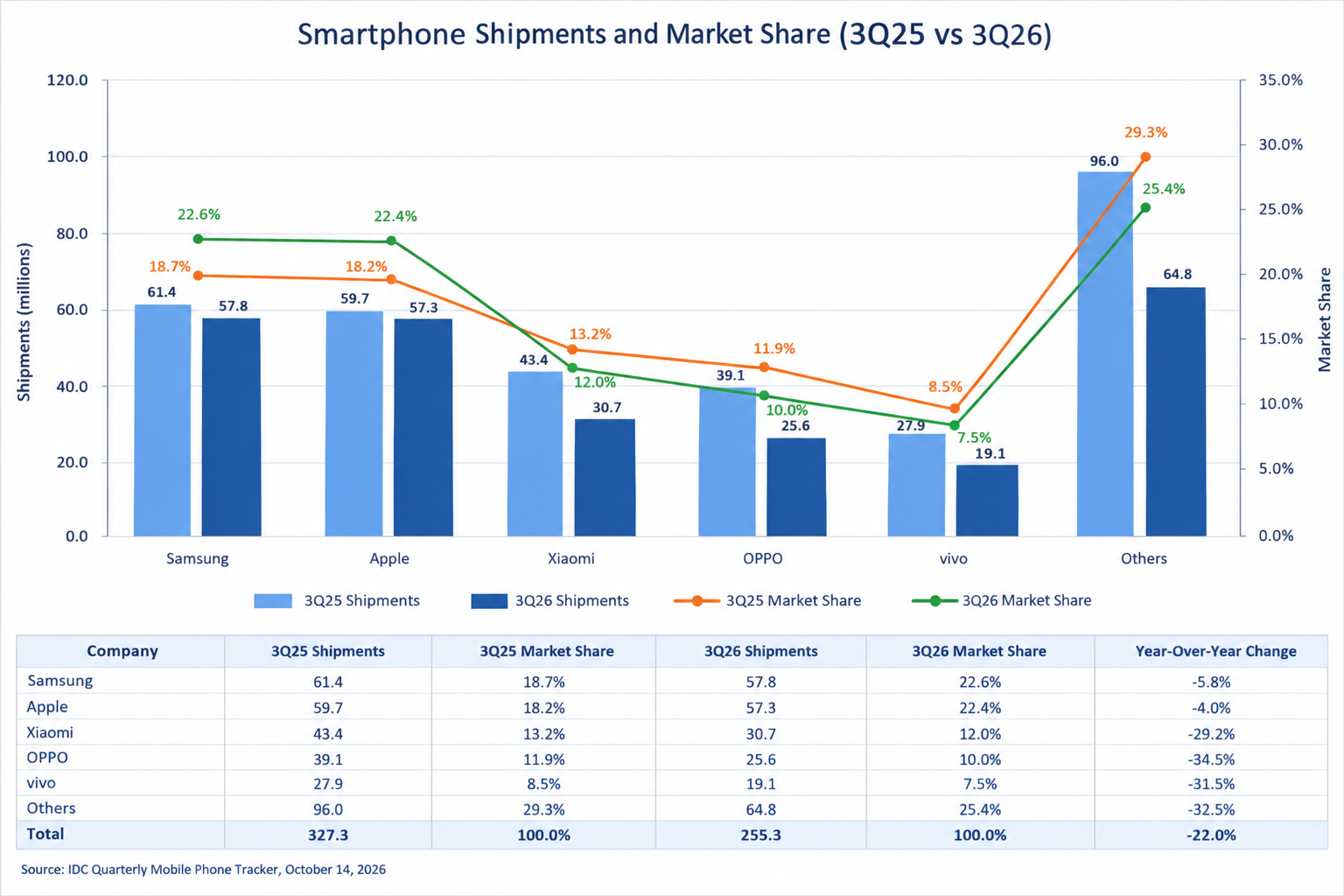
Global smartphone shipments plunged 22% Y/Y to 255.3M units in the September quarter, marking the steepest quarterly decline on record, as an AI-driven memory shortage sent component costs soaring and intensified pressure on manufacturers, according to International Data Corporation (IDC).
The downturn is expected to persist through 2027, with a recovery potentially delayed until 2028, IDC said. Memory costs have surged approximately 350% over the past year and continue to rise, putting pressure on manufacturers’ margins and shipment volumes.
“Current indicators suggest that the market has not yet reached the bottom,” said Nabila Popal, IDC’s senior research director for Worldwide Devices, adding that “the worst is yet to come.”
Seeking Alpha
Chinese smartphone makers bore the brunt of the downturn. Xiaomi’s shipments fell 29.2% Y/Y to 30.7M units, while Oppo declined 34.5% to 25.6M and Vivo dropped 31.5% to 19.1M.
Apple (AAPL) and Samsung Electronics (SSNLF) were more resilient, with shipments falling 4% and 5.8% Y/Y, respectively. Samsung shipped 57.8M devices, compared with 57.3M for Apple. Their market shares rose to 22.6% and 22.4%, respectively, as the overall market contracted.
Rising memory costs are forcing smartphone makers to raise prices and rethink product lineups, putting further pressure on demand. Vendors with stronger premium portfolios and reliable component supplies are better positioned to weather the downturn, IDC VP Francisco Jeronimo said, as consumers hold on to their existing devices for longer.
IDC also warned of potential inventory risks in 2027, as manufacturers ramp up production ahead of tighter component supplies.
KioskNews shows a cleaned-up reading view extracted from the publisher’s page — the original always lives on their site, not ours.