Barracks survive despite high office’s mess

The backflip by the Albanese government on the future of Victoria Barracks by announcing that the site won’t be sold demonstrates yet again that we have a prime minister and government that have no idea what they are doing and simply react to public opinion on any contentious issue (“Victoria Barracks sale abandoned after veterans and ex-PMs cry foul”, November 9). Defence Minister Richard Marles, in particular, has demonstrated his utter incompetence on this and other defence issues and should resign or be sacked. Lawrie Yeomans, Oatley
It is lamentable that the PM admits he has never visited Victoria Barracks. It is gratifying that the government has withdrawn its proposal to sell the property. If one follows the original logic, perhaps it should have considered selling Kirribilli House. Just think of the sale price of that pile! Perhaps a relocation of the PM’s official residence to, say, Marrickville, an area he knows very well, would have been a cheaper option. Les Sisley, Kelso

Don’t be fooled. Councillor Zann Maxwell, campaigning on the housing crisis, says the site’s sale includes provision for housing. But increased housing density and high-rise apartments would be a heritage heresy and steal open space that these buildings need to retain their heritage values. Andrew Woodhouse, Potts Point
My great-grandmother Mary Sandford, born in April 1854, was among the first babies born at Victoria Barracks. Her father, James Sandford, was a corporal of the 11th (North Devonshire) Regiment of Foot stationed at the barracks. Her mother, my great, great-grandmother Ann (nee Dowd), was an orphan Irish immigrant. Her name is etched in the Irish Famine glass memorial to those remarkable young women in the wall outside the Hyde Park Barracks. I have watched the unfolding drama about the offloading of the barracks to assist the government’s budget savings. I am very relieved that Victoria Barracks will remain in public ownership, not only because of its significance to my family’s ancestry but to have it maintained as a crucial symbol of our military history. Anne Finnane, Marlee
I’m wondering if Albo and Marles had a quiet drink with the retired generals at the Officers Mess after their visit to Victoria Barracks. Les Bienkiewicz, Kensington

Powerhouse’s Parramatta legacy
What an intriguing process heritage and its protection or destruction generates! Years ago, the Quarantine Station on North Head was leased to an operator. Its heritage was protected while the site was enhanced for commercial use. Now Victoria Barracks will remain in government hands and its use will be determined in due course. The new Powerhouse Parramatta has just opened to great fanfare, but a question remains: What will happen to the materials saved from Willow Grove, taken apart to make way for this new museum? The Italianate villa won’t be rebuilt, but how can its place in our history be honoured through reuse of its fabric? Lyn Langtry, East Ryde
People power in motion
People power – it really works! The proposed selloff of Victoria Barracks for more luxury apartments has been dishonourably discharged; and now the ugly, invasive AI data centre on the Cooks River has failed to connect, and crashed (“Cooks River AI data centre axed after outcry”, November 9). Reason and logic have prevailed. If the same democratic lens can be applied to the much-despised budget-sucking AUKUS deal, that will be a win for common sense too. Prime minister and cabinet, you need to read the room. Patrick McGrath, Potts Point
Just an idea, but would data centres be more acceptable if they were smaller – say, the size of a house? Early computers in the 1960s were housed in warehouse-sized rooms. The data produced was far less than handheld phones today. Patricia O’Brien, Rozelle
Torpedo AUKUS next
The reversal on Victoria Barracks and the recent choice to cut funding for Ask Izzy shows an Albanese government that is confused and incapable of handling the economic situation of Australia, a sentiment increasingly reflected by the public amid his unpopularity (“Trust in PM crashes as cost of living bites”, November 9). William Sun, Epping
It is not only the costs that the PM suffers from, it is his refusing to tax big business and the waste of money on AUKUS. Being stubborn will be his downfall. Zuzu Burford, Heathcote
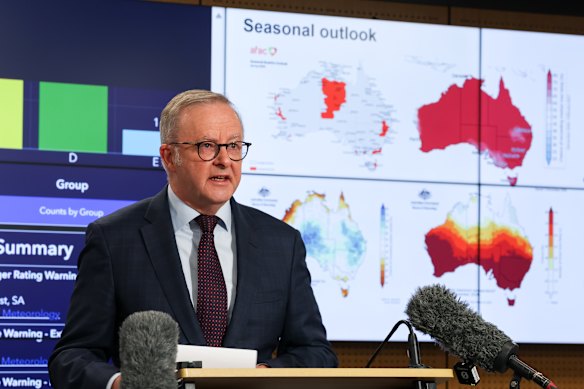
The Albanese government is rather unfairly criticised over the cost of living, debt and “reckless spending”. But there is some pertinent context that often goes unmentioned. The October International Monetary Fund figures report the 20 highest government debt ratios measured as a percentage of GDP. Australia is ranked 96 out of 191 economies, with government debt of 52.6 per cent of GDP, a whopping 76 places below the top 20. Relative to the size of our economy, our debt is about half the UK’s, less than half of the US’s and about a quarter of Japan’s. Our government is actually doing a pretty good job in challenging international circumstances. A more concerning figure for them should be the increase in the Greens’ vote. David Shoebridge has been strongly advocating against AUKUS. The government may need to recognise that there is significant and growing opposition to this terrible, expensive, compromising pact. Alison Stewart, Riverview
Break the medical cartel
Brittany Busch (“Three times the rebate, way above inflation: the medical specialties with sky-high fees”, November 9) reports the high cost of specialist fees in Australia as trust in the PM hits all-time lows. Our PM understands full well how the medical profession maintains high fees – it simply restricts the number of specialists working in Australia, including those imported from overseas. Surely, that cartel can be easily broken by someone genuinely interested in cost-of-living pressures. Brian Barrett, Padstow
Psych fees up 20 per cent. Shrinkflation? Les Shearman, Darlington
Bush remedy v modern life
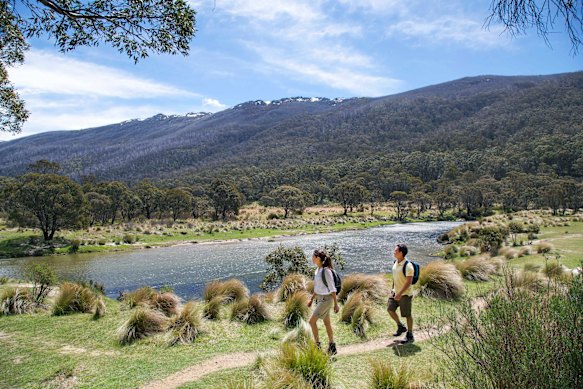
Good to see the prescription for nature and bush medicine (“Bush medicine: GPs endorse dose of nature for improved health”, November 9). Sadly, my observation when walking is people with ear pods and/or looking at phones rather than enjoying the beauty around them. Carol Bailey, Point Frederick
So, avoid bush lawyers like the plague but trust bush doctors with your life? Edward Loong, Milsons Point
Shady Nation
It doesn’t stretch the imagination to hear One Nation is “weirdly incompetent, chaotic” (“Staffer ‘sacked’ for raising concerns”, November 9). As if Australians need any more evidence what a dysfunctional leader looks like than the USA. It’s surely got enough impact to help steer us away from being a banana republic under One Nation. Ted Bush, North Epping
The description of One Nation by one of their former staffers as “a really shady place” should ring alarm bells to anyone thinking of them as a viable alternative political party. Unfortunately, it will probably have little effect, if any, on those who fully support a party whose main philosophy revolves around blaming immigrants for their economic woes. Con Vaitsas, Ashbury
Perhaps your correspondent (Letters, November 9) has forgotten that Australians have, for a century or more, told people who complain about Australia to “piss off back to...” Most notably when people of British descent have been perceived as being “whinging poms” and told to “piss off back to Pommieland”. I don’t recall that expression ever being considered a bigoted personal attack. Ms Hanson simply used a well-established Australian expression, and at least used the proper name of the country. Peter Thornton, Killara
Fines are for safety, not revenue
I have no sympathy for those who bleat about being caught breaking the road rules, and resent the danger they put me in (“The tunnel speed camera raking in $11 million a year”, November 9). Apart from the arrogance of people one often sees clearly thumbing their noses at speed limits, etc, what’s astonishing is the blame-shifting that so often happens by people claiming it’s all about government revenue. Bunkum. The rules are about safety, and if you break them, whether by design or by inadvertence, it’s your fault and you deserve what you get. If you don’t like that medicine, the far cheaper and more responsible remedy is to pay attention, stick to the rules, stop blaming others for your own mistakes and spare us all the hollow self-righteousness. Adrian Connelly, Springwood
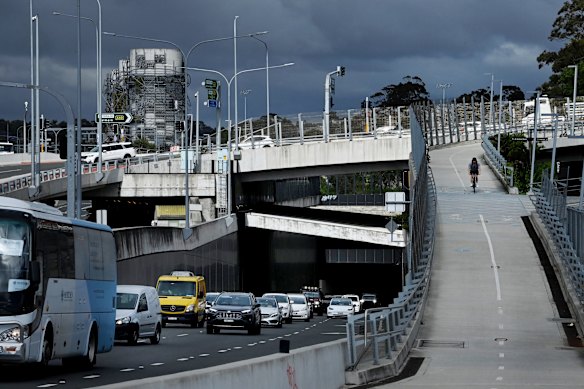
Dr Grzebieta says we are lucky that driving enforcement fines are “so low”. For someone on a salary such as his, they amount to little less than pocket money. For others such as pensioners, the fine for a minor offence can be an entire week’s income. Requests for leniency, such as a 60-year good driving record, now appear to get an automatic rejection. Few can afford the cost or stress of a court challenge. A rethink of the efficacy of the current punitive and inequitable mindset is long overdue. Ray Seymour, Castle Hill
Scammers’ field of dreams
I, too, have received many emails of my dreams, Margot Saville (“It was the email of my dreams …sent straight to my ego”, November 9), and every time I hope it may be the genuine article. My memoir of my late sister, the groundbreaking queer poet Dorothy Porter, was published last year, and ever since I have received increasing numbers of persuasive emails telling me of the potential markets and unlimited opportunities for my book. Anyone who has ever had the luck (and often it is luck) to get published in this country knows the years of slog, despair and rejection associated with writing, so the arrival of these well-argued emails with their promises of astronomic book sales feels like manna from heaven. And yet they are just another cruel example of the complex scams entrepreneurial crooks dream up using the latest AI tools. The scammers always find our most vulnerable area, whether it be financial insecurity, loneliness or the desire for a book to be read, and they keep pressing on the spot ’til we fork out good money for a lie. My late sister would have told me, “Brat, a mug is born every minute”. Josie McSkimming, Coogee
Bottle tops before sandpaper
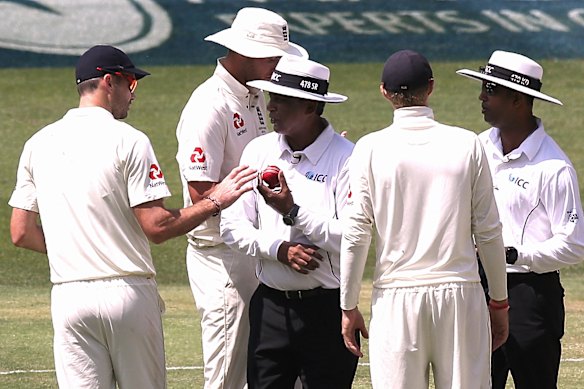
The present brouhaha about cricket ball tampering smacks so much of a media beat-up. Many years before sandpaper-gate, I remember watching the great Imran Khan telling the cricket world on a news clip that all teams worked on altering one side of the ball to their hopeful advantage, and admitting that his preferred method was to use a bottle-top (“Explosive book claims look set to dog captain”, November 9). John Lewis, Thornleigh
Many years ago, I heard a group of cricket commentators, which included at least one ex-player, in an impromptu conversation about ball tampering. It appeared to be an “open” secret that tampering went on, and bottle tops were even mentioned. This action is obviously contrary to the spirit of the game, and any steps taken to expose it have to be for the long-term good. John Croker, Woonona
Wallabies third-rate dopes
At Twickenham, the Wallabies came a cropper. The start of their Spring Tour against England was a total shocker. England for much of the match had the Australians on the ropes. Their 45-22 victory made the Wallabies look like third-rate dopes (“‘Didn’t fire a shot’: Woeful Wallabies smashed by England in record rout”, smh.com.au, November 9). Eric Palm, Gympie (Qld)
Why can’t Rugby Australia just buy a better team? Rick Johnston, Potts Point
Free will is just that
Your correspondent is confusing freedom of belief for individuals with coercion by powerful religious institutions (Letters, November 9). Freedom of religious belief (or none) means that each individual has the right to live their life informed by that belief. It does not mean that, as part of an institution that is in a powerful position, anyone has the right to wield that power to force others to take a similar belief. Everyone has the gift of free will but, in their desire to control, this is a fact that coercive religious groups often find hard to accept. Elisabeth Goodsall, Wahroonga
Sadly, one of my acquaintances recently opted for voluntary assisted dying. I can assure your correspondent (Letters, November 9) that it was far from “on demand”. It is a rigorous process that one could interpret as ensuring the opposite. Brian Jones, Leura

I am perfectly happy for religious organisations to choose to limit the services they deliver to the public. However, under no circumstances should they be funded by the government to limit those services where no reasonable alternative exists. In other words, do what you like, but leave us out of it. Tom McGinness, Randwick
Writing wins, hands down
Thankfully there is recognition of the importance of handwriting for learning (“Schools where writing is on the wall for the digital revolution”, November 9). As a former high school teacher I am also aware that those students unable to write in cursive are at a distinct time disadvantage in written exams. Sally Spurr, Lane Cove
Romance of David Jones
Wendy Bull (Letters, November 9) raises some interesting questions. Did her future husband ask for her phone number then race off to haberdashery, and/or did he ask Wendy out immediately? Was it love at first sight? Lindsay Somerville, Lindfield
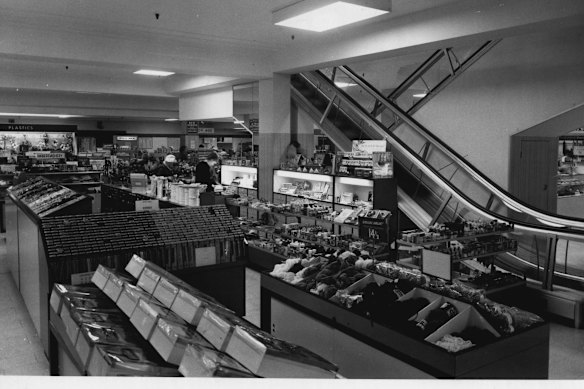
One day in the late 1950s, I slipped into DJs at lunchtime and saw my venerable aunt, a Sister of Mercy, lunching with another nun. The restaurant had a special spot for nuns and there always seemed to be two or more there. Sadly, there are no longer many nuns looking for a quiet lunch. John Crowe, Cherrybrook
Raw ingredients
Tony Judge (Letters, November 9), I reckon Josh Niland (of Saint Peter restaurant) might have a contrary view on what you can put in a milkshake. Duncan McRobert, Hawks Nest
If a pizza maker won’t put pineapple on my pizza, I’ll go elsewhere. Or go hungry. Penelope Layton-Caisley, Marrickville
- To submit a letter to the Sydney Morning Herald, email letters@smh.com.au. Click here for tips on how to submit letters.
- The Opinion newsletter is a weekly wrap of views that will challenge, champion and inform. Sign up here.
KioskNews shows a cleaned-up reading view extracted from the publisher’s page — the original always lives on their site, not ours.