The play that changed my life: ‘John Berger’s Pig Earth became something magical – they licked milk off bodies’
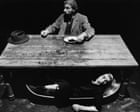
There are many things you see that are impactful, but few you can genuinely say change your life. I saw Complicité’s The Three Lives of Lucie Cabrol aged 16 on a school trip to Riverside Studios in London and it really reached me. I’d been educated in a very language, words-based way. Here the story was told – with such intensity! – through people’s bodies.
The world they were conjuring, from a story by John Berger in his book Pig Earth, was about this remote French village – a world of labour. And the strife and struggles of these characters was expressed through the physical work of the company.
It travels in time from the turn of the 20th century. There were Lucy’s three lives, the first being her real work life with Lilo Baur playing Lucy. Then her husband abandons her and she’s expelled from her community. And she then goes on a quest, which eventually leads her to love in the afterlife.
Physically they were unlike anyone I’d ever seen – Baur, Simon McBurney and Tim McMullan were not conventional-looking actors. It felt like somewhere between meeting a group of aliens and a kind of arthouse circus coming to town. You were completely lifted out of the norm and transported – it opened up very intense, deprived, raw experience into something magical.
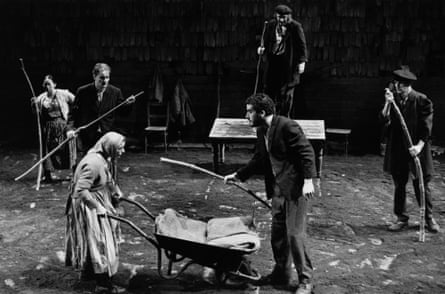
I remember images more than story. There was an incredible sequence where the company told a love story within a cowshed. They played the cows, they played the lover, there was milk licked off bodies. It felt like something I’d never seen before. The actors were properly sweating doing it, reaching a sort of mystical level. It was amazing and made me realise just what theatre could do.
You didn’t judge these people. You weren’t ever allowed to, you had to go with them, whatever difficult turns their lives took.
I don’t make theatre like that. I don’t have the kind of physical storytelling language; I always look at it dreamily wishing I had that kind of training. My play Giant uses much more conventional, one-set, closed-time storytelling devices. But I hope that the audience experience something similar in terms of feeling compelled by something and made uncomfortable by it at the same time.
-
As told to Lindesay Irvine
KioskNews shows a cleaned-up reading view extracted from the publisher’s page — the original always lives on their site, not ours.