10 Greatest Noir Westerns, Ranked

Anja Djuricic was born in Belgrade, Serbia, in 1992. Her first interest in film started very early, as she learned to speak English by watching Disney animated movies (and many, many reruns). Anja soon became inspired to learn more foreign languages to understand more movies, so she entered the Japanese language and literature Bachelor Studies at the University of Belgrade.
Anja is also one of the founders of the DJ duo Vazda Garant, specializing in underground electronic music influenced by various electronic genres.
Anja loves to do puzzles in her spare time, pet cats wherever she meets them, and play The Sims. Anja's Letterboxd four includes Memories of Murder, Parasite, Nope, and The Road to El Dorado.
Sign in to your Collider account
What's better than a film noir and a Western? Yeah, a noir Western. The difference between these distinct genres and their combination lies in some skilled genre-blending—in plain Westerns, the protagonist is usually heroic and a representative of the law and all things good, while in noir films, all the characters are a lot more morally complex and nuanced. A morally ambiguous lone wolf sounds like a compelling protagonist, which is why noir Westerns make for an interesting type of film.
Besides a troubled protagonist, noir Westerns are more cynical and dark, presenting a convoluted plot and a bloody solution that carries a moral message. Some of the greatest noir films are Westerns, and some of the greatest Westerns are most definitely also noir. If you're a fan of both genres and want to explore their blend, here are the greatest noir Westerns, ranked.
10 'The Ox-Bow Incident' (1943)

The Ox-Bow Incident is a particularly strong film noir with a Western heart. Starring Henry Fonda, it belongs to the group of films that were only ever nominated for the Best Picture Oscar. Fonda's performance greatly captures the moral dilemma and unease of the story, while director William Wellman successfully creates a John Wayne-like story with the atmosphere of Double Indemnity. Though it lacks some style and violence to be a clear-cut noir Western, it's philosophical, serious, and pessimistic enough to count.
The Ox-Bow Incident is set in a small Nevada town, where a posse forms after hearing that a local rancher has been murdered and had his cattle stolen. Two cowboys traveling through town, Art Croft (Harry Morgan) and Gil Carter (Fonda), join the posse of locals who mob together to find the rancher's killer (or killers). Incidents of mistaken identities collude with self-righteous choices, and the movie plays out like a pressure cooker, where the wrong side of justice and mob mentality cause inevitable chaos.
9 'Blood on the Moon' (1948)

Blood on the Moon is one of director Robert Wise's greatest achievements. His vision here brings true noir to the frontier, from gloomy standoffs and night-vision ambushes to low-ceiling interiors that were lit to feel like seedy detective offices. Blood on the Moon is a perfect combo of cowboy mythology and the moral ambiguity of a noir film, and who better to step in as the lead than Robert Mitchum? When co-star Walter Brennan saw Mitchum in his costume, he was awestruck by how impressive Mitchum looked "in uniform."
Blood on the Moon follows a cowboy drifter, Jim Garry (Mitchum), who arrives in a frontier town to help an old friend, only to discover he's being pulled into a scheme regarding a land dispute; betrayal and political corruption mark Garry's stay in town, where he's left to choose between preserving his pride and honoring past alliances and friendships. Mitchum is brilliant here, as usual; one could argue he's the most natural noir face in film history. Because of his presence, Blood on the Moon is an essential stepping stone in the blend of noir and Western, perfectly cast, and beautifully imagined.
8 'Pursued' (1947)

Pursued is often cited as the first true noir Western. It's structured almost entirely around psychological trauma, repressed memory, and fatalistic violence, all the defining traits of a true noir film. This is another feature starring Mitchum, and he's joined by Teresa Wright, the then wife of the film's screenwriter Niven Busch. Busch based Pursued on a real-life story he read in the newspaper, finding the plot of the story—and his film—akin to a Greek play or myth. Raoul Walsh, who was usually associated with directing muscular adventure films, superbly guided Mitchum and Wright in two of their greatest performances.
Pursued follows Jeb Rand (Mitchum), a man who was raised by a foster family after surviving the massacre of his entire family. Jeb, growing up under the dark cloud of the trauma he barely understands, falls in love with his foster sister, Thor Callum (Wright). But Jeb's past only comes out after Thor's family starts getting involved in their relationship, including Thor's brother, Adam, and uncle, Grant (Dean Jagger). The Western here is merely a backdrop, and the plot of Pursued is steeped in psychological thrills and a noir mood.
7 'The Proposition' (2005)

The Proposition was written by Nick Cave, the famous Australian musician, and he also scored the movie entirely. John Hillcoat directed Cave's essentially Shakespearean tragedy, giving it a gritty, almost post-apocalyptic feel. The movie has the key ingredients, from moral rot to fatalistic dread and impossible choices, and its unflinchingly brutal violence is rarely stylized; paired with the harsh Australian outback, The Proposition is a scorching hot, dusty noir film. In some ways, the Australian outback here feels like a much better setting for a Western than any American landscape, though it's hard to call it a Western in a geographical sense.
The Proposition follows outlaw Charlie Burns (Guy Pearce), who is captured by Captain Stanley (Ray Winstone) together with his younger brother, Mikey. Stanley promises to let him and Mikey go free and unharmed if Charlie agrees to kill their older brother, Arthur (Danny Huston), who committed a heinous crime. The examination of family, class, and societal structures that Australia was built on makes up a large portion of the narrative and is neither subtle nor presented through hints; it's a brutal film with a powerful core.
Collider Exclusive · 8 Questions · 2 Minutes Which Western Icon Are You Most Like? No Name · Doc Holliday · Wyatt Earp · Mattie Ross
Pick your name, your gun, your horse and how you spend a night in town, and we will tell you which legend of the Old West you would have been. Four icons are waiting at the end of this: the stranger who never gives his name, the gambler who would die for a friend, the lawman who never wanted the badge, and the girl nobody has ever talked out of anything.
🚬No Name(Dollars Trilogy)
🃏Doc Holliday(Tombstone)
⭐Wyatt Earp(Tombstone)
🐎Mattie Ross(True Grit)
01
The town is about to learn your name. What do they call you? In a Western, what people call you is already half the character.
02
What are you carrying? Everything out here is character, right down to what is sitting on your hip.
03
What are you riding? A hero and their horse is one of the oldest relationships in cinema.
04
You have got one evening in town. How does it go? The saloon is where these films quietly tell you who somebody really is.
05
A stranger offers you money for a job that sounds like trouble. Somebody always turns up with a full purse and a bad idea.
06
Somebody is waiting for you in the street. What does the town see? Two people, an empty road, and everybody else watching from behind the shutters.
07
What is the one thing you will not do out here? The code is about the only thing west of the river that actually holds.
08
The job is finished. Where does the story leave you? Eight questions in, this is the one that decides your icon.
The Dust Has Settled Your Western Icon Is…
Four icons and four completely different ways of walking into trouble. This is the one you would have been out there, why it fits, and what it would have cost you.
The Man With No Name
You have never explained yourself and you have never needed to, because people work out fairly quickly that you are the most capable person in the room without you ever having to mention it.
- Eastwood built the character out of everything he refused to do, stripping away the backstory, the speeches and every bit of reassurance until only the competence was left.
- You keep your own counsel, and while other people occasionally find that unnerving, you have never felt any real need to fix it for them.
- The Dollars films work because he genuinely is in it for himself right up until the moment he is not, and he never explains that part either.
- You would be gone before anybody got a chance to thank you.
Doc Holliday
You are the funniest person in most rooms and the most loyal person in all of them, and you would be genuinely insulted if somebody suggested those two things were in any tension.
- Doc has no real reason to be in this fight beyond the fact that his friend is in it, which is the only reason he has ever needed for anything.
- You lead with wit, and it does a very effective job of hiding how seriously you take the handful of people you actually care about.
- Val Kilmer's performance is the most quoted in the entire genre because the jokes keep getting sharper as the situation gets worse.
- You would spend everything you had on this and still describe it as a good week.
Wyatt Earp
You never wanted this job, and you took it anyway because the alternative was standing there watching somebody less careful do it badly, which is the most Western reason there has ever been.
- Earp is the reluctant authority figure, a man who came to town specifically to be left alone and somehow ended up answerable for all of it.
- You are protective by instinct, so when something goes wrong your first thought is who is exposed rather than who is to blame.
- These films understand that keeping order costs far more than breaking it, and that the person holding the line almost never gets thanked.
- You would do the whole thing again, and you would complain about it the entire time.
Mattie Ross
Nobody has ever successfully talked you out of something you had already decided was right, and a long line of grown adults has found that out the hard way.
- Mattie is the most relentless character in the Western canon and she manages it through argument, paperwork and flat refusal rather than a fast draw.
- You have no patience for being managed, so you negotiate, you check the details and you turn up exactly when you said you would.
- True Grit is the rare Western where the moral centre is the youngest person on screen and every adult around her has to catch up.
- You would get what you came for, and the film is honest about what that takes out of you.
6 'High Plains Drifter' (1973)
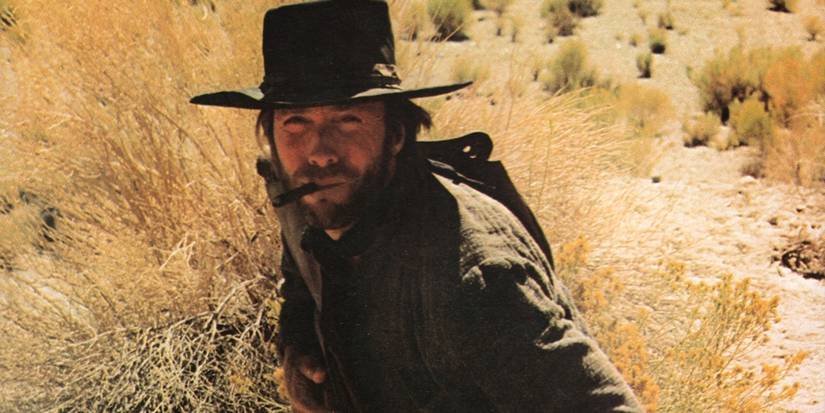
High Plains Drifter was directed by Clint Eastwood, and it's one of his most outstanding works—despite being only his second directorial effort. It's a ghost story wrapped in a revenge Western, complete with a bow made of moral lessons. Visually, the film gives a lot: bright red buildings all over town, a haunting score, and hints of potential supernatural plots at hand. Eastwood preferred the supernatural twist and the offbeat story at the core; he, in fact, loved it so much that he wrapped it before schedule and under budget and enjoyed talking about "The Stranger" in the film as a ghost that haunts for moral high ground.
High Plains Drifter follows a mysterious stranger (Eastwood) who rides into the isolated town called Lago. The townspeople hire him to protect them from vengeful outlaws, but as he himself seizes control of the town, its dark secrets are exposed, and he turns out to be something other than just their savior. The film's moral world is pitch-black—the townspeople collectively participate in cowardice and violence while asking for moral retribution against others. High Plains Drifter is a fantastically stylish noir Western that remains unforgettable.
5 'The Assassination of Jesse James by the Coward Robert Ford' (2007)

The Assassination of Jesse James by the Coward Robert Ford is one of the most out-of-the-mold Westerns ever, and it's a pretty clear-cut example of a beautiful noir film. This Andrew Dominik masterpiece is a slow-burn psychological drama disguised as a Western; the focus is less on robberies and shootouts and more on obsession, ego, and fatalism. Dominik's direction is paired with Roger Deakins' grainy cinematography, with the tension emphasized through beautiful, moody lighting. Brad Pitt's Jesse James is charismatic and terrifying, while Casey Affleck delivers one of the greatest portraits of insecurity shifting into violence in his portrayal of Robert Ford.
The Assassination of Jesse James by the Coward Robert Ford follows the two titular characters—James, near the end of his outlaw career, when he was becoming increasingly paranoid, and Ford, who takes this chance to infiltrate the inner circle of James, an outlaw he greatly admires. As he gets closer to James, his adoration quickly develops into resentment and obsession, resulting in a final betrayal insinuated in the film's very title. The film leans heavily on noir psychology and develops poetically into a tragic Western—a perfectly complex blend.
4 'No Country for Old Men' (2007)
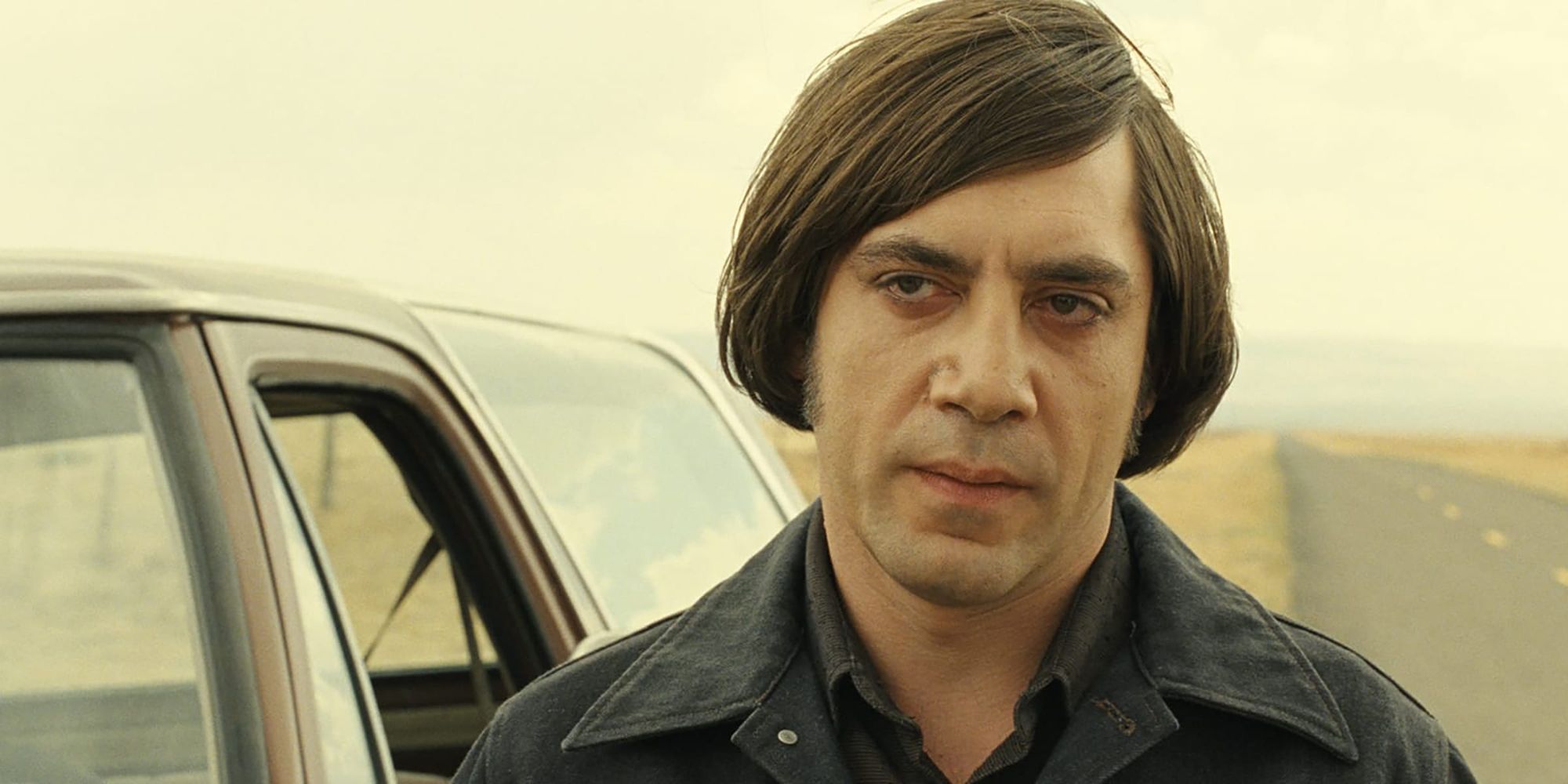
No Country for Old Men is one of the greatest neo-Western noir thrillers of all time, and this beautiful and ominous blend of genres only makes it more appealing; the Coen brothers' signature noir-style cinematography and storytelling is present, and the entire plot is very much just straight-up noir, despite being more classified as a neo-Western. The tension is palpable in every shadow, silence, and movement, especially when showing the psychotic killer Anton Chigurh (Javier Bardem) on the move; as one of the most famous serial killers on film, Chigurh embodies the existential dread that many noir films tend to make us feel.
No Country for Old Men follows Llewelyn Moss (Josh Brolin), an everyday man living in Texas, who finds a suitcase full of drug money. Feeling guilt for having taken the money, Moss tries to return it, but not before becoming the target of psychopathic hitman Anton Chigurh. No Country for Old Men updates the noir Western for the modern era, and it's a beautiful, if not haunting, adaptation of Cormac McCarthy's nihilistic novel.
3 'Ride the High Country' (1962)

Ride the High Country is Sam Peckinpah's masterclass in hiding the noir in plain sight. It's a crime story wearing a Western disguise, remaining deceptive and nostalgic, but carrying a bleak noir essence. Stylishly directed and elegant, it builds a bridge between old Hollywood Westerns and the noir-filled revisionism of the latter years. There's everything: betrayal, ethical dilemmas, doomed relationships, and inescapable pasts, you name it. The chemistry and tension between the two classic Western heroes, Randolph Scott and Joel McCrea, is what drives the plot forward most of the time. This was Scott's final role.
Ride the High Country follows two former lawmen, Steve Judd (McCrea) and Gil Westrum (Scott), who join forces after a long time for a mission to escort a gold shipment through some highly treacherous terrain. As they travel, Westrum plans to steal the gold while the still honorable Judd tries to uphold the law and morality in the situation. The two classic Western heroes, Scott and McCrea, come together in this legendary story of deception and fading moral codes. Some also find Ride the High Country to be quite an emotional tale of right and wrong.
2 'The Wild Bunch' (1969)

The Wild Bunch is a classic Western drenched in blood and infused with a deeply noir premise, boasting one of the few antiheroes as the protagonist of a Western. This is another Peckinpah feature, so it's no surprise it finds its way among the greatest; beyond that, it's also a revolutionary film for its (then) novel uses of slow motion and quick cuts. The frontier Peckinpah depicts here is Western-coded: morally crooked, corrupt, and full of betrayals and temporary loyalties. What the film ends up depicting is highly noir: a group of men clinging to codes that don't matter in such environments.
The Wild Bunch follows Pike Bishop (William Holden), an aging outlaw who leads a group of men similar to him, who plan to finally call it quits after one last robbery attempt in Mexico. The job takes place in a revolution-riddled place, inevitably trapping the outlaws between political factions and old acquaintances. There are a few Western films darker than The Wild Bunch; this one may be fatalistic, but it's the gold standard in many ways, most notably for being a great mix of noir and Western, and for marking a true end of an era in Western-style storytelling.
1 'The Searchers' (1956)

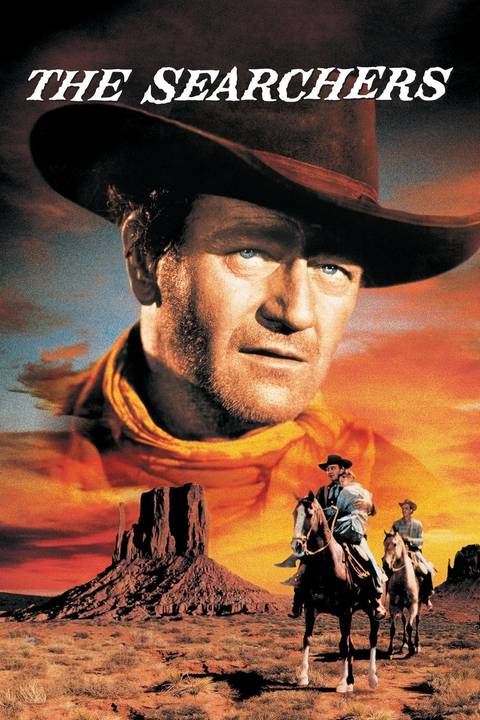
The Searchers is a movie that inspired cinema throughout history, sometimes in the unlikeliest places. Some analyses draw parallels between The Searchers and Taxi Driver; others find its unique Western setting and noir storytelling to be unlike anything ever made. The protagonist, Ethan Edwards, is one of cinema's most complex antiheroes; he is charismatic, heroic, and dutiful, yet underneath bigoted, hateful, and often terrifying—he's someone fairly realistic in a setting that usually depicts glorified, larger-than-life types of heroes.
The Searchers follows Ethan Edwards (John Wayne) as he returns home to Texas after the Civil War. Edwards is invited to become a Texas Ranger, and though he refuses, he goes on a mission with them; while there, Edwards and the Rangers realize it was a ploy to draw them away from their homes. Edwards' niece, Debbie (Natalie Wood), is abducted and his brother and his family are killed; he embarks on a quest to find Debbie, becoming obsessed and impulsive. As the search lasts, his outbursts of violence make him a threat and a target at the same time. With this, noir is effortlessly present in the film; nearly every theme is there: obsession, vengeance, and alienation. In many ways, the reason it was transposed onto the frontiers of the Old West was to break the myth of the Western genre and critique it.
The Searchers
- Release Date
- May 26, 1956
- Runtime
- 119 minutes
- Director
- John Ford
- Writers
- Frank S. Nugent
-

Ethan Edwards
-

Jeffrey Hunter
Martin Pawley
- Producers
- C.V. Whitney
- Main Genre
- Western
- Budget
- $3.75 million
- Studio(s)
- Warner Bros. Pictures
- Distributor(s)
- Warner Bros. Pictures
- Executive Producer(s)
- Merian C. Cooper
KioskNews shows a cleaned-up reading view extracted from the publisher’s page — the original always lives on their site, not ours.