Prof Wakindiki: Kenya’s Universities have three years to rethink how they teach
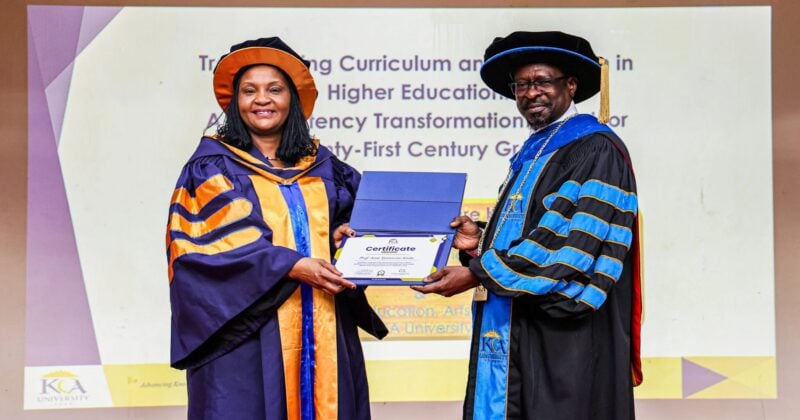
NAIROBI, Kenya, Sept 24 – The students who will arrive at Kenyan universities in 2029 will have spent their entire schooling being asked not what they know, but what they can do. The institutions waiting for them have three years to learn to ask the same thing.
That was the warning from Prof Isaiah I.C Wakindiki, the vice chancellor of KCA University, at an inaugural lecture in Nairobi on Wednesday.
More than 1.13 million learners in the pioneer cohort of Kenya’s Competency-Based Education system are expected at university that year, he said.
“If competency is to become the organising principle of Kenyan higher education, someone must do the hard intellectual work of showing how,” Prof Wakindiki said.
Prof Anne Syomwene Kisilu, the dean of the School of Education, Arts and Social Sciences, offered a framework she calls the Competency Transformation Model.
Universities cannot succeed by adjusting isolated parts of the system, she argued. What is taught, how it is taught, how learning is assessed, who teaches and how institutions work with industry must all change at once.
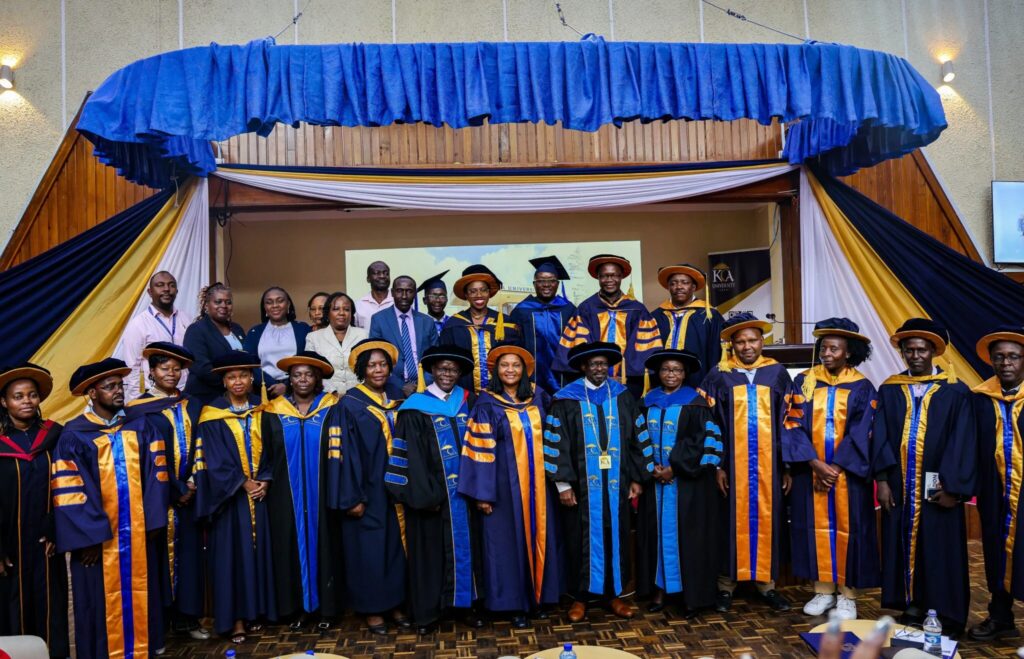
The model lists ten dimensions, from an evidence-based needs assessment to the retraining of faculty, and its slides insist they are not sequential steps. Change in one, the presentation said, requires change in the others. The intended result is a graduate with fourteen named attributes, including critical thinking, digital competence, ethical reasoning and entrepreneurship.
Its sharpest demand falls on examinations. “We must move from recall-based examinations to real-world, performance-based tasks that show learners can apply their competences in meaningful contexts,” Prof Kisilu said. Projects, portfolios, case analyses and simulations would replace tests of memory.
Lecturers would also change roles, from subject experts to facilitators, coaches, mentors and learning designers, which Prof Kisilu said makes continuous retraining of staff indispensable.
She urged universities to invest in laboratories, innovation hubs, simulation facilities and internships, to bring employers into curriculum design and assessment, and to replace periodic curriculum reviews with a continuous, evidence-based cycle.
The proposals raise questions of cost and pace that a lecture is not built to answer. Laboratories and retrained staff are expensive, Kenya’s universities differ widely in their means, and how many of the 1.13 million will choose universities over other routes remains a separate question.
Prof Wakindiki cautioned that a university is not measured by its assets. “Programmes, buildings and technology tell the world what a university has,” he said. “But scholarly excellence tells the world what a university is.
KioskNews shows a cleaned-up reading view extracted from the publisher’s page — the original always lives on their site, not ours.