6-Part Spy Drama With A Near-Perfect RT Score Shows Slow Horses How It's Done

Casey Duby is an avid TV writer, watcher, and reviewer. She graduated from Emerson College in 2021 with a focus in Writing for Film and Television, where she wrote several pilots and watched countless more. She's been working in television ever since.
Casey loves thoughtful content that makes her ponder our world and the people in it, and she's learned that any genre can surprise her. With favorites in every genre from horror to politics, family to action, nothing is off limits.
Casey has experience working in TV development and writing scripted shows. Currently working as a Writer/Critic in Los Angeles, with an AMC A-List membership to boot, she is always hunting for the next good story and great theme song.
Apple TV's hit spy drama has become one of the streamer's longest-running and most reliable shows. By the time Slow Horses season 6 premiered this September, the show had already been renewed through season 8. Even as it builds on its reputation for quality, Slow Horses has maintained its yearly release cadence, an increasingly rare feat in the streaming era.
The show, which is based on the Slough House series of novels by Mick Herron, is undoubtedly thrilling. Despite its sparse episode count (even by modern standards), each season of Slow Horses has depicted a clear, satisfying, mostly contained story that subtly raised the stakes for the following installment.
The conceit of the show innately raises questions about its characters, as one failing or another has inevitably led each of them to Slough House, a sore spot that Gary Oldman's Jackson Lamb is unafraid to press on. Yet despite its character-driven premise, Slow Horses stops short of allowing itself to be a true character study, an approach that would truly take the show to the next level.
In this regard, Slow Horses could learn a thing or two from The Americans, the 2013 series that has become a cornerstone of the spy genre.
The Americans' Spy Plots And Character Studies Are Intertwined
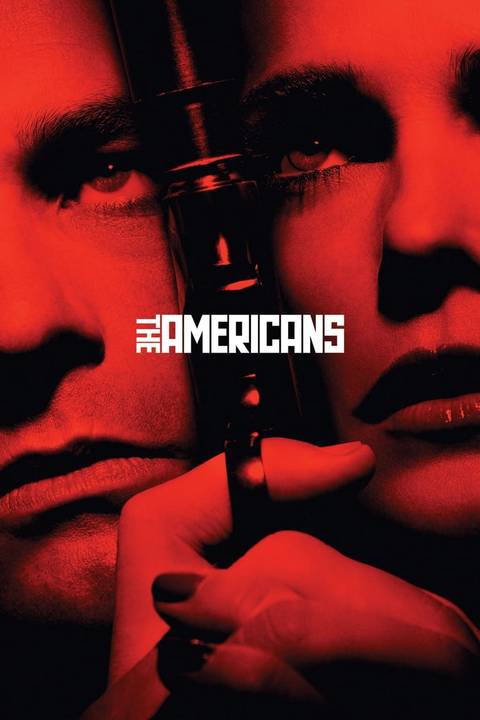
The Americans starred Matthew Rhys and Keri Russell as Philip and Elizabeth Jennings, Russian spies living and working in Washington, D.C., in the 1980s. The show was ambitious in its scope, plot, and historical significance as it explored the inner workings of both the KGB and the FBI's counterintelligence division. Several side stories even unfolded in Russia as the series tackled real-world events.
Yet The Americans was, at its core, a family drama. Though Philip and Elizabeth had begun their lives in America almost 20 years before the events of the show, the story really began when they finally began to develop real feelings for one another. Their genuine emotions and real marriage were as central to the story as the disguises they donned to do their jobs.
Just as Philip and Elizabeth's humanity complicated their work, The Americans explored the deeply and ironically human nature of what being a spy really means. Though Philip and Elizabeth worked hard to compartmentalize their emotions, the reality was that being a spy meant forming connections with other flawed human beings and relying on those connections for something incredibly high-stakes.
In The Americans, something as innocuous and unpredictable as someone taking an unexpected route to work could derail an entire life-or-death operation. For their part, Philip and Elizabeth were expert manipulators, but even they couldn't always foresee the inherent randomness of human nature, and would at times surprise even themselves with unexpected emotions.
The messy, unpredictable reality of human nature is exactly what made The Americans so compelling and heart-pounding. It cemented the danger of Philip and Elizabeth's work, while simultaneously developing them on a character level. Moments of emotional vulnerability in Elizabeth served to make her a more compelling character, while at the very same time thrusting her further into danger.
In order to depict the impact of these small moments, The Americans had to understand its characters deeply. Over six seasons, the show proved that character development doesn't have to slow down the action in a plot-driven show. It can actually accelerate it.
Slow Horses Doesn't Fully Explore The Human Element Of Espionage

Slow Horses would benefit from a similar treatment. Character depth is built into its premise as the show invites viewers to wonder why each spy has been relegated to Slough House, while the defining trait of their leader is an entertaining yet somewhat mysterious crudeness.
Even so, the first five seasons of Slow Horses simply reiterated one defining flaw in each of its characters. With a chip on his shoulder and something to prove, River Cartwright is prone to going rogue. Roddy Ho is dominated by the damning combination of ego and loneliness. Catherine Standish is meek and loyal to a fault. Even Jackson Lamb, hardened by loss, is avoidant and intentionally off-putting.
These traits do offer some intrigue and complexity to the ensemble, and they even lead to mistakes, but on the whole, Slow Horses' characters feel like an oversimplification of human nature. The threats they deal with are either faceless and smoothly executed or led by a character the likes of Frank Harkness, River's almost cartoonishly evil father, who dropped a live grenade in his own son's jacket.
The show reiterates the spies' flaws as they combat these threats, but it doesn't tackle the everyday nuances of human behavior or the fact that that is what spy work is built on.
The Americans set the precedent that the true intrigue of espionage stories is the juxtaposition between the mundane humanity that spy work requires and the complete separation of emotion that they must have in place to pull it off. If Slow Horses could follow in its predecessor's footsteps in that regard, it could become a true standout in the spy thriller genre.
- Release Date
- 2013 - 2018-00-00
- Network
- FX
- Showrunner
- Joe Weisberg
- Directors
- Daniel Sackheim, Thomas Schlamme, Daniel Attias, Kevin Dowling, Stefan Schwartz, Adam Arkin, Matthew Rhys, Nicole Kassell, Noah Emmerich, Andrew Bernstein, John Dahl, Kevin Bray, Roxann Dawson, Steph Green, Sylvain White, Alex Chapple, Alik Sakharov, Bill Johnson, Charlotte Sieling, Christopher Misiano, Constantine Makris, Gavin O'Connor, Gregory Hoblit, Gwyneth Horder-Payton
- Writers
- Melissa James Gibson, Stuart Zicherman, Hilary Bettis, Bradford Winters, Angelina Burnett, Sneha Koorse
-

Keri Russell
Elizabeth Jennings
-
Matthew Rhys
Phillip Jennings
KioskNews shows a cleaned-up reading view extracted from the publisher’s page — the original always lives on their site, not ours.