‘Never put away a damp one!’: 15 expert tips for perfect pans

Choosing the right pan can be a mind-boggling task. There’s a plethora of options, from stainless-steel skillets to heavy cast-iron pans, non-stick products coated in PTFE chemicals to carbon steel, blue steel, copper, ceramic and enamel, to name just a few. Are some materials and styles better to cook with than others? Do you need to tailor your pan to the type of hob? And once you have selected your cookware, how do you take care of it properly? Here is everything you could possibly want to know about pans.
What are pans typically made of?
Most pans fall into three categories: stainless steel, non-stick and cast iron. Stainless steel pans tend to be a favourite for restaurant kitchens owing to their durability and even heating capability, while cast-iron skillets, griddle pans and casserole pots also withstand high heating and retain temperatures for searing and frying. Non-stick pans – often known as Teflon – are usually coated in PTFE chemicals to allow for easy cleaning and cooking with less oil. Chemical-free non-stick pans generally have a ceramic coating.
Carbon steel pans are a lightweight hybrid of stainless steel and cast iron designed to be more reactive to heating. Other metal alloys include copper (a historical favourite of haute cuisine French kitchens due to its extremely sensitive heat conductivity) and titanium, which is used for its durability. “There isn’t one type of pan that works for everything,” says Nicola Lando, founder of online cookware shop Sous Chef. “It’s down to personal preference and the type of cooking you like to do.”
What is the best all-round pan?
“Stainless steel is a fantastic all-rounder,” says Lando. “It can take a bashing, be cleaned in the dishwasher and is very versatile. It gives a deep, even caramelisation to whatever’s being cooked in it.” Lando recommends a “tri-ply” – three layers of stainless steel fused together – for the most consistent durability. A heavy-bottomed copper insert in the base of the pan offers the benefits of copper’s conductivity at a fraction of the cost of a full copper pan.
“Home cooks can be preoccupied with food sticking on stainless steel, but if you start with it on a high heat for a few minutes, until when you flick water on to the surface it beads off, it will behave like a non-stick,” she says. “Then you can turn it down if you need – just make sure you’re using enough oil. And if you’re searing meat, leave it for long enough to form a crust before you move it around the pan. Over time and lots of use, the stainless steel will build its own slightly non-stick patina from the emulsions created through cooking.”
What about heavy-duty cooking?
Cast iron is heavier and denser, making it better for high temperatures or prolonged, low-and-slow cooks. “The thickness and density of the material means heat remains in the pan, rather than being transferred immediately to the ingredients,” says Tom Walker, the head of operations and food education at Hackney School of Food. “That means it might take a while to get it hot, but once it’s up to temperature it will stay there, making it great for stews that need simmering for a long time. Its durability also means cast iron can deal well with open flames.”
Cast iron also builds even more of a patina than stainless steel over time, lending a smokiness or charred flavour to ingredients. Studies have shown that cooking in cast iron can even increase your levels of iron consumption, through small amounts of iron leaching into food. It’s important to remember that most cast iron and stainless steel pans don’t have heatproof handles and need to be used with tea towels or mitts once hot – though this also means they’re ovenproof.
Is there a good pan for beginners?
For Walker, a non-stick pan with a PTFE or ceramic coating is an essential for any home cook. “It takes the stress out of cooking, since you might not know what heat levels are right for your pan or how much oil to use, and non-sticks are very forgiving. They’re great for delicate, tricky items like eggs or fish,” he says. “Provided you don’t use metal utensils or harsh scourers on them and scratch off the non-stick coating, they can be very easy to wash up and keep using.”
What about the rest?
Copper pans are known for their responsive heat conduction, meaning they will get hot faster and cool down quicker than other pans. “They give chefs more control when cooking,” Lando says. “You can’t have the copper come into contact with food so older pans are lined with tin, which has a natural sort of non-stick to it but it will wear off with time, while newer ones are coated with stainless steel.”
Carbon steel, blue steel and spun steel are all hybrids of stainless steel and cast iron that are oxidised and prepared using slightly different methods. “They’re nice pans but the challenge is that they oxidise, so you have to dry them thoroughly, otherwise they rust,” says Lando. “They’re good value and they develop a nice patina but you have to take care of them.”
Does size matter?
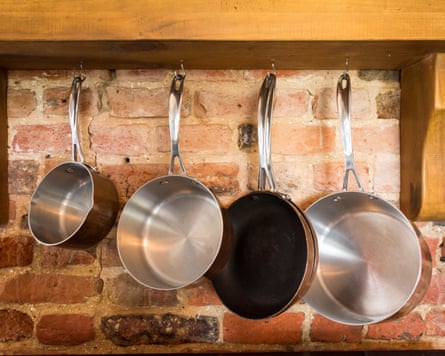
Yes! Your pan should correspond with the size of your hob. If you use a small pan on a large cooker plate, for instance, you run the risk of dirtying or damaging the outside edges of the pan. Gabriel Waterhouse, chef-owner of London’s Waterhouse restaurant, recommends only two sizes of pans for home cooks. “You can reduce it to a medium-depth skillet pan with sides that you can saute and fry and move ingredients around in, and a two-handled casserole pot with a lid,” he says. “You should be able to do all of your jobs on all different levels of heat with those.”
Should I buy specialist pans for different types of cooking?
Although the frying pan and casserole combination is a good catch-all, if you find yourself constantly coming back to one type of dish or preparation, it might be worth investing in a specialist pan. “At our restaurant we do a lot of cooking over open fire, so cast iron is great for that,” says Ben Chamberlain, head chef at Mediterranean restaurant Wild. “A lot of people use griddle pans for steaks but I wonder about aesthetic over flavour with those. You have nice bar marks but ultimately you want maximum surface contact for a nice caramelised crust.”
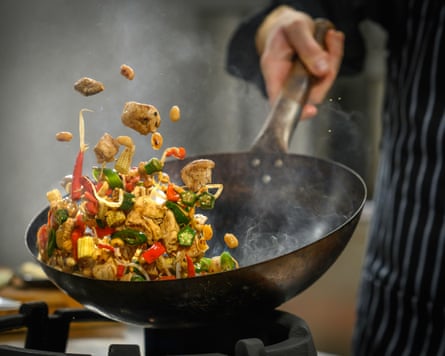
Walker also recommends buying a wok if fast cooking and stir-frying are on the menu. “You need to get them very hot so that oil smokes when you add it, but woks are so thin it’s like cooking over an open flame,” he says. “Flat-bottomed woks are really versatile. When I went off to university that’s all I took with me and it was perfect.”
For Palestinian chef Fadi Kattan, co-founder of Notting Hill’s Akub, specialist pans can have a personal connection to culture and heritage. “The fukhara, our traditional Palestinian earthenware pot, heats slowly and gently, encouraging a completely different relationship with cooking. You cannot rush it,” he says. “These vessels connect us to generations of Palestinian cooking, local pottery traditions and the relationship with the land.”
Think about what you’re cooking
As important as your choice of pan is the preparation of your ingredients. “You need to make sure that fish is patted dry before you put it into the pan skin-first, otherwise it will stick,” says Roberta Hall-McCarron, chef-owner of Ardfern restaurant. “Allow things to take on a proper sear first and don’t turn your ingredients too fast or they will break apart. Have confidence in getting the pan hot enough, particularly if it’s stainless steel, and don’t overcrowd the pan, otherwise it’ll draw the heat out too quickly.”
How does the type of cooker I have affect my pans?
Most modern pans should work across the three main types of cooker: gas, electric and induction. Since induction works using magnetism, the metal alloy in the pan needs to be appropriately conductive for it to work, and it is worth checking the details on the box before buying. “Older copper pans with a tin lining won’t work on an induction hob but almost all others do,” says Lando. “You should also be careful if you have a really thin pan on an induction as the magnetic vibration could damage its shape or structure.”
What is seasoning?
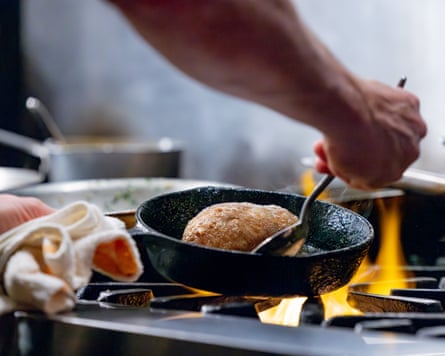
Seasoning is a way to protect your pan and help it to develop an emulsion and patina after repeated use, which adds flavour to your dishes. On cast iron this might look like a light crust on the base of your pan, while on stainless steel it’s a barely noticeable slick of oil. Most non-stick pans don’t need seasoning, although hybrid brands like HexClad recommend heating with oil before your first use, and some pans will come pre-seasoned.
“With cast iron pans, typically you would get them hot and then coat with a small amount of oil before your first use,” says Ryan Vaughan, senior teacher at Leiths culinary school. “Then, after each time you use them and wash them up, get them dry and coat them with a small amount of neutral oil to keep that layer intact. With brand new woks you also need to heat them to oxidise the surface and then add a thin layer of oil.”
If you accidentally scrub off the patina on a cast iron pan, you can take it back to the base metal and begin again. “It’s a great benefit of cast iron as it’s so hardy and forgiving,” says Lando. “You can re-season by scrubbing and then coating with layers of oil that you heat up or bake in the oven and it makes it good as new.”
How should I clean my pans?
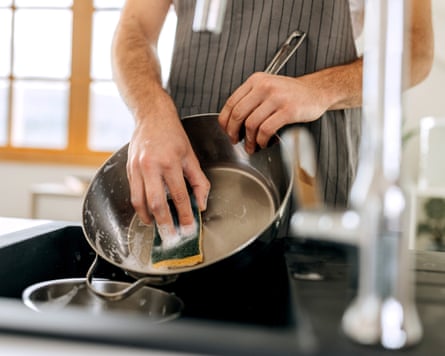
Stainless steel pans can be scrubbed and scoured, as well as placed into the dishwasher, while non-stick and cast iron pans should be handled more delicately. “Cast iron builds up a natural seasoning after use that you don’t want to get rid of, so make sure to wash with warm water and a gentle soap and sponge,” says Vaughan. “It’s amazing what a good soak can do if you have something really stubborn stuck on. With non-stick coatings and ceramics you want to make sure not to scratch it and take that coating off. Similarly, use a soft sponge and soak, and don’t use metal utensils.”
And how should I store them?
“Never put away a damp pan,” says Lando. “Otherwise pans might start to develop rust. If you’ve been using a pan for a while, it might develop a slightly sticky emulsion on the surface that you don’t want to damage, so if you’re stacking them in a drawer you can put a tea towel or bit of kitchen paper between them.”
What is Teflon?
Discovered in 1938 by 27-year-old chemist Dr Roy J Plunkett, polytetrafluoroethylene or PTFE was a plastic found to have extreme heat and chemical resistance. During the second world war the polymer was used in the Manhattan Project in the construction of the atomic bomb, and NASA has used the material in its insulation and thermal shields for the Apollo moon landing. The trademark Teflon was registered by Plunkett’s employer DuPont, and by the 1950s it had been bonded to stainless steel to create the first non-stick cookware.
What are the risks of PTFE coatings?
PTFE is often referred to as a “forever chemical”, since it takes thousands of years to degrade, making it potentially environmentally toxic if disposed of incorrectly. Thankfully, non-stick cookware production renders PTFE inert, although if you manage to scorch your pan at over 260C, the coating begins to break down and can cause what has been nicknamed the “Teflon flu” – a feverish headache developed after breathing in toxic fumes.
“People generally don’t cook above 180C or 200C so you shouldn’t be at risk of breaking down that material,” says Lando. “If you buy from a well-regarded UK retailer, they would have done food safety checks and it should be completely fine. But all non-stick coatings will come off eventually, and once they start to chip or scratch you should replace them.
Can I make my pans last for ever?
“Treat your pans well and they will treat you well,” says Chamberlain. “There’s no reason why stainless steel and cast iron pans can’t last for life if you take care of them properly. It’s often worth investing a bit more in a good quality pan at the beginning – it will pay off as you use it for many years to come. They’re an inheritance.”
KioskNews shows a cleaned-up reading view extracted from the publisher’s page — the original always lives on their site, not ours.