Captured, injured, released, recaptured: Young tigress miscarries three foetuses
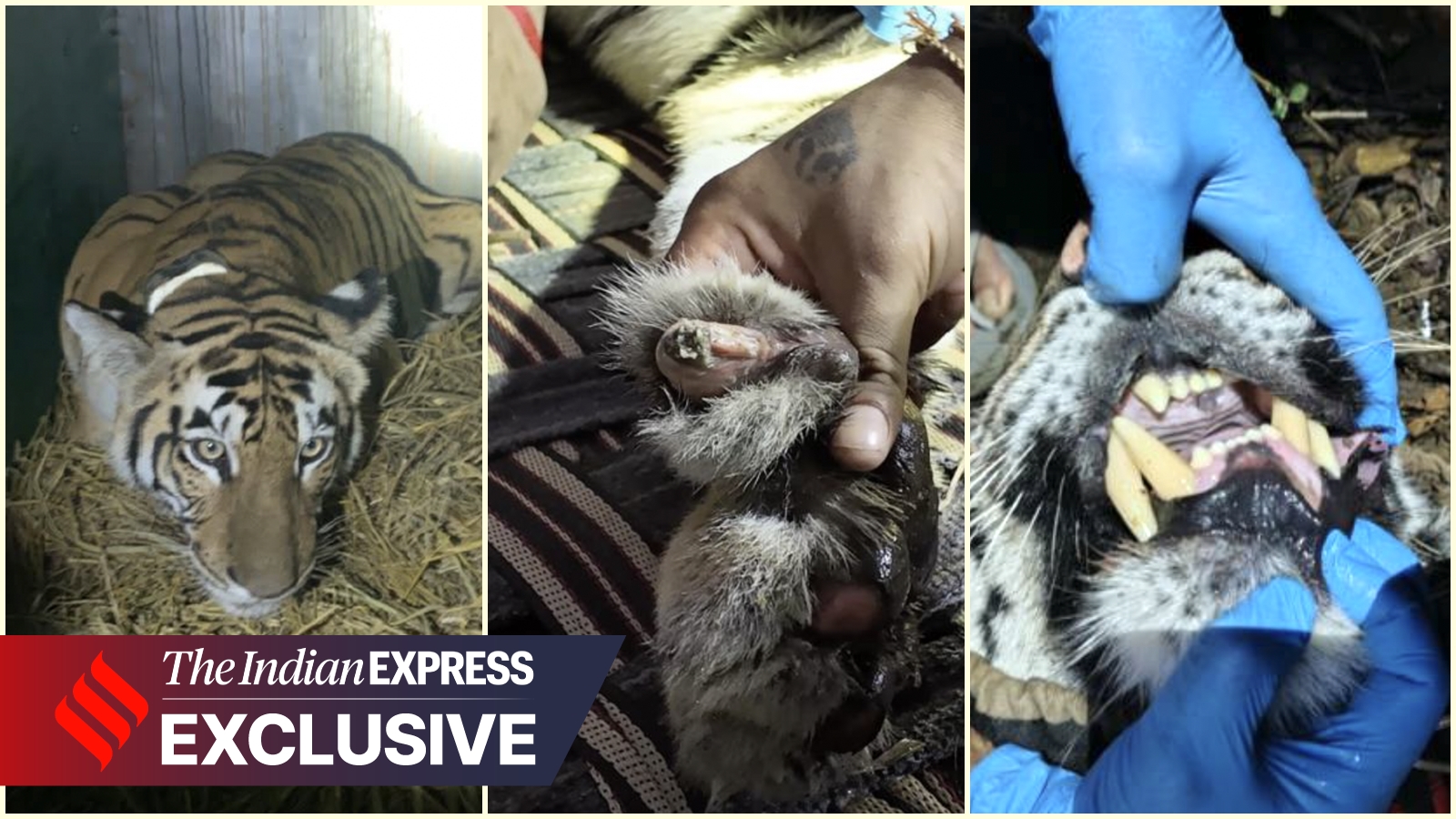
When the West Bengal Forest Department said a relocated tigress had dug her way out of an enclosure in Buxa Tiger Reserve last Sunday, it gave little account of what had happened to her in the six weeks since she was captured in Bihar’s Valmiki Tiger Reserve.
From official records and forest department sources, The Indian Express has learnt that the tigress suffered multiple injuries during the prolonged road and air transfer from Valmiki to Buxa. She was released into the wild before she recovered.
The authorities got a second opportunity to allow the tigress recovery time after she was recaptured in Assam. But short of time and funds, the department repurposed a holding pen built for chital as a tiger enclosure which could not hold her.
Officials learnt the tigress was pregnant only after she aborted three foetuses, estimated to be two months old, following her sedation and recapture on November 3 near Gelaguri village, about 10 km from Assam’s Kokrajhar town.
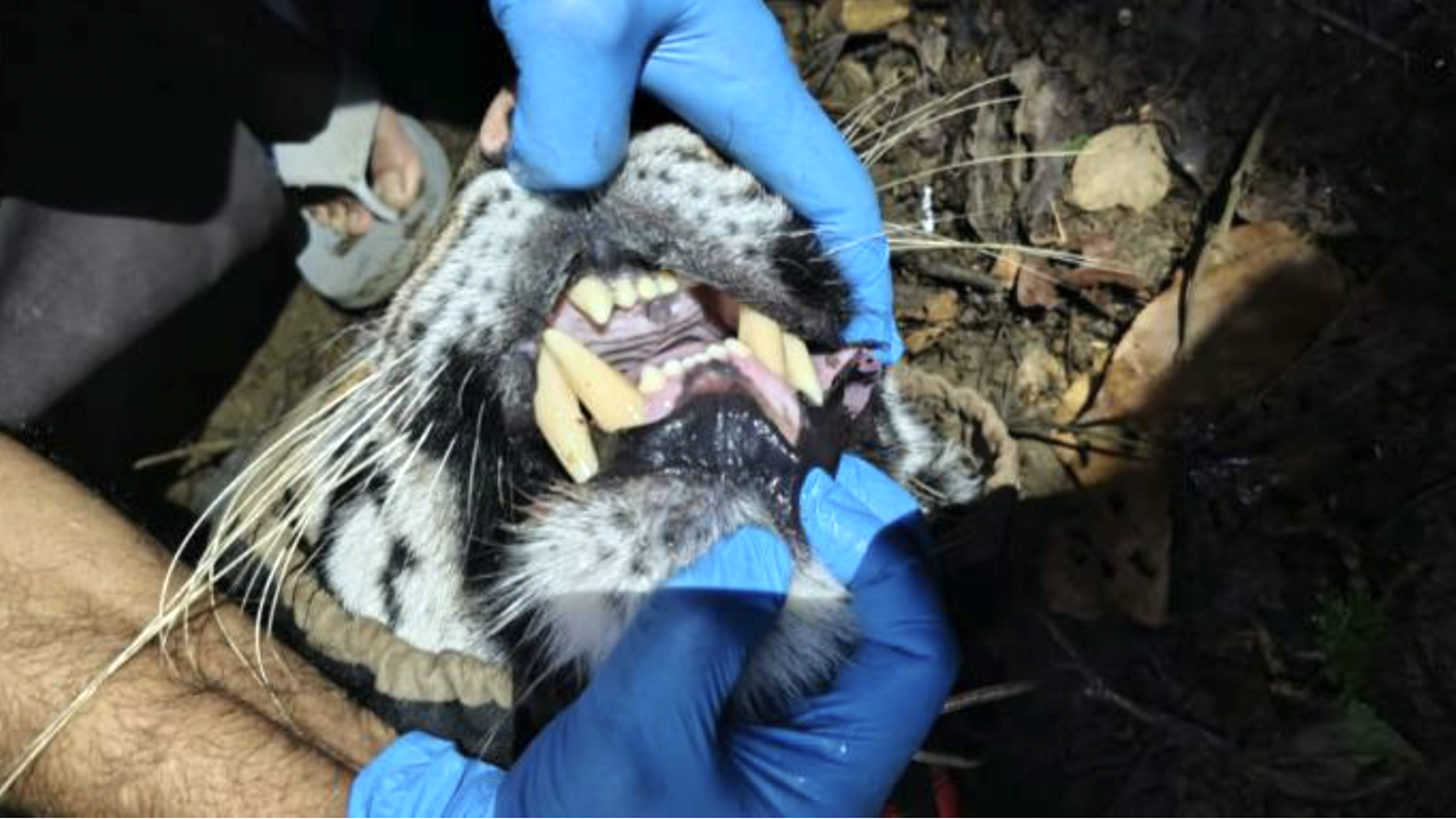 Lower canine chipped from biting the wall. (Photo courtesy: NTCA)
West Bengal Forest Minister Manoj Oraon was present during the recapture, in which four trained elephants and several excavators were used to surround the tigress. As a crowd gathered, the team rushed her in a cage to a waiting vehicle before it could administer the drug to reverse the sedation, Buxa Forest sources said.
Asked about the miscarriage, Sanjay Kumar, chief of the National Tiger Conservation Authority (NTCA), said: “The incident has come to our notice and we’ll further look into it.”
Dr K Ramesh, the Wildlife Institute of India (WII) scientist leading the relocation project, said “the matter is under investigation”.
Story continues below this ad
Minister Oraon said he had no knowledge of the miscarriage. Buxa Field Director Kumar Vimal did not respond to calls or messages seeking comment.
WII Director Dr G S Bhardwaj said the tigress showed no visible sign of pregnancy when first captured and that detecting it would have required hormone analysis or an ultrasound.
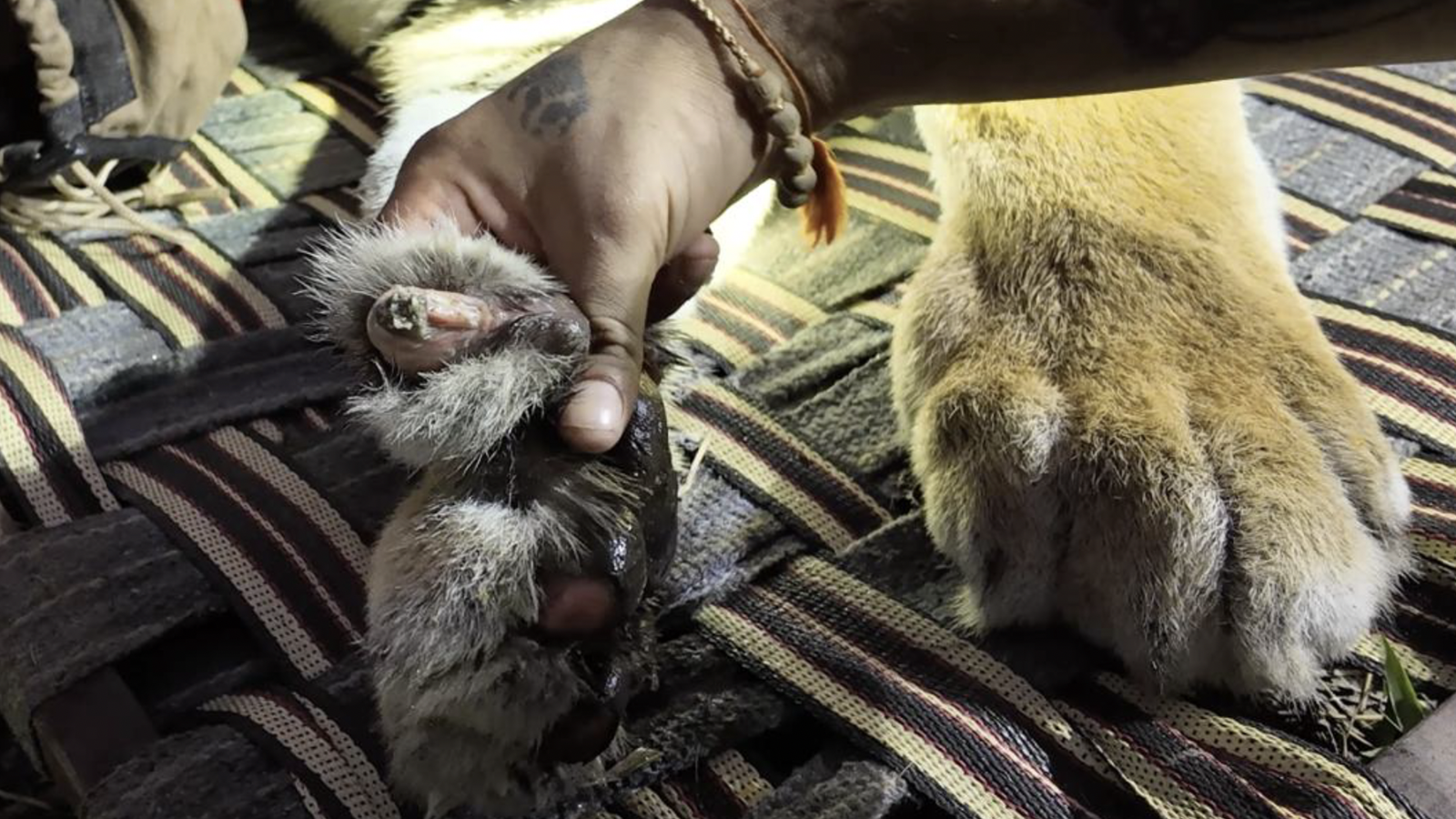 Foreclaws worn down by scratching the cage wall. (Photo courtesy: NTCA)
“The reported information on the foetus may have to do with a combination of factors such as anesthesia, transportation and stress experience in the new environment. But it is not uncommon for young tigresses to give premature birth in the first pregnancy,” he said, adding that the field team was monitoring her closely.
Buxa forest department sources said the foetuses had been preserved and at least two veterinary specialists were on their way to the reserve.
Story continues below this ad
Records reviewed by The Indian Express show that the tigress sustained abrasions on both front paw pads and near a nostril, a chipped lower canine and foreclaws worn down as if filed during the September 29-30 transfer. She was released on October 4.
At an October 15 review, expert committee chair Rajesh Gopal said the tigress should have been kept in the enclosure until recovery. She crossed into Assam on October 23.
After her recapture, the NTCA wrote to the state forest department on November 5 seeking an urgent veterinary report, photographs and video, particularly of her claws and canines. It said any major decision must be taken in consultation with the authority and its expert committee.
With the reports still awaited, the tigress slipped out of the Buxa enclosure on November 8. Within hours, Oraon said she had dug a tunnel under the wall. Asked whether a tiger could burrow, Vimal declined to comment.
Story continues below this ad
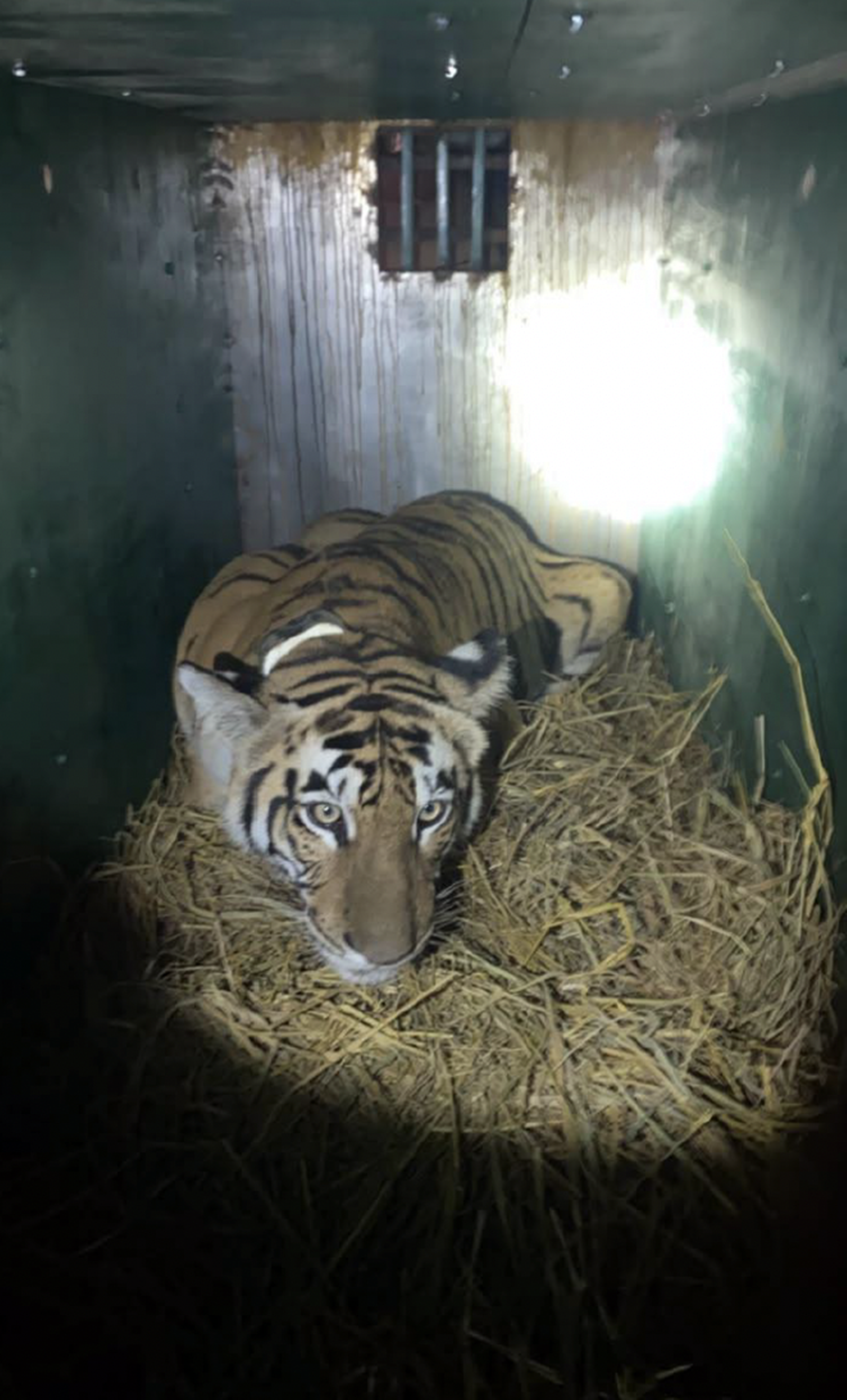 The tigress inside a transport cage. (Photo courtesy: NTCA)
Asked why an enclosure fit for tigers was not built, Oraon said: “It’s only a matter of holding tigers for a few days before release. So a new enclosure was not considered necessary. This tigress created a gap big enough for a dog to pass through.”
Several Buxa forest department sources disagreed. One said the former deer pen lacked the reinforced concrete base used in tiger enclosures. Its chain-link fence ran almost to ground level, with thick blocks of grass packed along the base. After her return from Assam, the tigress repeatedly tested the fence joints until she found a way out, the source said.
WII’s Ramesh acknowledged that the Buxa enclosure had been adapted at short notice. He said the department had reinforced it with grass padding and that the animal’s behaviour also mattered. “The same tigress did not slip out for four days when it first arrived,” he said.
The three-year-old tigress showed no sign of injury or distress when darted in Valmiki at 4.55 pm on September 29, the records show. She was taken by tractor to the base camp, about an hour away. Her radio collar came off inside the crate before the four-hour drive to Gorakhpur airbase. She struggled intermittently on the way and was given a second dose of the reversal drug after showing signs of slipping back into sedation.
Story continues below this ad
The convoy reached Gorakhpur around 3 am. The flight to Hasimara on an Indian Air Force C-130J Super Hercules took two and a half hours. The veterinary team had been told to expect 45 minutes. When unloaded around 6 am, the tigress was growling and repeatedly charging at the crate gates. Injuries were already visible. After another hour by road, she was let into the Buxa enclosure by 10.45 am, nearly 18 hours after she was darted.
On October 1, veterinarians sedated her again to fit a new collar, dress her wounds and administer a long-acting antibiotic. While the October 2 ceremony attended by Union Environment Minister Bhupender Yadav and West Bengal Chief Minister Suvendu Adhikari was recorded as the official release, the tigress was still inside the next morning. A veterinary certificate was issued on October 3 “based on instructions from the management” and the tigress walked out on October 4 to find her way to Assam before she was brought back.
After slipping out of the enclosure on November 8, the tigress followed the same route in the Buxa core until Diwali crackers made her change track and walk away from Jayanti village. She continues to move inside the reserve, traveling eastward up to Chunia in the Hatipota range and back towards Jayanti.
A Buxa forest official, speaking on condition of anonymity, said a larger enclosure would have allowed the department to hold her until she recovered. “Things will improve once villages, particularly Jayanti, are relocated. The arrival of big cats will also help departmental capacity building,” he said.
Story continues below this ad
Ramesh said the project was important to revive Buxa and the surrounding north Bengal forests, which could link tiger populations to the east and west.
KioskNews shows a cleaned-up reading view extracted from the publisher’s page — the original always lives on their site, not ours.