In Asia, midterms spark worries about diplomatic uncertainty, economic pressure
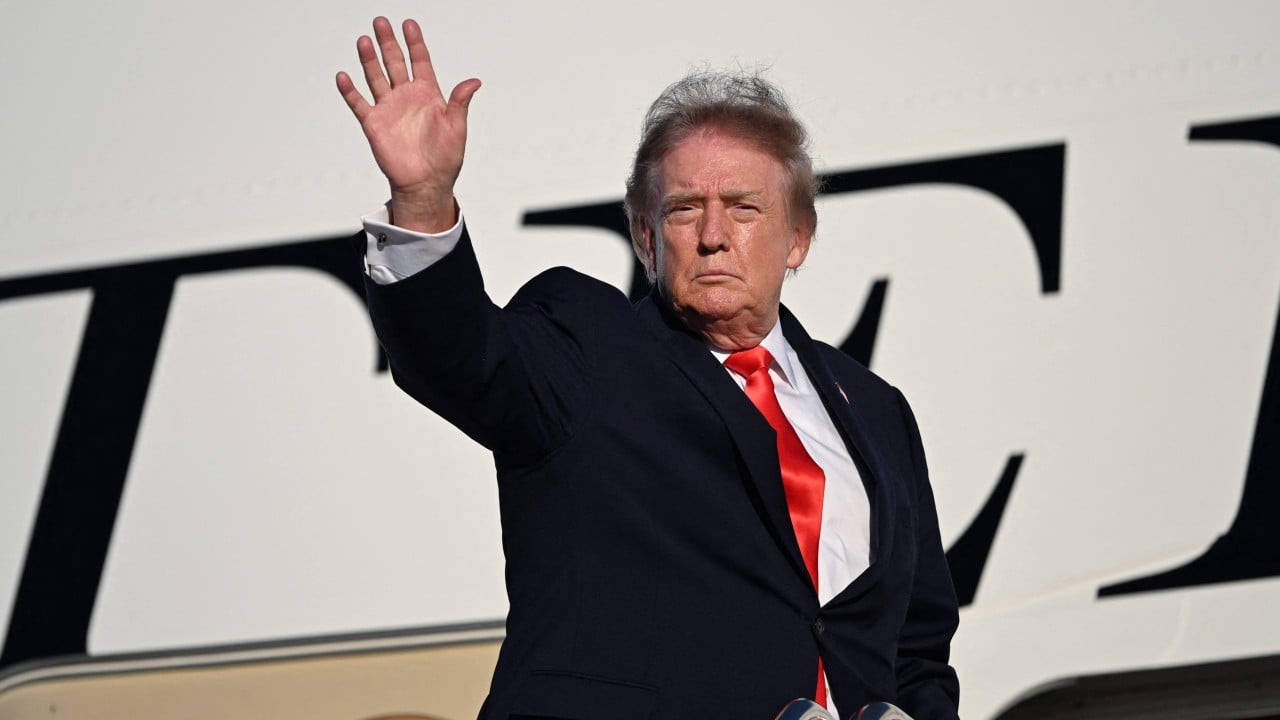
Seoul would have to deal separately with the White House and Congress, which could make diplomacy more challenging, said Choi Jong-kun, former first vice-minister of foreign affairs.
Speaking on Wednesday on Kim Eo-jun’s News Factory, a popular online current-affairs show, Choi warned that Seoul faced an increasingly complex balancing act.
Choi pointed to President Lee Jae-myung’s efforts to secure fuel supplies for nuclear-powered submarines as a potential example. A Democratic-led Congress, he argued, was likely to adopt a much stricter posture on global non-proliferation norms and erect barriers to the plan.
Choi was also cautious about the prospects of a revival of high-level diplomacy between Washington and Pyongyang.
03:00
The global impact of the coming US midterm elections under Donald Trump
Noting that North Korea “holds the key to bilateral talks”, Choi said that a Democratic sweep left Kim Jong-un with little incentive to re-engage, as it would be difficult for the Trump administration to offer the leader any substantive incentives to return to the negotiating table.
Pressure was likely to mount on both economic and military cooperation, South Korea’s The Financial News reported on Wednesday.
Congress would likely continue to push South Korea to fulfil its massive investment pledges to the US, the report noted, as Democrats also backed measures to attract foreign capital and revitalise domestic manufacturing.
Under a pact signed with Washington last year, South Korea committed US$350 billion to strategic US sectors including shipbuilding and advanced semiconductors.
The US would also likely urge South Korea to cover more of the cost of their security commitments, the report said.
Tougher measures could emerge quickly, the report argued, saying that Washington might threaten potential cuts to US forces in the country or trade tariffs.
Chief Cabinet Secretary Minoru Kihara said at a press conference on Wednesday that Tokyo would continue to place importance on Japan-US relations regardless of the US midterm results, according to Kyodo News.
01:51
North Korea’s Kim attends live-fire drone and rocket demonstration in Wonsan
“A robust Japan-US alliance is indispensable for maximising Japan’s national interests and ensuring the peace and stability of the international community,” Kihara said. “We will continue to work closely at all levels, including between the heads and foreign ministers of both nations, to elevate the alliance to even greater heights.”
A diplomatic conference hosted last Tuesday by The Japan Forum on International Relations highlighted a special agreement on sharing the cost of stationing US troops in Japan. Negotiations on extending the agreement, which will expire in March 2027, began in August .
The president’s post-election standing would likely affect his stance in these negotiations, according to the conference readout.
Takahide Kiuchi, an executive economist at Nomura Research Institute, shared a similar view.
In foreign policy, the more domestic difficulties an administration faced, the more likely it was to rush to get quick achievements abroad, he noted in an article published last week.
Japan may become more vulnerable to additional demands from the Trump administration regarding investment in the US and defence cost-sharing.
In Singapore, which is not a US ally, the reaction has centred on trade.
Elvin Lim, professor of political science at Singapore Management University, noted in a CNA report last Friday that a Democratic Congress would not necessarily mean quick relief from tariffs, as it takes a two-thirds majority vote in Congress to override a presidential veto.
For Singapore, the immediate takeaway was not a rollback of tariffs, but an added layer of legal and policy uncertainty, he said.
Still, there is some optimism that tariff pressures could ease.
“A Democrat-controlled Congress would be mindful of the tariff-fuelled higher prices distressing their constituents,” Stephen Olson, a visiting senior fellow at Singapore’s ISEAS-Yusof Ishak Institute in Singapore, wrote in an analysis published by The Business Times on Sunday.
02:05
Emboldened EU readies China company ‘kill switch’ as Beijing warns Brussels not to ‘fantasise’
“Such a Congress would be positioned to push for carve-outs and exceptions. This could provide a modicum of relief for Southeast Asian exporters. Any deeper shifts in US trade policy will have to await the outcome of the 2028 presidential election,” he added.
The prospect of a more restrained US military posture also drew swift reaction in the Middle East.
“Conscience or the cost of living, Americans said NO TO WAR, and we endorse this message,” Iran’s chief negotiator in talks with the United States, Mohammad Bagher Ghalibaf, posted on social media.
Supreme Leader Mojtaba Khamenei warned against expecting a change in Washington’s policy towards Tehran.
“If there are still those who harbour even the slightest hope that the behaviour of the hegemonic system could change through party or factional shifts, or who believe that making concessions to the US could persuade it to abandon its hostility towards the Iranian people, they are gravely mistaken,” he said a message attributed to him that was published by the state-run Islamic Republic of Iran Broadcasting.
It was part of his statement marking the National Day of Fighting Against Global Arrogance – an official annual observance in Iran held on November 4 – although the message did not explicitly mention the US midterm elections.
Khamenei also described Iran’s control of the Strait of Hormuz and the destruction of US military bases in regional countries as a response to American attacks and part of a broader regional struggle against “arrogance”.
He warned that such actions would take on “much broader dimensions if the aggressions are repeated”.
KioskNews shows a cleaned-up reading view extracted from the publisher’s page — the original always lives on their site, not ours.