What Shields India's Military Against Honey Traps? Air Force Chief Shares Insights
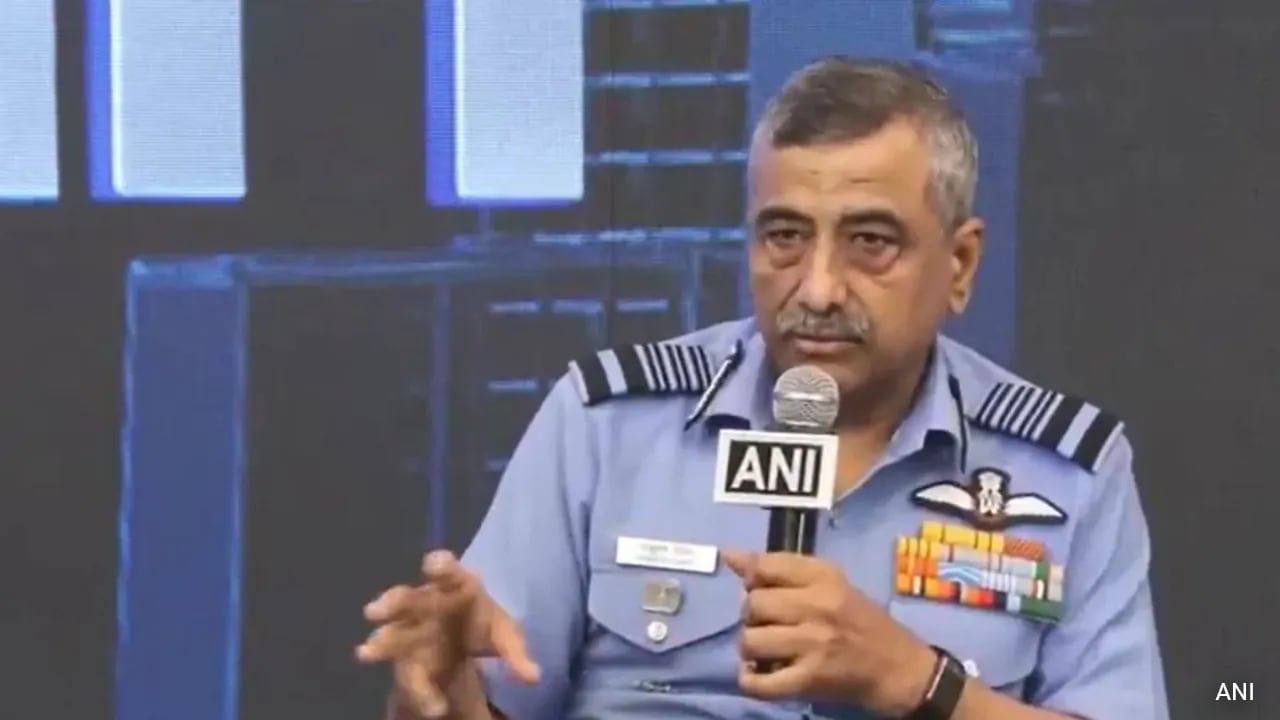
India's military and its research networks have put in place technical and institutional safeguards to counter foreign espionage rings that are increasingly moving beyond traditional honey traps to deploy cyber warfare and other forms of scams, Chief of the Air Staff Air Chief Marshal Ashutosh Dixit said.
He said romantic entrapment on social media was only a small part of a bigger intelligence challenge that targets personnel across both public-sector laboratories and private defence contractors, Air Chief Marshal Dixit said at the ANI National Security Summit 3.0 in Delhi today.
"It is not a honey trap thing. It is basically cyber espionage. It is an espionage issue. Nowadays espionage happens through cyber means and through various means and enticing. Honey traps are only one aspect of the overall picture. There are other things," he said, addressing questions on whether India's defence industry was vulnerable to compromise operations.
"Multi-level marketing is there and loan sharks are there. They're also active. So we are fully aware of this. We are keeping a close eye and there is a systemic effort to control this," he added.
Since the core military communication networks are physically isolated from the public internet, foreign intelligence handlers are targeting human operators rather than hardware, the Indian Air Force (IAF) chief said.
"Our networks are air-gapped, so people cannot do cyber attacks on that. But an insider threat is being generated and we are aware of that. Some technical solutions and some institutional solutions are already in place."
#WATCH | ANI National Security Summit 3.0 | Delhi: Answering a question on whether our defence industry also susceptible to 'honey traps' and how to handle this, Chief of the Air Staff, Air Chief Marshal Ashutosh Dixit says, "It is not a honey trap thing. It is basically cyber espionage. It is an espionage issue. Nowadays espionage happens through cyber means and through various means and enticing. Honey trap is only one aspect of the overall picture. There are other things. Multi-level marketing is there and loan sharks are there. They're also active. So we are fully aware of this. We are keeping a close eye; there is a systemic effort to control this. Our networks are air-gapped, so people cannot do cyber attack on that. So, insider threat is being generated. We are aware of that. Some technical solutions and some institutional solutions are already in place. Even for public sector, DRDO labs, and few are there for private sector...Awareness in using the correct software and whatever advice we are giving, we have an agency which gives advice to private sector people on how to use their network. If they just follow that, I think most of the time we will be safe in this."
— ANI (@ANI) November 16, 2026
On training the private sector, he said awareness in using the correct software is a key element. "Whatever advice we are giving... we have an agency which gives advice to private sector people on how to use their network. If they just follow that, I think most of the time we will be safe," Air Chief Marshal Dixit said.
The remarks come after a string of high-profile counter-intelligence arrests across the defence establishment, where operatives linked to Pakistan's Inter-Services Intelligence (ISI) used fake social media personas alongside financial lures to extract classified military data.
In recent cases, the Delhi Police arrested a defence officer for allegedly leaking sensitive operational deployment details and attempting to install data-stealing malware on a colleague's mobile phone. Investigators told NDTV that the officer, who was going through a difficult phase in his personal life, had been befriended on social media by a woman suspected to be working for a Pakistani handler.
In October, the Andhra Pradesh Police arrested 31-year-old Indian Navy sailor Pradeep Mukherjee and a contractual driver in Visakhapatnam. Mukherjee had been lured over several months by a female Pakistani operative online.
The latest case is over allegations surrounding Nvidia chief executive Jensen Huang and his past association with Alice Huang, an executive accused by the US of links to Chinese intelligence, a claim that Beijing has denied.
KioskNews shows a cleaned-up reading view extracted from the publisher’s page — the original always lives on their site, not ours.