Hydroxyapatite toothpaste promises to better protect your teeth. Here’s what the science says.
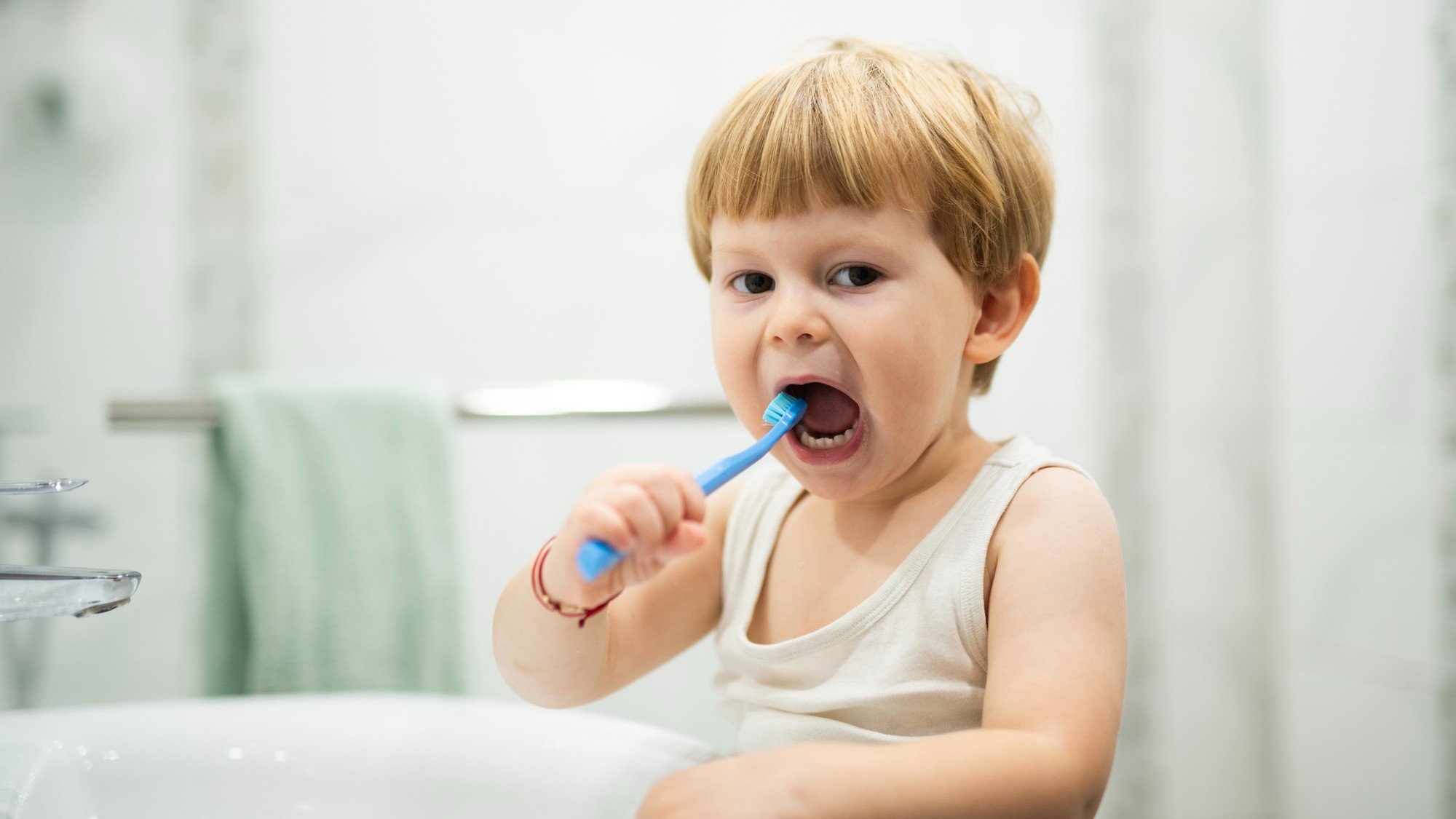
There’s a new kid on the block in the toothpaste aisle. Next to the usual fluoride formulas, another option has been appearing: hydroxyapatite toothpaste.
Hydroxyapatite is the same mineral found in tooth enamel, and some claim using hydroxyapatite toothpaste can help plug tiny cracks in your teeth. Many brands are touting the new toothpaste as an effective alternative to fluoride. But does it actually protect your teeth, or is it just another trendy wellness product? After speaking with several experts, it seems like hydroxyapatite toothpaste might be worth trying.
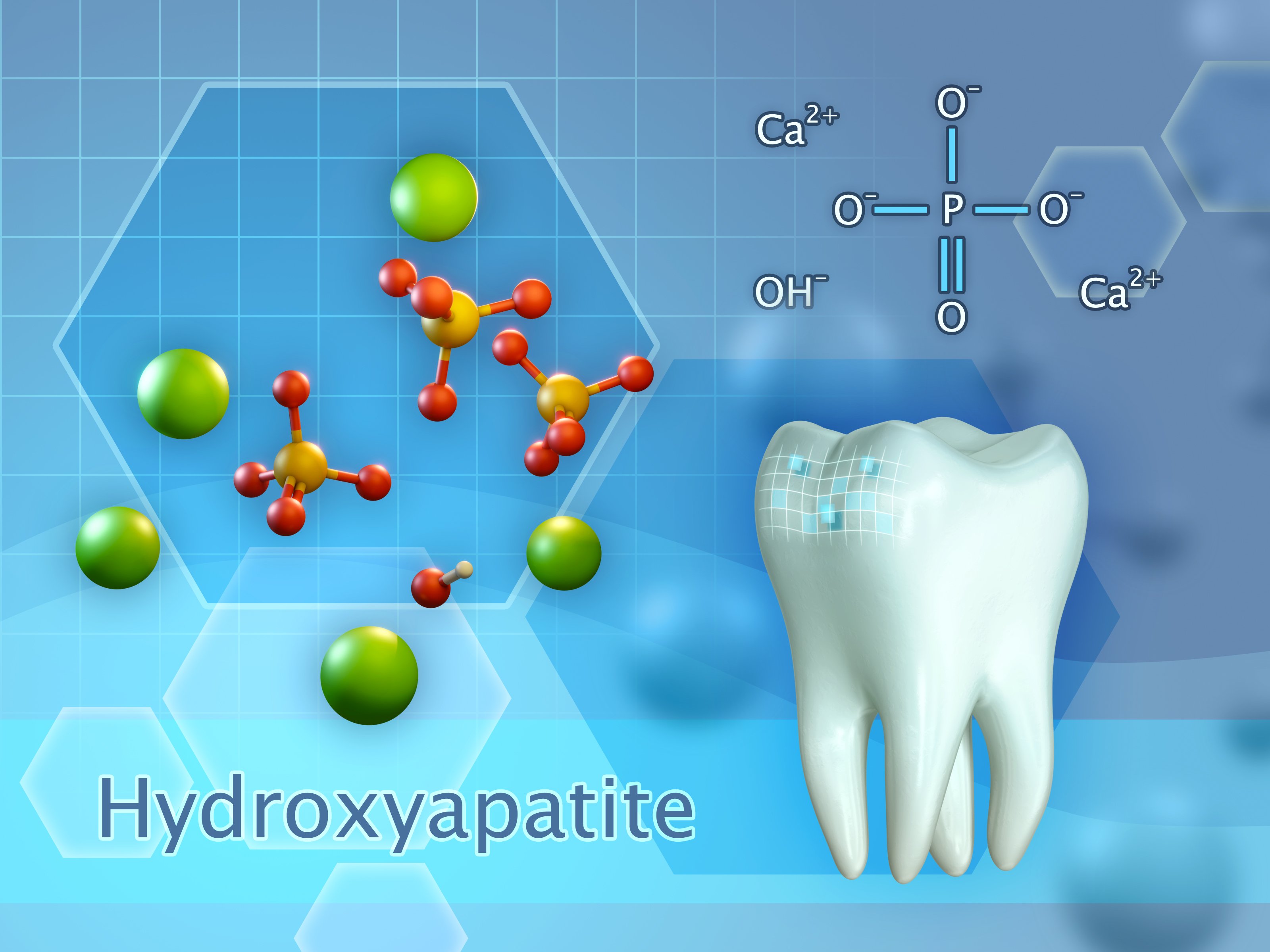
Hydroxyapatite is a mineral made mostly of calcium and phosphorus that naturally occurs in human bones and teeth. It’s the main mineral in tooth enamel, the hard outer coating that helps protect your teeth from damage.
“Enamel is the hardest substance in the human body, but it’s not invulnerable,” says Dr. Joachim Enax, a chemist and senior scientist at Dr. Kurt Wolff GmbH & Co. KG, which makes hydroxyapatite toothpastes. Acids from foods and from bacteria in the mouth can gradually dissolve minerals from the tooth surface. Toothpastes that contain hydroxyapatite are designed to put some of that mineral back and help repair very early enamel damage, Enax explains.
If you’ve looked at these products, you may have seen labels mentioning “nano-hydroxyapatite” or “micro-hydroxyapatite.” That refers to the size of the mineral particles in the toothpaste. “Nano crystals are very fine and microscopic. Micro-hydroxyapatite crystals are larger,” says Dr. Hardy Limeback, a professor emeritus in the faculty of dentistry at the University of Toronto, who has been critical of fluoride use.
Both nano- and micro-hydroxyapatite occur naturally—for example, in breast milk—and because they are chemically the same as the mineral in tooth enamel, “they are added to toothpaste to plug up micro cracks or etches on the tooth surface,” he explains.
When was hydroxyapatite toothpaste invented?
Hydroxyapatite toothpaste is not actually new. In the 1960s, research at NASA on growing crystals for electronics led to a patent for repairing teeth by growing hydroxyapatite crystals. A Japanese company later acquired the patent and introduced the first hydroxyapatite-based toothpastes in the 1980s.
Since hydroxyapatite was approved as an anti-cavity ingredient in Japan in 1993, similar toothpastes have become available in Europe (since 2006) and Canada (since 2015).
In the United States, you can buy hydroxyapatite toothpastes online and in some stores, but neither the Food and Drug Administration nor the American Dental Association has approved hydroxyapatite as an anti-cavity ingredient. To earn the ADA’s Seal of Acceptance—an official indication that a toothpaste helps prevent cavities—a product must contain fluoride.
What are the benefits of hydroxyapatite toothpaste?
Hydroxyapatite toothpaste can help remineralize enamel that has been weakened by acids from dental plaque or acidic foods, say Limeback and Enax. By promoting remineralization and forming a protective layer that helps shield enamel from acids, it may also protect teeth against cavities, says Dr. Elżbieta Paszyńska, a dental surgeon and head of the department of integrated dentistry and endodontics at Poznan University of Medical Sciences in Poland.
Fluoride prevents cavities in a similar way: Fluoride ions are incorporated into the enamel’s structure, helping repair very early decay and making the enamel more resistant to acid over time.
Paszyńska’s group ran two randomized clinical trials at two medical universities, with nearly 200 participants each: one in children aged three to seven, and one in adults with healthy teeth. For 12 to 18 months, participants used either a hydroxyapatite or a fluoride toothpaste. (Both studies were funded by Dr. Kurt Wolff GmbH & Co. KG.)
“At the end of both studies, children and adults using the hydroxyapatite toothpaste were no more likely to develop new carious lesions than those using fluoride toothpaste,” she says. “These findings demonstrated, in two independent clinical trials, that hydroxyapatite toothpaste can provide caries [cavity] protection comparable to fluoride toothpaste in daily oral care.”
Hydroxyapatite toothpastes may also help reduce tooth sensitivity by physically filling and sealing exposed dentinal tubules (the tiny channels leading to tooth nerves), Limeback and Enax note. In one study, people who used a nano-hydroxyapatite toothpaste for two to four weeks were less sensitive to cold air and touch than they had been at the start.
Early studies—most conducted in laboratory settings—suggest that regular use of hydroxyapatite toothpastes can also have a whitening effect. The mineral can form a thin, white layer on the tooth surface that helps mask the yellow tones of the underlying dentin and reduce the appearance of stains.
“This is different from bleaching; it is about restoring and maintaining the natural appearance of enamel,” Enax says. But more clinical trials are needed to confirm this effect in people.
Related 'Ask Us Anything' Stories
Is hydroxyapatite toothpaste safe?
In Europe, health officials have closely studied nano-hydroxyapatite in toothpastes and mouthwashes. In July 2025, the Scientific Committee on Consumer Safety said this ingredient is safe in amounts up to about 30 percent in toothpaste and 10 percent in mouthwash. Most products on the market use 10 percent or less, which is well within that limit.
In the studies they reviewed, rod-shaped nano-hydroxyapatite did not damage DNA or harm cells, even when tested at high concentrations on mouth tissue samples in the lab. (The safety opinion does not apply to products that use needle-shaped particles.)
The committee concluded that any tiny amount of nano-hydroxyapatite particles that enter the cells lining the mouth is naturally removed from the body when those cells shed. If you swallow some toothpaste by accident, the particles are expected to break down quickly in stomach acid, causing no harmful effects.
The bottom line: Should you make the switch?
Even with growing evidence in its favor, some U.S. dentists are cautious about swapping fluoride for hydroxyapatite.
“As far as telling someone, ‘Hey, stop using fluoride toothpaste and start using this,’ we don’t have enough evidence yet,” Dr. Hema Arany, a dentist and associate professor at the Medical University of South Carolina, said in a recent interview. “And so when it comes to standard of care, we are not recommending hydroxyapatite toothpaste.”
But some people avoid fluoride because they’re worried about possible links between fluoride and skin problems or neurodevelopmental issues in children, though these concerns remain debated and the data is still evolving. The World Health Organization and the American Dental Association maintain that fluoride toothpaste is safe and highly effective at preventing tooth decay when used as directed.
According to ethical guidance published in the Journal of the American Dental Association, for people who refuse to use fluoride, hydroxyapatite “is likely the second-best option.”
In Ask Us Anything, Popular Science answers your most outlandish, mind-burning questions, from the everyday things you’ve always wondered to the bizarre things you never thought to ask. Have something you’ve always wanted to know? Ask us.
KioskNews shows a cleaned-up reading view extracted from the publisher’s page — the original always lives on their site, not ours.