El Niño takes toll on Bukidnon rice farms
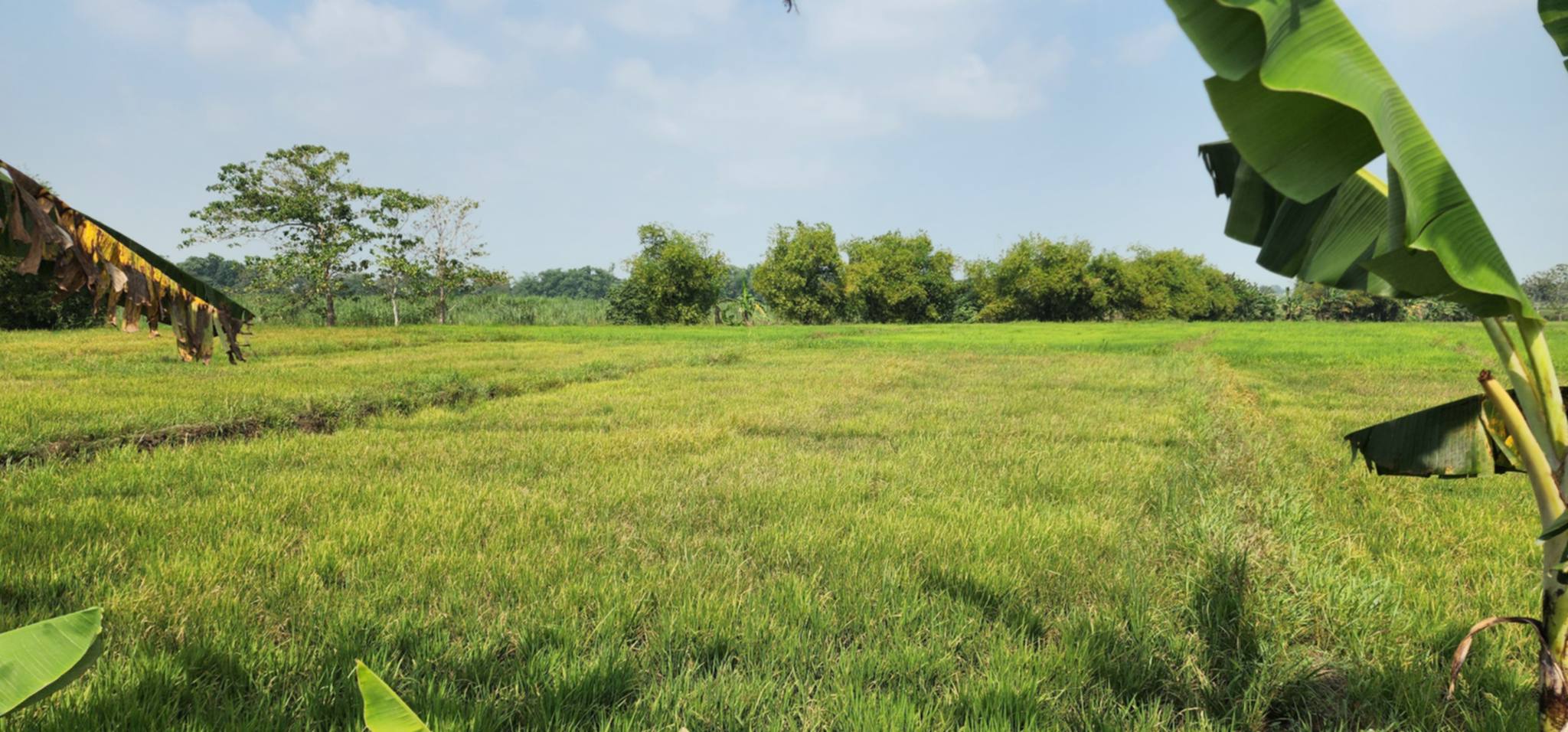

VALENCIA CITY, Bukidnon — Hundreds of hectares of rice fields in this major agricultural hub have been affected by below-normal rainfall, prompting the National Irrigation Administration (NIA) to implement scheduled water deliveries.
Valencia City spans a total physical agricultural area of over 10,000 hectares, consisting of 9,862 hectares of irrigated land, 990 hectares of rainfed farms, and 19 hectares of upland fields dedicated to local consumption located in Pantaron, Barangay Banlag.
Adonis Torres, monitoring personnel of the City Agriculture Office, told the Inquirer on Thursday, September 3, that the dry spell has severely impacted both rainfed and downstream agricultural areas.
Article continues after this advertisement
READ: Pagadian opens banana tissue culture laboratory
FEATURED STORIES
NEWSINFO
NEWSINFO
NEWSINFO
In Sitio Bantal, Barangay Banlag—which covers over 300 hectares of rainfed rice fields—about 80 percent of the crops have struggled to transition from the vegetative to the reproductive stage due to a severe lack of water.
Torres noted that farmers have exhausted all options, including water pumps, as local water sources have dried up.
While NIA has installed solar-powered pumps in areas like Barangay Laligan, Lumbayao, Lumbo, and upper Kabolooan and Boyog in Barangay Banlag, officials said the supply remains insufficient.
In Lumbayao and Lumbio, solar pumps are still being monitored as farms heavily rely on rainfall.
Article continues after this advertisement
Meanwhile, areas near rivers like Banlag still have some water supply and remain in the vegetative stage at 70 to 80 percent, but officials warn these crops are not guaranteed to survive if the rivers dry up amid continuous below-normal rainfall.
Conversely, areas with sufficient NIA irrigation, particularly in Laligan, have largely completed harvesting with minimal worries, while downstream areas bear the brunt of the shortage.
Article continues after this advertisement
For corn crops, Torres reported that while most have already been harvested, ears were notably smaller due to extreme heat and below-normal rains experienced as early as mid-April, affecting around 50 to 100 hectares.
Additionally, about thee hectares of four-month ginger gardens have been affected by the dry conditions.
The agricultural strain comes in the wake of an advisory issued by the Philippine Atmospheric, Geophysical and Astronomical Services Administration (PAGASA) on September 1, warning of unusually high temperatures and a moderate-to-strong El Niño across Mindanao.
Climate models indicate the phenomenon could strengthen toward late 2026 and persist into the first half of 2027, prompting local authorities to initiate water conservation and drought-mitigation measures.
Your subscription could not be saved. Please try again.
Your subscription has been successful.
The City Government of Valencia and relevant local departments are continuing monitoring efforts to assist affected farmers as dry conditions persist. /mr
KioskNews shows a cleaned-up reading view extracted from the publisher’s page — the original always lives on their site, not ours.